NOVA of California is a lighting and decor company that creates original design with a California Modern edge. Founded in 1923, NOVA of California is the oldest lighting company in North America.
About Us
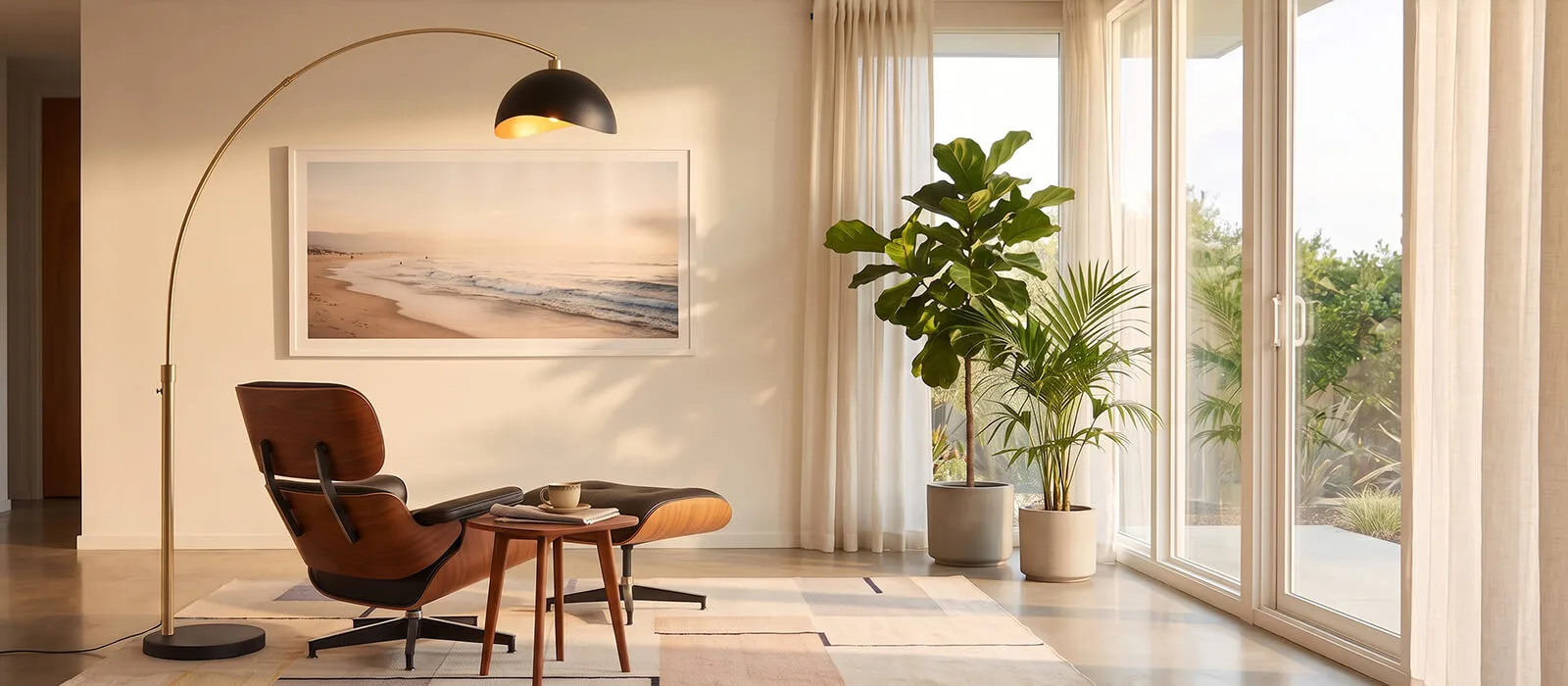
We want to fill homes across the world
with the warmth of California living.
Our Story
FOUNDED & GROUNDED
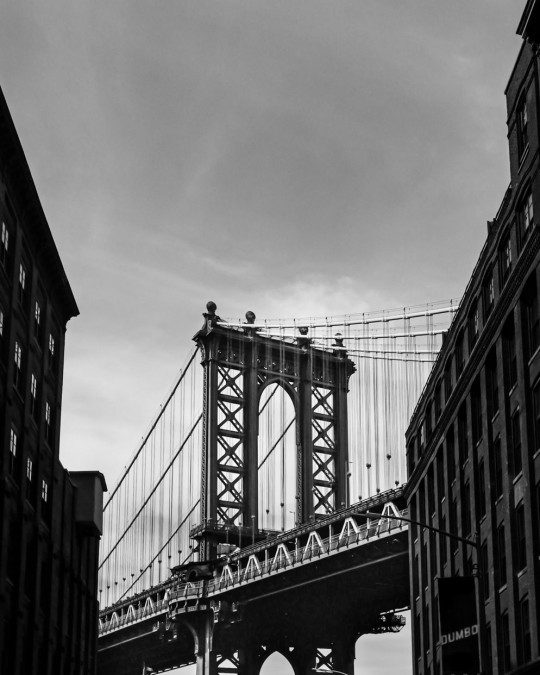
NOVA was founded in 1923 by two brothers with a vision of bringing light and warmth to their fellow Brooklynites. The business thrived through the Depression years, opening showrooms in High Point, NC, the New York Furniture Exchange and America’s Furniture Mart in Chicago. The two brothers, Israel and Murray Langbaum, and their brother-in-law, David Moskowitz, set up initial factory in the Williamsburg section of Brooklyn.
The designs were functional, purposeful and built to last. Their mission was simple: solve real-world problems while making homes warmer and cozier.
Our Roots
RETAIL IS IN OUR HERITAGE
After World War II, the Brooklyn plant expanded into a vertically integrated operation, adding electroplating, painting and assembly. This allowed NOVA’s in-house designers to develop fully realized lamp lines and create custom products for major retailers, including JCPenney, Sears and Polk Bros.
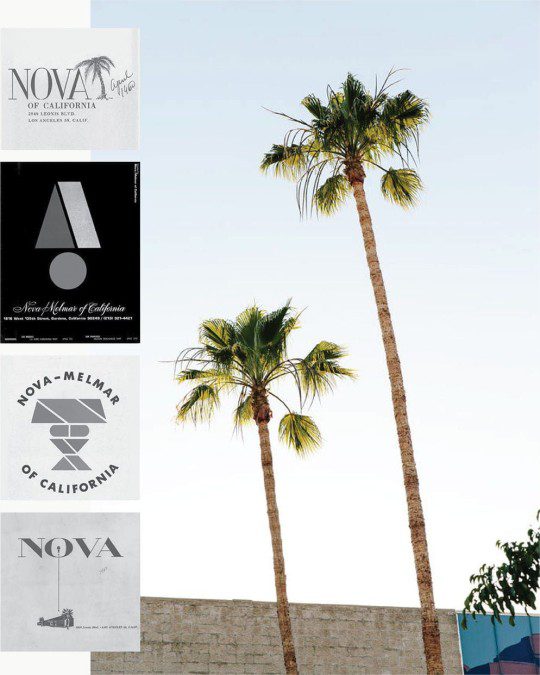
In the mid-1950s, NOVA acquired Kirkwood Industries, expanding its retail lamp and lighting manufacturing operations. In 1956, Mel Moskowitz, son of founder David Moskowitz, relocated to California with his wife, Marilyn, to oversee the company’s West Coast business, which operated under the names NOVA of California and NOVA MELMAR.
NOVA’s use of the NOVA name in connection with lamps and lighting dates to this period and continued through subsequent decades under the NOVA, NOVA Lighting and NOVA Lamps brands. Today, our original designs are sold under the names NOVA of California, NOVA Lighting, NOVA Lamps and NOVA. You can explore our current assortment here and through our retail partners.
Our Product
PRODUCT IS OUR PURPOSE
In 1956, Mel Moskowitz gave a young Viennese industrial designer named Peter Morelli a chance. Before the war, Peter had briefly apprenticed as a jewelry maker in Josef Hoffmann’s renowned Wiener Werkstätte in Vienna. Following the Anschluss in 1938, he fled Austria, making his way through Romania, Rio de Janeiro and Buenos Aires before eventually arriving in Los Angeles—with limited English and no job.
Mel hired Peter on a trial basis. He would go on to become one of the most important figures in NOVA’s history, working with the company from 1956 to 1989 and again from 1993 to 1999.
Peter was a remarkable craftsman, a playful lothario and brilliant jokester. He spoke six languages and was a master jeweler, carpenter and raconteur. Fluent in Spanish, he built and trained a talented team of craftsman drawn from across Latin America. He designed every NOVA product by hand, working at his drafting table with the precision of a craftsman and the imagination of an artist.
Peter believed modern design should serve a purpose while elevating the human condition. Functional design, in his view, should never be joyless or without thought. Instead, he advocated extraordinary attention to detail, artisan quality and a sense of harmony in the way objects live together within an environment. That philosophy became an essential part of NOVA’s design DNA.
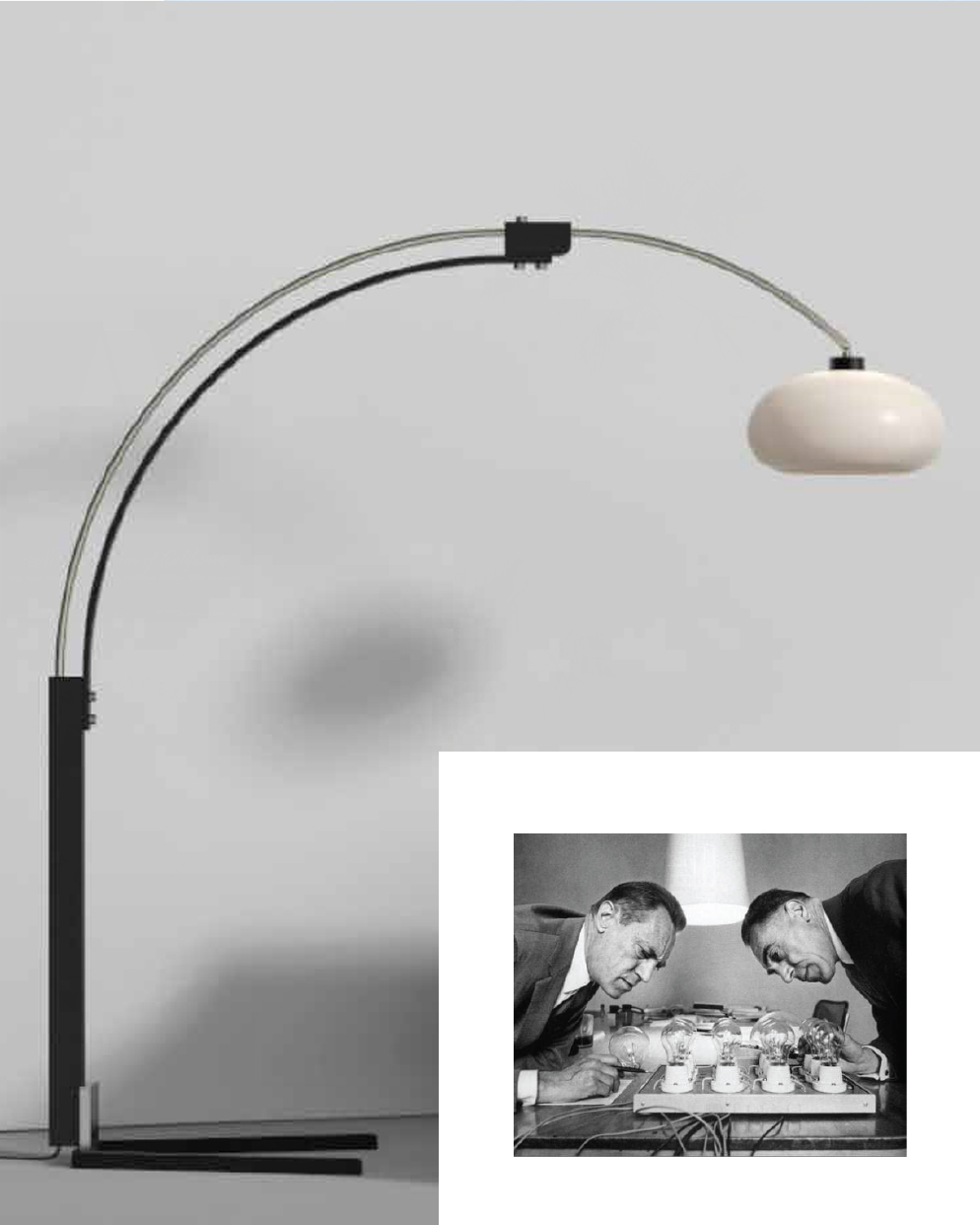
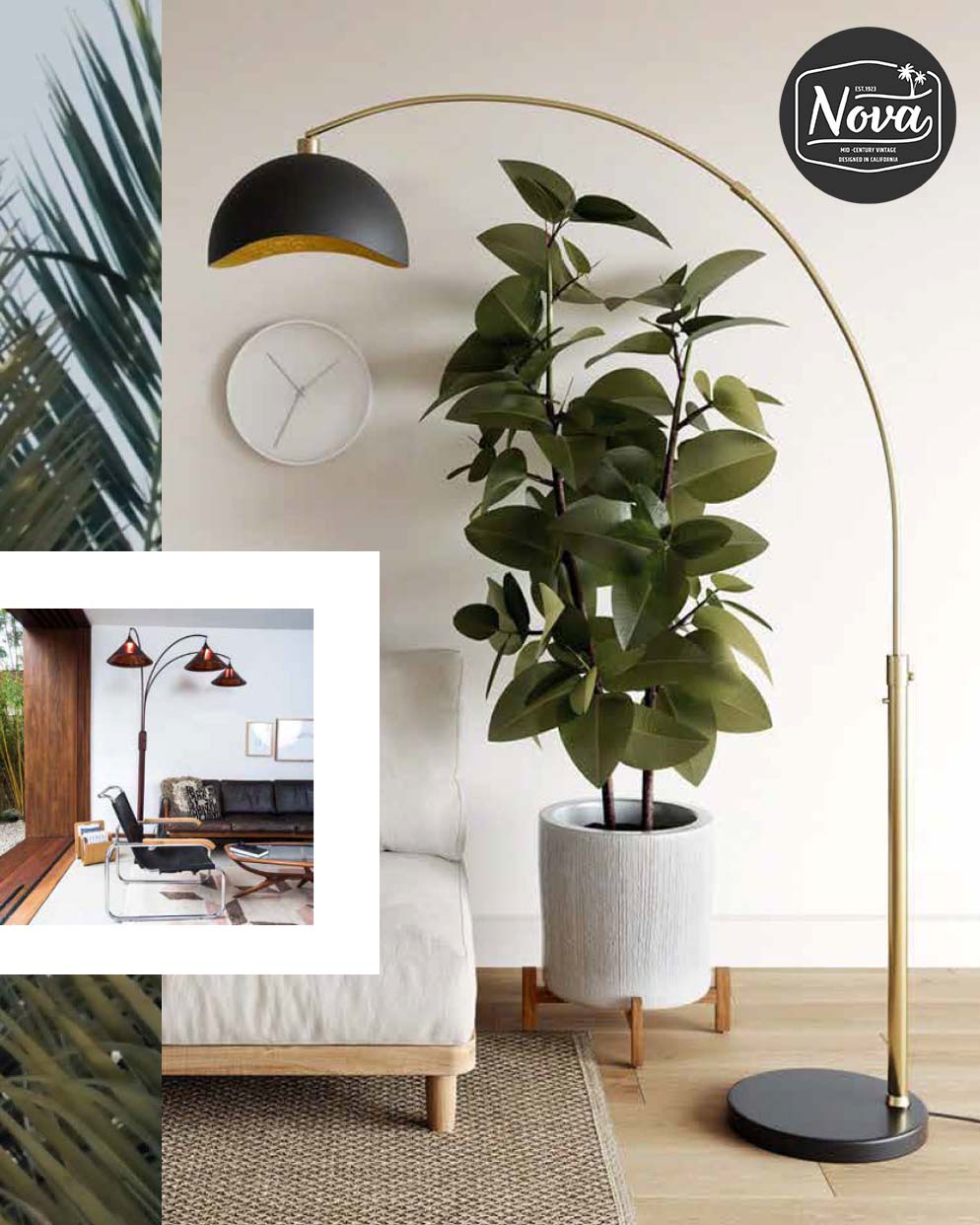
In 1961, NOVA’S Design Director, Peter Morelli, visited the first Salone del Mobile in Milan, where Peter met Achille and Pier Giacomo Castiglioni as they were introducing their new Arco lamp—a portable structure designed to suspend a pendant. Unbeknownst to the Castiglioni brothers, Peter had already been developing his arc lamp concept since 1958, featuring a larger-scale arc with multiple arms and smaller shades with swivels.
Peter created a range of arc lamps specifically for the American market while the Castiglioni brothers pursued their Arco lamp for Flos in Italy. Peter continued to grow NOVA’s woodworking operation, experimenting with bendable plywood, including Italian poplar, to create elegant wooden arches.
By 1970, NOVA Lighting had earned the title of “The King of Arc Lamps.”
Our Future
REBIRTH & A CENTURY OF DESIGN
NOVA was acquired by a private equity group in 1989. In an effort to increase profitability, the new owners terminated Peter Morelli and many of NOVA’s lead craftsmen. The loss of this creative and manufacturing talent had a profound impact on the company, and by 1993, NOVA was on the verge of bankruptcy.
In 1993, Daniel Edelist acquired the iconic California lighting brand and brought Peter Morelli back as Design Director, along with many of his former craftsmen. He also welcomed Larry Langbaum, the son of Murray Langbaum, into the company’s sales team in the New York metropolitan area, continuing the connection between NOVA’s past and its next chapter.
In the early years under Daniel’s leadership, renowned Herman Miller designers Don Chadwick and Tom Newhouse consulted on the direction of NOVA’s design program. They emphasized the importance of maintaining a distinctive point of view while building a lasting brand.
Peter’s return was a remarkable reunion with NOVA and the craftsmen he had trained and worked with for decades. He enjoyed a prolific final seven years with the company, bringing renewed energy to the design workshop and filling it once again with drawings, new materials and new ideas.
When Peter passed away in 1999, Mervyn Weitz became NOVA’s Creative Director. Mervyn was a true California original—a groundbreaking lighting designer, entrepreneur, craftsman and larger-than-life character whose career was defined by curiosity, audacity and an almost complete disregard for convention.
Growing up in Boyle Heights, Mervyn worked in his family’s delicatessen and was forever tinkering with the interior. He instinctively understood how details, furnishings and lighting could transform a space. He attended the Frank Wiggins Trade School in Los Angeles, where he studied mechanical drafting, lighting and electrical wiring, architectural drawing and furniture design. He later apprenticed with several modernist interior designers in Los Angeles, developing a rare combination of technical precision and creative instinct.
Mervyn was a chain-smoking, rough-talking, big-hearted man who could swear like a sailor, break virtually every convention of polite society and still charm an entire room. An iconoclast and bon vivant, he moved easily among designers, craftsmen, Hollywood luminaries and some of Los Angeles’ more colorful characters. He drove Rolls-Royces, built and lost businesses, and collected a lifetime of stories about wild adventures, encounters with the rich and famous and Hollywood dalliances. He was an extraordinary raconteur and never seemed to run out of a good story.
Behind the larger-than-life personality was a serious designer and craftsman. Mervyn believed lighting should create emotion and character, not simply provide illumination. He questioned convention, experimented with materials and manufacturing, and pursued ideas others might have dismissed as impractical.
He built House of Lamps into a substantial business and later founded Lancer/White Lamps, bringing his entrepreneurial instincts and distinctive design sensibility to each venture. At NOVA, he embraced global manufacturing and the emerging possibilities of LED technology, pushing the company’s design language into new territory and creating many of its most successful and distinctive designs.
Mervyn continued designing for NOVA until his death at age 80. His work remains an important part of the NOVA collection — inventive, confident and unmistakably individual.
Today, NOVA’s design team continues that spirit of exploration, developing new approaches to illumination, smart technology and interactivity while remaining grounded in the company’s long history of purposeful, innovative design.
NOVA of California, NOVA, NOVA Lighting and NOVA Lamps are NL&A Collections, Inc. companies.

Heritage
Founded in 1923, NOVA of California has been designing and manufacturing well-crafted original lighting designs for 100 years.

True Materials
NOVA's roots are in craft and woodworking. We specialize in modern lighting designed from wood, metal, and glass.

California
We are based in Venice Beach, California and draw our inspiration from our funky surroundings.

Passion
We are passionate about our design work and seek to offer our unique, well-crafted designs at democratic values.

Experts
We are lighting experts and are happy to share our knowledge and passion for design with you.