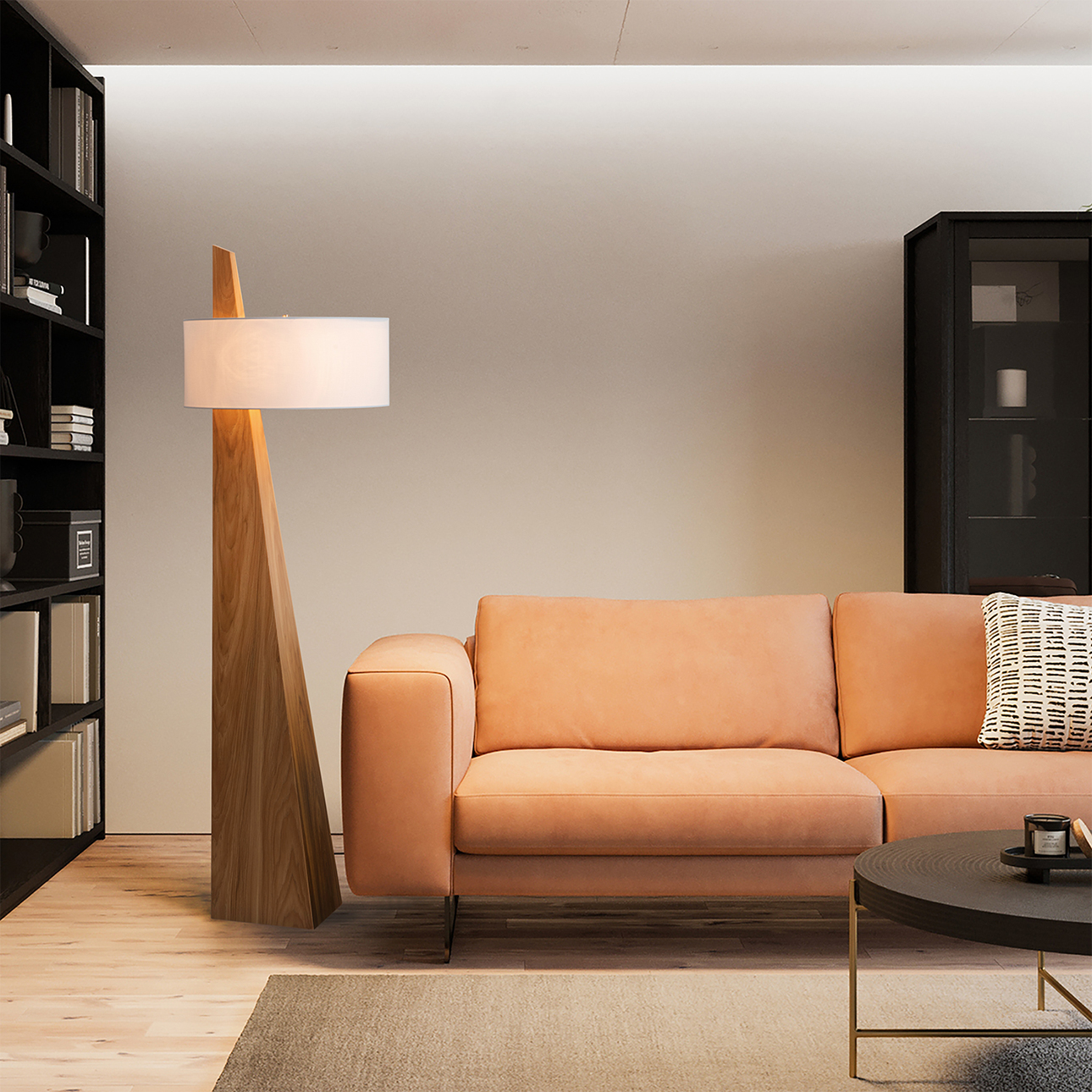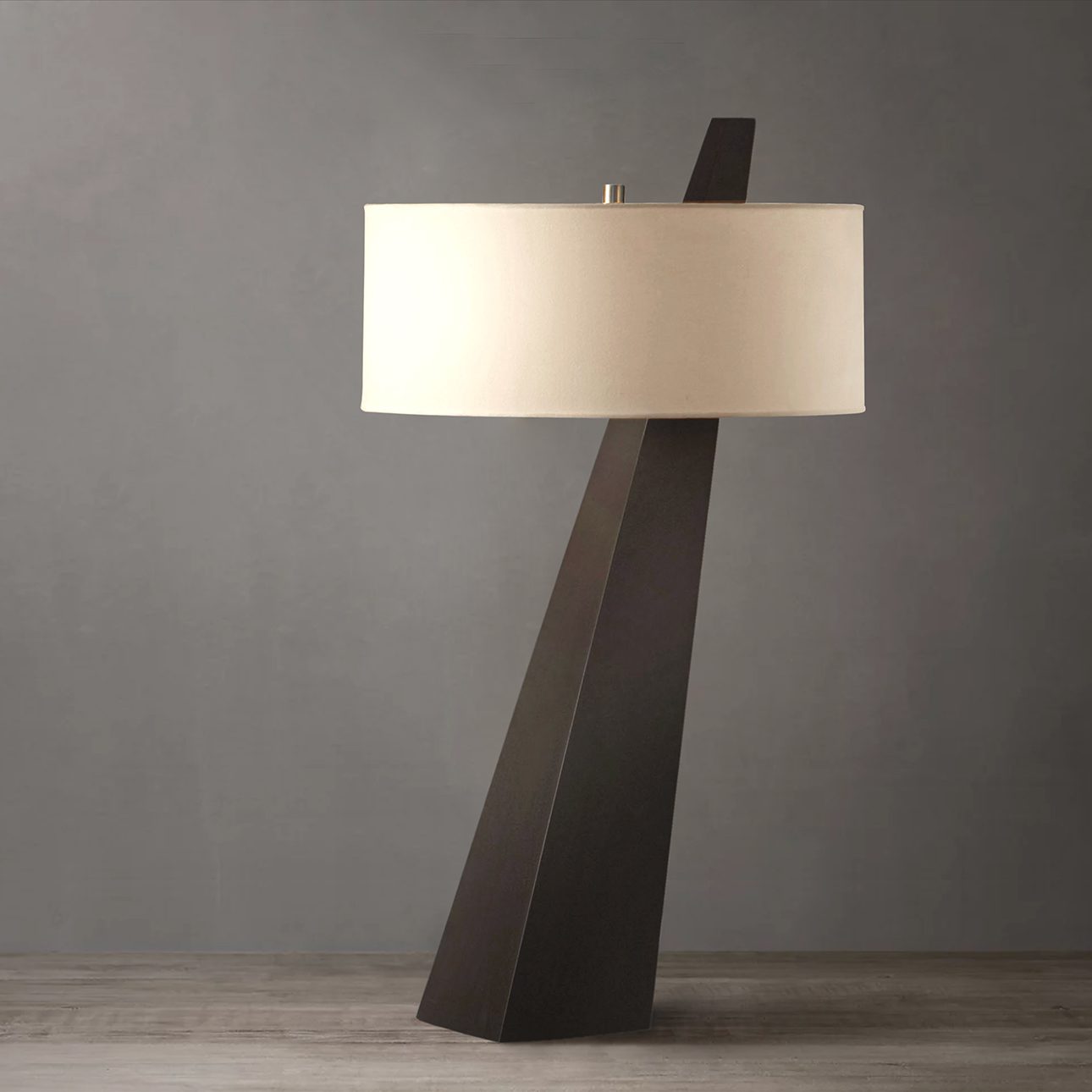


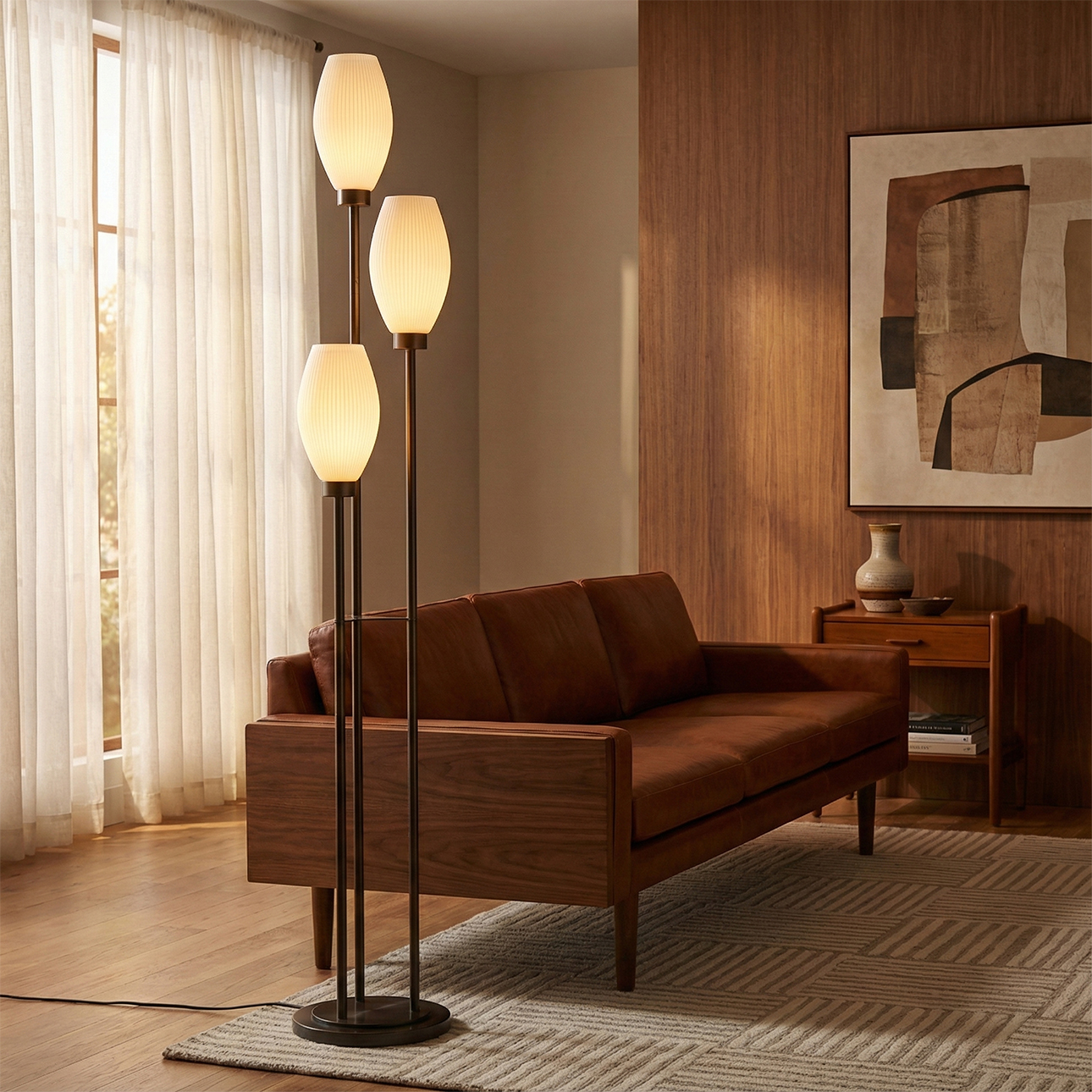
What Makes Floor Lamps More Than Just a Light Source
Most homeowners in the USA and Canada treat lighting as an afterthought. They paint the walls, buy the sofa, hang the curtains, and then realize the room still feels flat. That is where floor lamps earn their place. A well-chosen floor lamp does not just push back darkness. It shapes the mood of a room, draws attention to architectural details, and gives a space its personality.
Floor lamps are one of the most versatile lighting fixtures available for residential interiors. Unlike recessed ceiling lights or pendant fixtures, they are freestanding, portable, and adjustable. You can move them from corner to corner, redirect them toward a reading chair or an accent wall, and swap them out when your interior style shifts. That level of flexibility is genuinely hard to match with any fixed lighting solution.
Nova of California has built its reputation around this exact idea. The brand designs floor lamps that balance aesthetic appeal with practical light output, giving homeowners across North America the ability to elevate everyday spaces without an expensive renovation. Whether the goal is ambient lighting for a living room, task lighting for a home office, or accent lighting to highlight a piece of art, the right floor lamp handles all of it.
This guide covers everything a homeowner needs to make a confident floor lamp purchase, from the different lamp types and their ideal use cases to real-world comparisons, placement strategies, bulb technology, and styling advice by room.
Understanding the Different Types of Floor Lamps
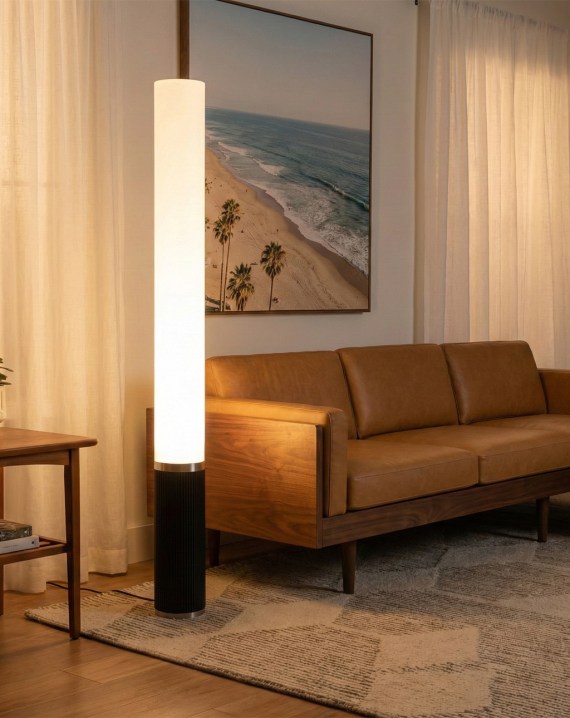
Torchiere Floor Lamps
Torchiere lamps direct light upward toward the ceiling, creating what lighting designers call uplighting. The ceiling acts as a reflective surface and diffuses the light back into the room, producing a soft, even glow with minimal harsh shadows. This makes torchiere lamps excellent for living rooms and open-plan areas where ambient illumination is the priority.
A classic example of how torchiere lamps perform in real interiors: consider a 14-by-16-foot living room with an 8-foot ceiling painted in a warm off-white. Placing a single torchiere in the corner behind a sectional sofa fills the room with enough ambient light for casual conversation, movie watching, and general evening activity without the glare of overhead fixtures. Nova of California offers torchiere designs that come with integrated dimmer switches, allowing the light level to drop from bright fill lighting down to a low, warm nighttime atmosphere.
Arc Floor Lamps
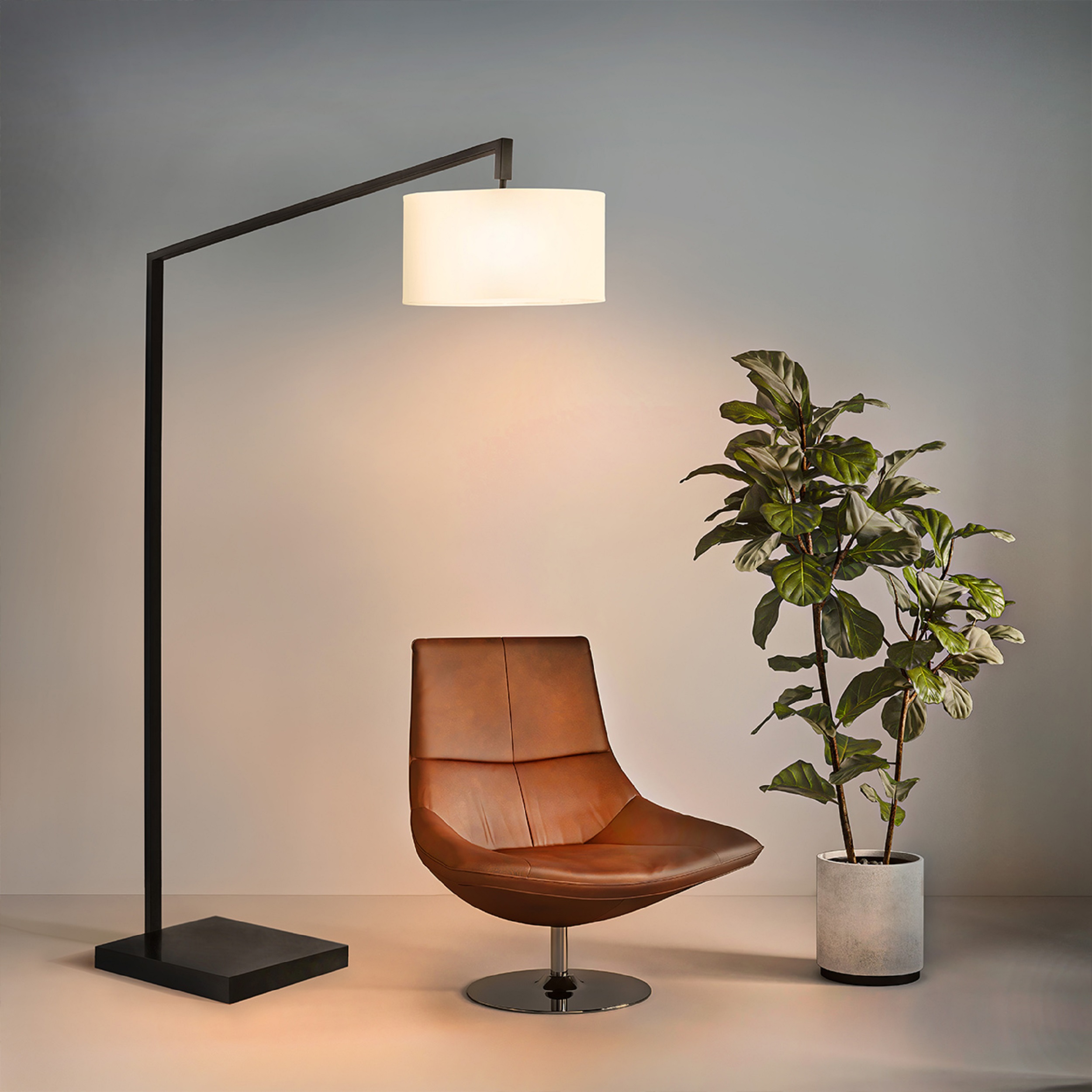
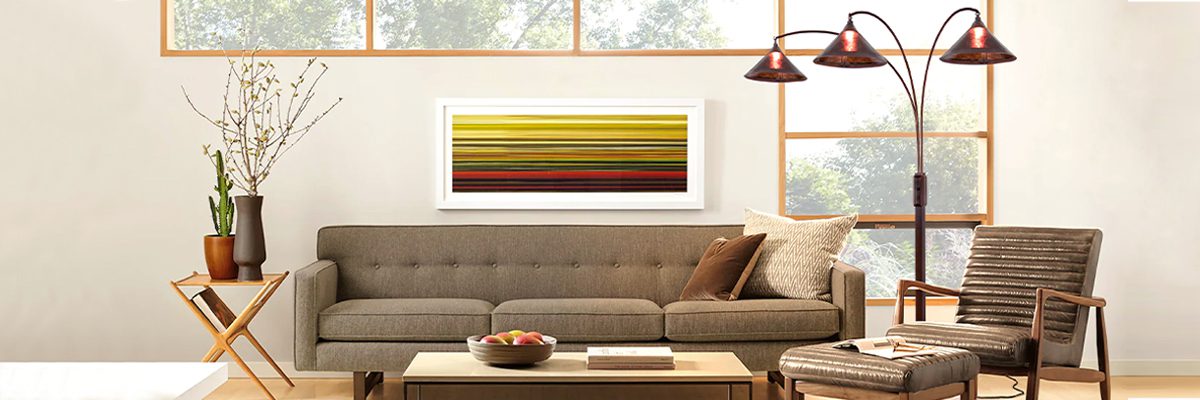
Arc lamps feature a curved or arched neck that extends outward from the base, allowing the light to hang over a seating area or dining table without being mounted to the ceiling. They work particularly well in situations where a pendant or chandelier is not practical, such as rental apartments or rooms without a central junction box over the seating area.
Arc lamps introduce visual drama. The sweeping line of the arm creates a sculptural element in the room, and the shade position can be adjusted to direct light precisely where it is needed. A common use case in Canadian condos and apartment units: placing an arc lamp over a small two-person dining table near a window. The lamp delivers intimate downward light during meals while its base stays clear of the walking path.
Tripod Floor Lamps
Tripod floor lamps use a three-legged base, borrowing their aesthetic from camera equipment and mid-century modern design. They are inherently stable, highly decorative, and work best in spaces where the lamp is meant to serve as a visual statement as much as a light source.
In terms of interior styling, tripod lamps fit naturally into Scandinavian, mid-century modern, and contemporary eclectic rooms. They are often paired with drum shades or cone shades in natural materials such as linen, cotton, or rattan. The three-legged silhouette creates an open and airy feel compared to a solid post lamp, making them a practical choice for smaller rooms where visual lightness matters.
Pharmacy and Task Floor Lamps
Pharmacy lamps are built for directional, focused light. They typically have an adjustable arm and a small shade that concentrates the beam on a specific surface. These are the go-to choice for reading chairs, home offices, craft rooms, and workspaces where the eyes need strong, targeted illumination without flooding the entire room.
Unlike ambient lamps, pharmacy floor lamps do not try to light the whole room. That targeted approach is actually their greatest strength. Someone reading dense text for an hour benefits more from a bright, well-aimed pharmacy lamp next to their chair than from a brighter overhead fixture. Eye fatigue drops significantly when the light is coming from the correct angle and at the right intensity for the task at hand.
ED and Smart Floor Lamps
Modern floor lamps increasingly come with integrated LED technology, color temperature controls, and smart home compatibility. These lamps connect to Wi-Fi or Bluetooth, allowing brightness and color temperature to be adjusted through a smartphone app or a voice assistant.
Color temperature is measured in Kelvin. A warm white light at around 2700K suits bedrooms and living rooms where relaxation is the priority. A neutral white at 3500K works well in home offices and reading areas. A cooler daylight at 5000K to 6500K supports concentration, craft work, and spaces that benefit from a crisp, alert feel. Smart floor lamps from Nova of California allow users to cycle through these temperatures based on time of day or activity.
How to Choose the Right Floor Lamp for Each Room
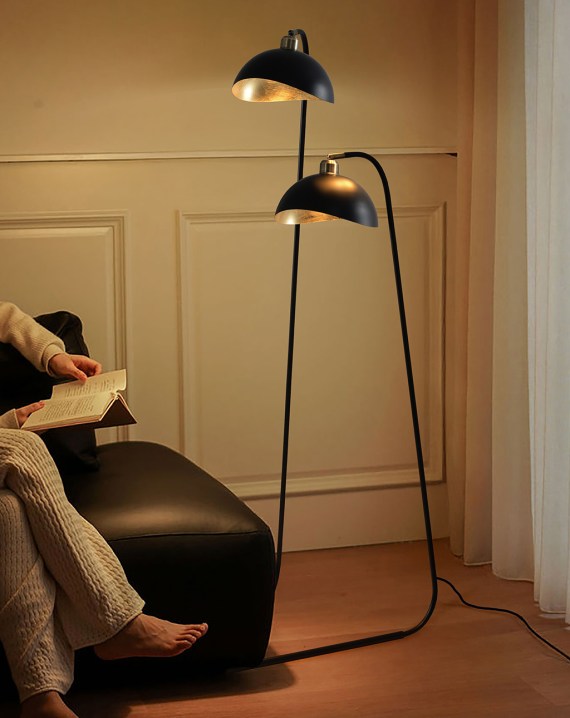
Floor Lamps for Living Rooms
The living room is typically the largest and most social space in the home, and its lighting needs to reflect that. Most designers recommend layering light, meaning combining ambient, task, and accent lighting rather than relying on a single source.
In a living room, a torchiere or arc lamp works well as the primary ambient source when paired with table lamps or wall sconces. The floor lamp’s job in this layered approach is to provide fill light that reduces the contrast between bright and dark areas, making the space feel balanced and comfortable. For rooms with high ceilings, taller floor lamps with upward-facing shades are more effective at bouncing light off the ceiling and distributing it evenly.
A useful real example: a family room measuring 18 by 20 feet with a vaulted ceiling. A single ceiling fixture in the center left the seating corners dim and the room feeling unfinished. Adding two torchiere floor lamps from Nova of California, placed symmetrically at opposite ends of the seating arrangement, solved the balance problem and added warmth that the overhead fixture alone could not achieve.
Floor Lamps for Bedrooms
Bedrooms call for softer, warmer light than most other rooms in the home. Overhead lighting in bedrooms is frequently too harsh for the relaxed activities that happen there, such as reading before sleep, winding down after a long day, or creating a calm morning routine.
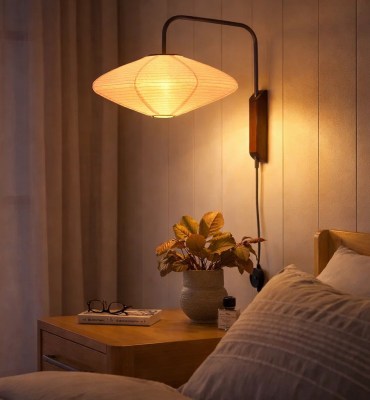
A bedside floor lamp offers a practical alternative to table lamps when there is limited surface space or when the nightstand is too small to accommodate a full lamp base. Arc lamps that extend over the bed from behind the headboard deliver clean downward light for reading without requiring the headside table at all. Many homeowners in both the USA and Canada prefer this arrangement in smaller bedrooms where nightstand space is at a premium.
When selecting a floor lamp for the bedroom, warm color temperatures between 2200K and 2700K are the most appropriate. This range mimics the warm glow of incandescent bulbs and supports the body’s natural wind-down process in the evening hours.
Floor Lamps for Home Offices
Home offices have specific lighting requirements that differ from social or rest spaces. The goal is to reduce eye strain, eliminate screen glare, and maintain enough brightness to support focus over long working hours.
Pharmacy and task floor lamps are the strongest performers in this context. A lamp placed to the side of a computer monitor, angled toward the desk surface rather than directly at the screen, provides supplemental light without creating reflections or glare on the display. For offices where video calls are common, a softer lamp placed behind the monitor, slightly off to one side, improves facial visibility on camera without washing out the frame.
The key mistake most people make in home office lighting is relying entirely on ceiling lights. Overhead lighting casts shadows downward onto desk surfaces and creates high contrast between the bright screen and the darker surroundings, which accelerates eye fatigue. A well-positioned floor lamp solves both problems at once.
Floor Lamps for Reading Nooks and Corners
Reading nooks and dedicated book corners are among the best places for a focused floor lamp. The lamp height, shade position, and bulb brightness all matter here. A reading lamp should ideally place the bottom of the shade at about eye level when the reader is seated, sending light downward at a slight angle onto the page rather than directly into the eyes.
Adjustable arm lamps with dimmer capability give readers the most control. Being able to increase brightness during daylight and reduce it during evening hours keeps the experience comfortable regardless of the time of day or the ambient light coming through nearby windows.
Floor Lamp Comparison: Torchiere vs Arc vs Tripod vs Pharmacy
| Lamp Type | Best Use | Light Direction | Style Fit | Typical Height |
| Torchiere | Ambient room fill | Upward | Modern, transitional | 68 to 72 inches |
| Arc | Over seating or tables | Downward | Contemporary, eclectic | 70 to 84 inches |
| Tripod | Decorative accent | Downward or diffused | Mid-century, Scandinavian | 58 to 66 inches |
| Pharmacy | Task and reading | Directional | Traditional, industrial | 60 to 65 inches |
| LED Smart | Multi-purpose | Adjustable | Any style | Varies |
This comparison makes it clear that no single lamp type wins in all situations. The best approach for most homes is selecting lamps based on the specific function of each room or zone, then matching the style of the lamp to the existing furnishings and decor.
The Role of Bulb Technology in Floor Lamp Performance
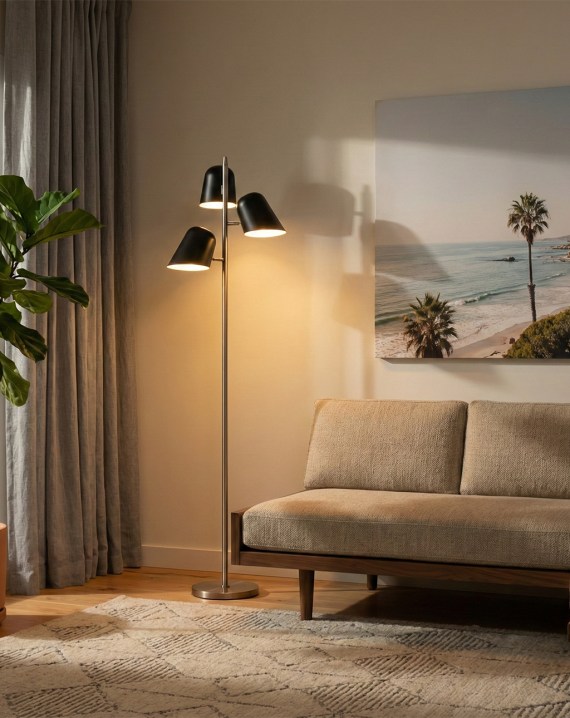
LED Bulbs and Energy Efficiency
LED technology has fundamentally changed what residential floor lamps can accomplish. A standard LED bulb used in floor lamps consumes between 8 and 15 watts while delivering the same lumen output as a 60 to 100 watt incandescent bulb. Over the course of a year, for a lamp used four to six hours per day, that difference translates to meaningful savings on electricity bills.
In Canada, where electricity costs vary significantly by province, energy efficiency is a practical consideration for most households. In Ontario, for example, time-of-use pricing makes high-wattage fixtures expensive during peak evening hours. A LED-equipped floor lamp from Nova of California running at 10 watts during those peak hours costs a fraction of what an older halogen torchiere would cost for the same usage period.
LED bulbs also have lifespans of 15,000 to 25,000 hours compared to the 1,000 hours typical of incandescent bulbs. For a floor lamp used regularly, that means years of operation without needing a bulb replacement.
Color Rendering Index and Light Quality
Beyond brightness and energy use, the quality of light depends heavily on the Color Rendering Index, or CRI. CRI measures how accurately a light source renders colors compared to natural daylight, on a scale from 0 to 100. A lamp with a CRI of 80 or above is generally considered acceptable for residential use, while lamps rated 90 or above deliver noticeably more vibrant and accurate color representation.
This matters practically in spaces like living rooms where upholstered furniture, rugs, artwork, and decorative objects have carefully chosen colors. A floor lamp with a low CRI can make a rich burgundy sofa look dull and flat. The same sofa under a high-CRI LED source looks accurate and vibrant. Nova of California incorporates high-CRI LED options across its floor lamp range to ensure that the light genuinely enhances rather than undermines interior color choices.
Floor Lamp Placement Strategies That Actually Work

The Corner Placement Method
Placing a floor lamp in a corner is one of the most effective strategies for adding ambient light to a room. The corner position allows the lamp to wash two walls with light simultaneously, creating a sense of depth and warmth that a lamp placed in the open center of a room cannot replicate.
This approach works especially well with torchiere lamps in living rooms with neutral or light-colored walls. The upward light bounces off the ceiling and both adjacent walls, producing soft, even illumination across a large area. In a dark-walled room, the contrast is even more dramatic, and a pair of corner-placed torchieres can make the space feel much larger and more inviting.
Flanking a Sofa or Bed
Placing two matching floor lamps on either side of a large sofa or at the head of a bed creates visual symmetry and ensures even light distribution across the seating or sleeping area. This is the same principle that interior designers apply when flanking furniture with table lamps, but floor lamps allow the placement to be adjusted without moving any furniture.
The symmetrical approach also works well for formal living rooms and primary bedrooms where the interior has a traditional or transitional aesthetic. Nova of California offers floor lamps in coordinating styles and finishes that are designed to work well as pairs, making this placement strategy easy to execute.
Using Floor Lamps as Accent Lighting
When directed at a wall, a piece of artwork, a bookcase, or an architectural feature, a floor lamp shifts from a functional light source into an accent tool. This technique, often called wall washing or object highlighting, adds drama and visual interest to a room at a relatively low cost.
A practical approach: position a narrow-shade floor lamp at a 30-degree angle to a textured stone or brick wall. The raking light emphasizes the texture of the surface and creates a dynamic visual effect that changes the character of the wall entirely. This is a trick used by professional interior designers that any homeowner can replicate with the right floor lamp.
Nova of California Floor Lamps: Design Philosophy and Product Range
Nova of California has been producing residential lighting fixtures that combine quality materials, thoughtful design, and practical functionality for years. The brand’s floor lamp collection addresses every major lighting need across the home, from simple ambient solutions to multi-function smart lamps.
The brand is particularly noted for its use of premium materials including brushed nickel, antique brass, matte black steel, and natural wood in its floor lamp bases. These finishes align with the dominant interior trends across North American homes, where mixed material interiors and transitional styles are especially popular.
Nova of California also pays close attention to lamp proportions. The height, shade diameter, and neck angle of each lamp are calibrated to work in standard residential ceiling heights of 8 to 10 feet, ensuring that the lamp does not feel undersized in the space or overwhelm a room with an oversize shade.
The brand’s commitment to energy efficiency means that most lamps in its current range come with LED-compatible or LED-integrated technology. For homeowners focused on reducing their environmental footprint while maintaining a refined interior aesthetic, this combination of design quality and responsible technology is a meaningful differentiator.
Real Comparison: Two Living Rooms, Two Different Floor Lamp Approaches
To make the impact of floor lamp selection concrete, consider two real-world scenarios from North American homes.
Scenario One: Open Plan Living Room in Toronto
A 20-by-22-foot open-plan living and dining room in a Toronto condo. The ceilings are 9 feet high, painted in a soft greige. The furniture is a mix of walnut wood and neutral upholstery. The existing lighting was a single recessed fixture in the center of the living area and a pendant over the dining table.
The homeowner added two Nova of California torchiere floor lamps in an antique brass finish, placed at the back corners of the seating area. The result was an immediate transformation. The previously dim corners brightened, the warm uplight softened the contrast between the ceiling fixture and the lower portion of the room, and the brass finish tied into the warm tones of the walnut furniture. The lamps were also significantly more affordable than rewiring for additional recessed fixtures, making the solution both practical and cost-effective.
Scenario Two: Home Office in Seattle
A 10-by-12-foot home office with a north-facing window that delivered cool, gray light throughout the day. The desk faced the wall, and the overhead fixture created a shadow over the work surface. Eye strain was a persistent problem during long work sessions.
The homeowner introduced a pharmacy-style floor lamp from Nova of California in a matte black finish, positioned to the left of the desk and angled toward the surface. The targeted illumination eliminated the shadow problem, and the adjustable arm allowed fine-tuning based on the task. On video calls, a second, softer lamp placed behind the monitor and off to the right side improved facial lighting without creating screen glare. The office went from being a frustrating workspace to a genuinely comfortable and functional room with two lamp additions and no structural changes.
Interior Style Matching: Choosing Floor Lamps That Fit Your Decor
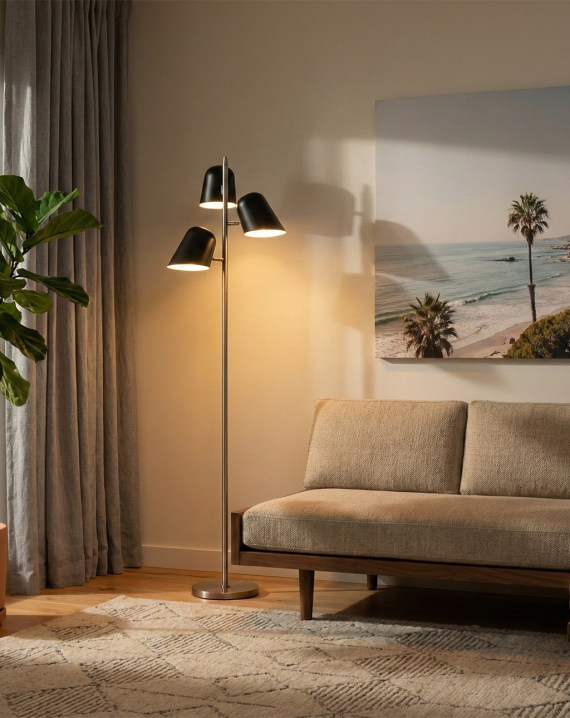
Modern and Contemporary Interiors
For sleek, modern spaces, floor lamps with clean geometric lines, minimal ornamentation, and finishes in matte black, chrome, or brushed nickel are the strongest choices. Slim tripod bases, cylindrical shades, and integrated LED strips align with the minimalist aesthetic that defines contemporary design in North American homes.
Avoid ornate bases, fussy shades, or overly decorative details in a modern space. The lamp should complement the room without competing with it. Nova of California offers a range of modern floor lamps designed specifically for this aesthetic, with attention to proportions that work in spaces where every element is intentional.
Traditional and Transitional Interiors
Traditional and transitional rooms call for floor lamps with more warmth and detail. Antique brass, oil-rubbed bronze, and dark walnut finishes work well here. Shade materials in cream linen, white cotton, or warm ivory complement the softer, layered quality of traditional interior design.
In transitional spaces, which blend traditional and modern elements, the floor lamp can serve as a bridge between the two aesthetics. A lamp with a classic form, such as a column-style torchiere, in a contemporary finish like satin nickel, occupies that middle ground effectively.
Mid-Century Modern and Retro Interiors
Mid-century modern interiors pair naturally with tripod floor lamps, arc lamps with shallow dome shades, and brass or warm gold finishes. The organic curves and warm metallic tones of mid-century design vocabulary are well served by floor lamps that reference the same era while incorporating modern LED technology.
Warm amber-tinted shade materials or amber-colored Edison-style LED bulbs reinforce the retro atmosphere in these spaces. Nova of California includes several mid-century influenced floor lamp designs that bring the visual language of the era into current production with updated materials and energy-efficient light sources.
FAQ: Floor Lamps for Home Lighting
What height should a floor lamp be for a standard room?
Most residential floor lamps range from 58 to 72 inches in total height. For rooms with 8-foot ceilings, a lamp in the 60-to-66-inch range provides proportional scale. Taller lamps work better in spaces with 9-foot or higher ceilings. The general rule is that the top of the shade should sit at approximately 6 feet when the lamp is on the floor.
How many lumens does a floor lamp need for a living room?
For ambient lighting in an average living room, a floor lamp delivering 800 to 1600 lumens is appropriate. For task lighting, such as reading, a lamp with 450 to 800 lumens aimed directly at the reading surface is sufficient. Torchiere lamps often produce 2000 to 3000 lumens because they light indirectly through ceiling reflection, requiring more raw output to achieve the same practical brightness.
Are LED floor lamps safe for long periods of use?
LED floor lamps run cooler than halogen or incandescent alternatives and are safe for extended use. They do not produce the heat buildup that older bulb technologies create, which also reduces fire risk near curtains, furniture, and other flammable materials.
Can a floor lamp replace overhead lighting?
In many rooms, a combination of floor lamps can effectively replace a central overhead fixture, particularly in bedrooms and living rooms. Designers often prefer this layered approach because it provides more control over the direction, intensity, and atmosphere of the light. However, in kitchens, bathrooms, and hallways, overhead lighting is typically more practical for safety and utility reasons.
What is the best floor lamp for a small apartment?
For small apartments, slim tripod lamps with narrow footprints, arc lamps that extend over furniture without occupying floor space beneath, and adjustable torchieres with small bases are the most practical options. The priority in small spaces is minimizing the floor footprint of the lamp while maximizing the light coverage. Nova of California designs several lamp models specifically proportioned for compact urban living spaces.
How do smart floor lamps connect to home systems?
Most smart floor lamps connect via Wi-Fi or Bluetooth to smartphone apps and are compatible with major smart home ecosystems including Amazon Alexa, Google Home, and Apple HomeKit. Some models also include physical dimmer switches for manual control without requiring a phone or voice command. Nova of California smart lamps include app-based scheduling, which allows the lamp to turn on and off automatically at preset times.
What type of floor lamp works best next to a sofa?
Arc lamps are particularly well suited to sofa placement because the extended arm brings the light source over the seating area without the lamp base sitting in an awkward position beside the sofa. Pharmacy lamps work well for a reading chair or chaise that requires focused light. A torchiere placed behind or beside the sofa is a strong choice when ambient fill is the priority rather than directed task light.
How do I prevent a floor lamp from tipping over with children or pets in the home?
Weighted bases, wide tripod footprints, and floor lamps with a low center of gravity are more stable than tall, narrow post lamps. Many Nova of California floor lamps feature heavy bases with rubberized feet that grip flooring surfaces. For homes with very young children or active pets, it is also advisable to route cords along the wall and secure them with cord clips to reduce tripping hazards.
Maintenance and Care for Residential Floor Lamps
Keeping floor lamps in good working order requires minimal effort, but consistent attention to a few details extends their life and performance significantly.
Shade cleaning is the most frequent maintenance task. Fabric shades accumulate dust quickly and should be dusted with a soft brush or a low-suction handheld vacuum every two to four weeks. Metal and glass shades can be wiped with a slightly damp cloth and then dried immediately to prevent water marks.
Bulb replacement in LED-compatible lamps is infrequent, but when it is needed, always match the new bulb to the wattage rating listed on the lamp’s socket label. Exceeding the recommended wattage creates heat buildup and can damage the shade or the socket over time.
Cord inspection is worth doing once or twice per year. Look for fraying, cracking, or any visible damage to the cord or plug. Damaged cords should be replaced by a qualified electrician and the lamp should not be used in the interim. Nova of California builds its lamps with quality-graded cords and strain relief at the plug connection, but physical damage from furniture legs, vacuum cleaners, or door frames can occur over time with any lamp.
Final Thoughts on Selecting the Best Floor Lamps for Your Home
Floor lamps offer one of the highest returns on investment available in residential interior design. A well-chosen lamp changes the feel of a room, improves the functionality of a workspace, adds architectural presence to a bare corner, and does all of it without the cost or disruption of a renovation.
The key is matching the lamp type to the room’s specific lighting need, selecting a style and finish that aligns with the existing interior, and choosing a quality product built to last. Nova of California brings all three of those elements together across its residential floor lamp collection, serving homeowners across the USA and Canada who want functional beauty without compromise.
Whether the space calls for the soft fill of a torchiere, the focused beam of a pharmacy lamp, the sculptural statement of a tripod, or the sweeping drama of an arc, the right floor lamp is available to meet the need. The decision comes down to understanding the space, setting a clear intention for what the light should accomplish, and choosing a lamp that delivers on both counts.
Nova of California floor lamps are available for residential customers across the United States and Canada.