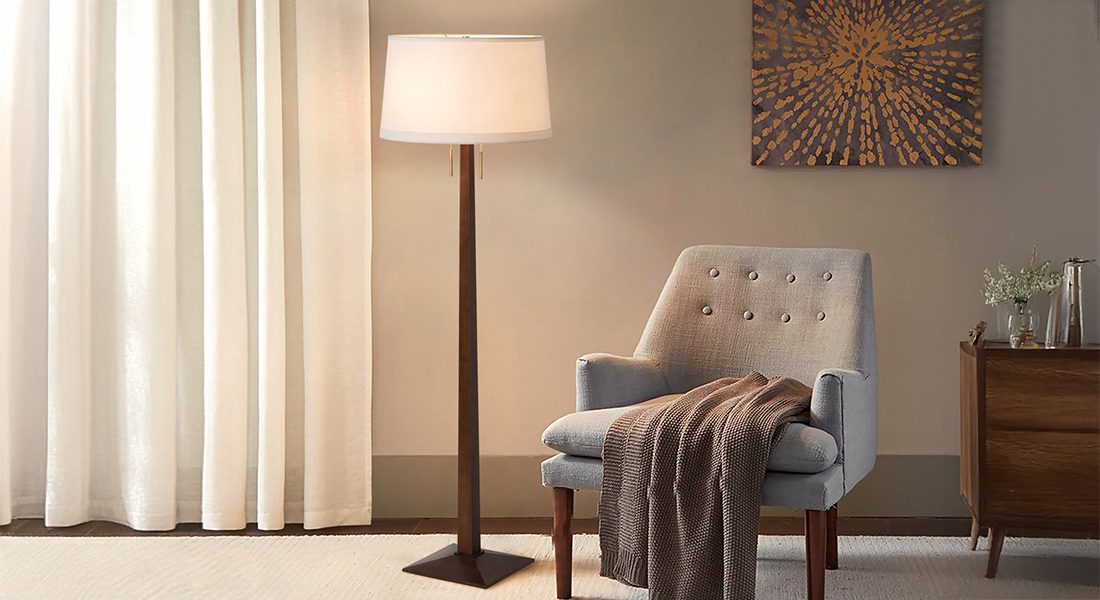
A floor lamp buying guide should start with the room and its purpose rather than the lamp itself. Choose the lamp category (arc, tree, slimline, torchiere, or sculptural) based on the light direction you need. Then match the height to your ceiling and the finish to your existing furniture. Budget ranges from $300 to $1,700 depending on materials and design complexity.
Most people shop for a floor lamp the wrong way around. They start with style. They scroll through photos and pick something that looks nice. Then they bring it home. And it does not work. The height is off. The light goes in the wrong direction. The shade color clashes with the wall behind it. Three weeks later the lamp sits in a corner half forgotten with a jacket draped over the arm.
This guide flips the order. Start with the room. Figure out what the light needs to do. Then find the lamp that does it. This approach takes slightly more thought upfront but it eliminates the return trips and the settling for something that is just okay.
Table of Contents
Rooms are not interchangeable when it comes to light. A living room with a large sectional needs overhead coverage that a table lamp cannot deliver. A bedroom needs soft indirect glow that will not keep you awake at 11 PM. A home office needs focused task light aimed at a desk surface. A hallway needs ambient warmth from something that takes up almost no floor space.
Before you look at a single lamp write down two things. First: where will the lamp sit? Measure the available floor space. Note how far the nearest wall is and whether there is furniture on both sides. Second: what should the light do? Ambient fill. Focused reading light. Overhead coverage over a table. Decorative accent. The answer narrows your options immediately.
The Illuminating Engineering Society recommends 300 to 500 lux for reading and detailed tasks. General ambient lighting in a living room sits around 150 to 300 lux. Most quality floor lamps with 1,500 lumen LED bulbs deliver that range comfortably at typical room distances. Knowing the target range helps you evaluate whether a lamp will actually serve the purpose or just sit there looking good.
Step Two: Match the Lamp Category to the Job
Floor lamps split into five main categories. Each one sends light in a different direction. That direction is the single most important factor in how the lamp performs in your room.
Arc Floor Lamps
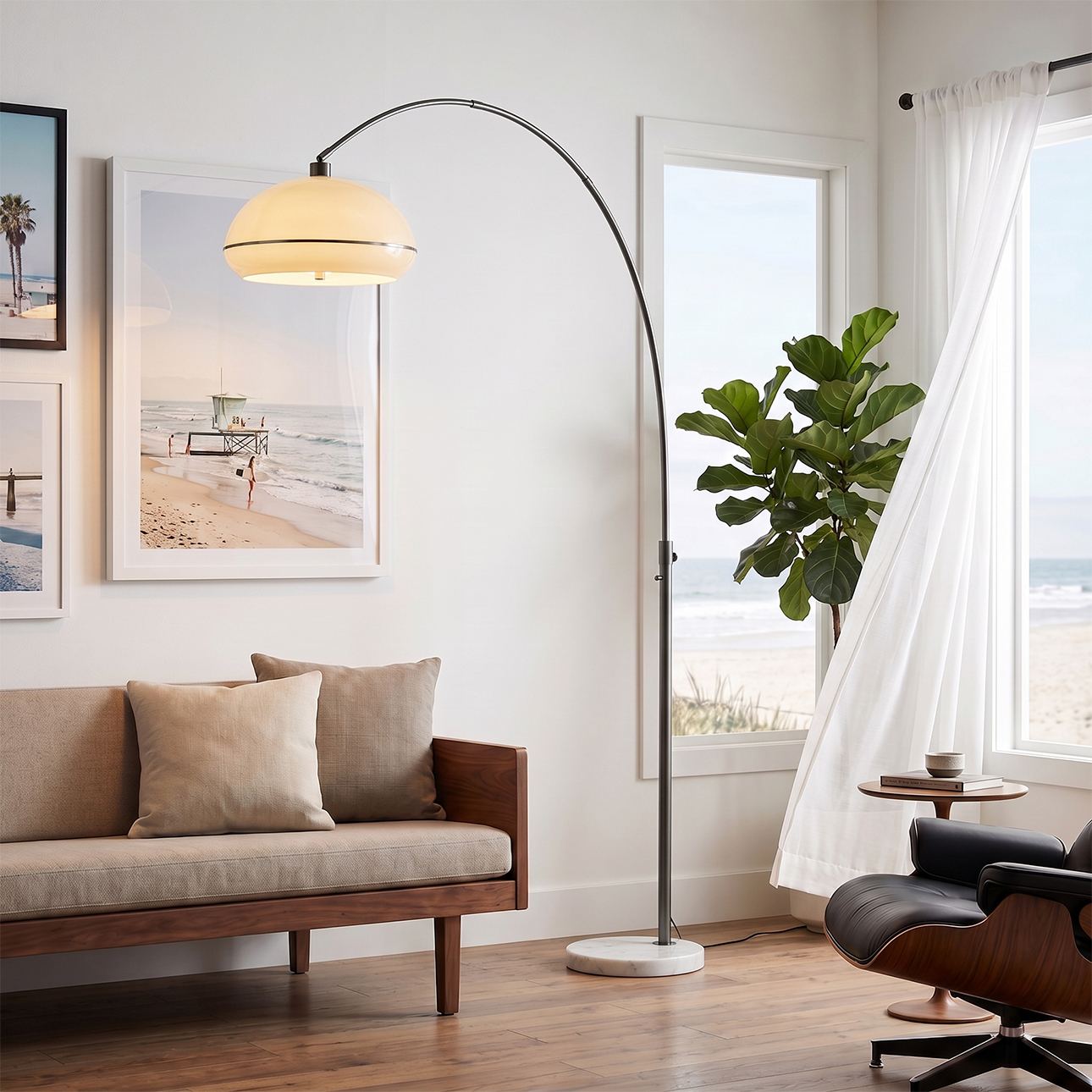
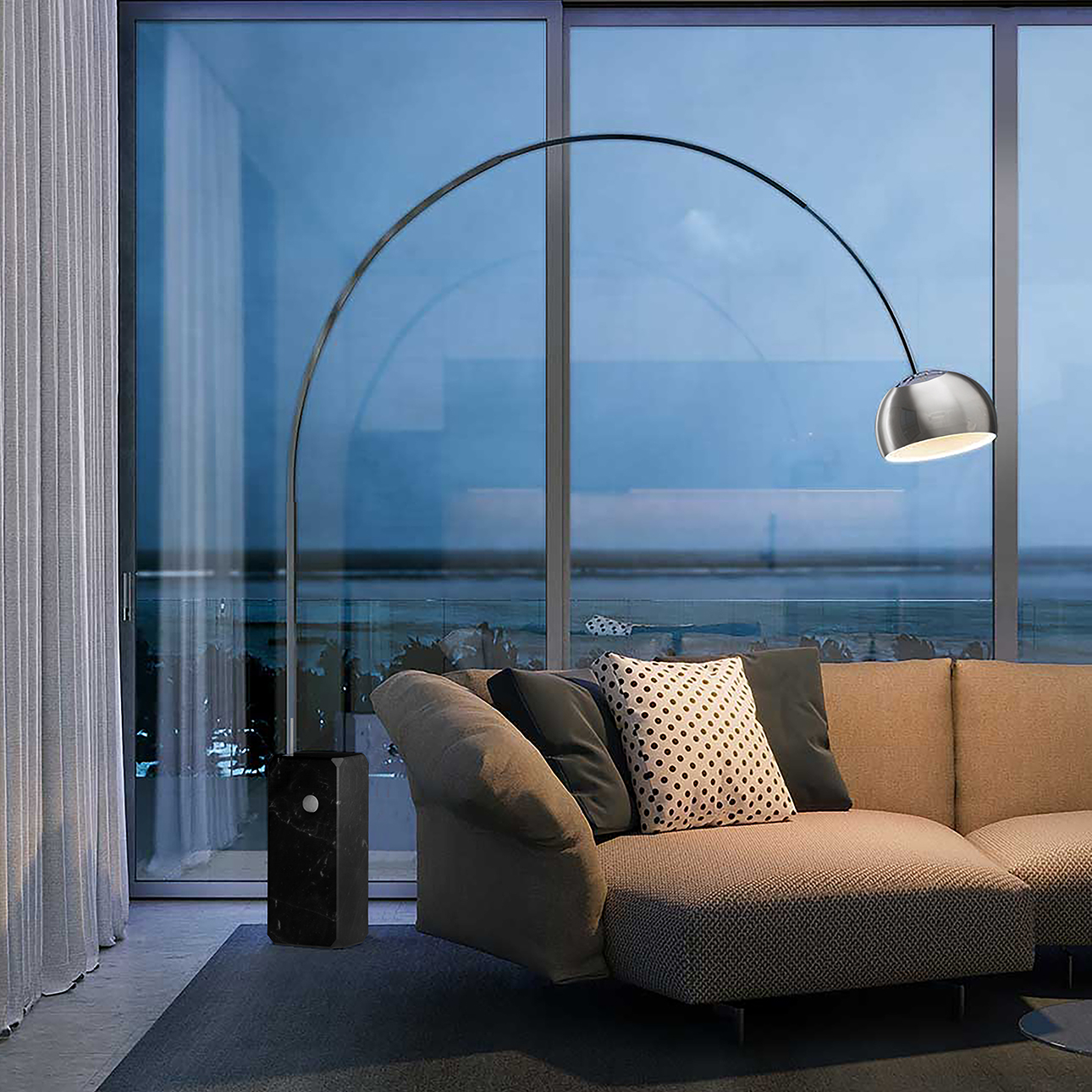
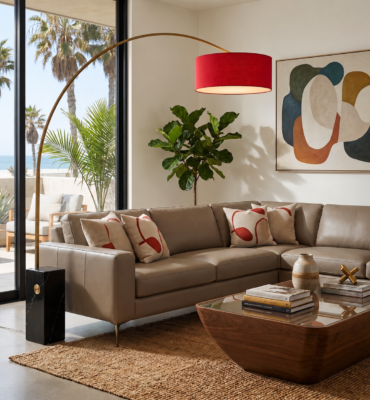
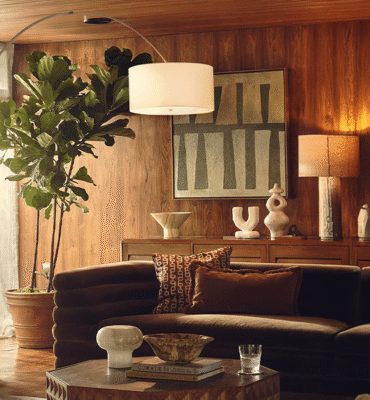
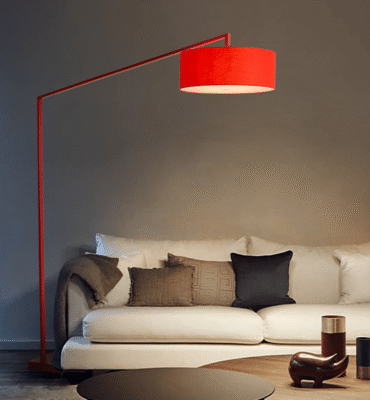
An arc lamp curves outward from the base and places the light source 4 to 6 feet away. The light comes from above like a pendant or chandelier but without any ceiling installation. This is the right choice for dining tables without overhead fixtures. It also works over the arm of a large sofa or a sectional corner. Nova of California designed its first arc lamp in 1961 and the category remains the core of the collection today.
Related: Best Arc Lamps for Modern Living Rooms in 2026
Tree Floor Lamps
A tree lamp branches into two or three separate heads from a single base. Each head can angle independently. That means one lamp covers multiple zones. Aim one head at a reading chair. Point another at the wall to wash it with ambient glow. The Encinitas 3 Light Tree Floor Lamp from Nova does exactly this. Three weathered brass heads with wood shade details. Each one adjustable.
Slimline and Column Lamps
Column lamps have a vertical profile. They stand straight up with a shade at the top. The footprint is small. The light radiates outward at standing height. These are the right choice for tight spaces. Hallways. Bedroom corners. The area between a sofa and a wall. Nova’s Slimline series comes in four configurations ranging from $599 to $899 depending on the shade and finish combination.
Torchiere Floor Lamps
A torchiere directs all of its light upward. The shade opens toward the ceiling and bounces light back down as soft ambient fill. There is no glare. No hot spots. Just even gentle light across the room. Torchieres work well as secondary light sources in rooms that already have a primary fixture or an arc lamp. They fill the gaps that other lamps leave.
Sculptural and Accent Lamps
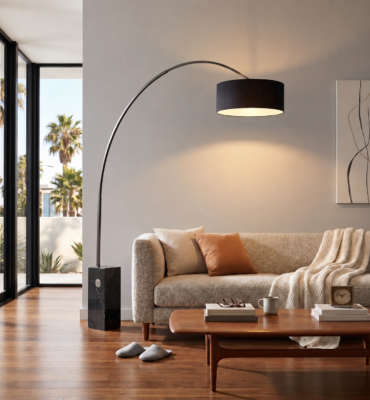
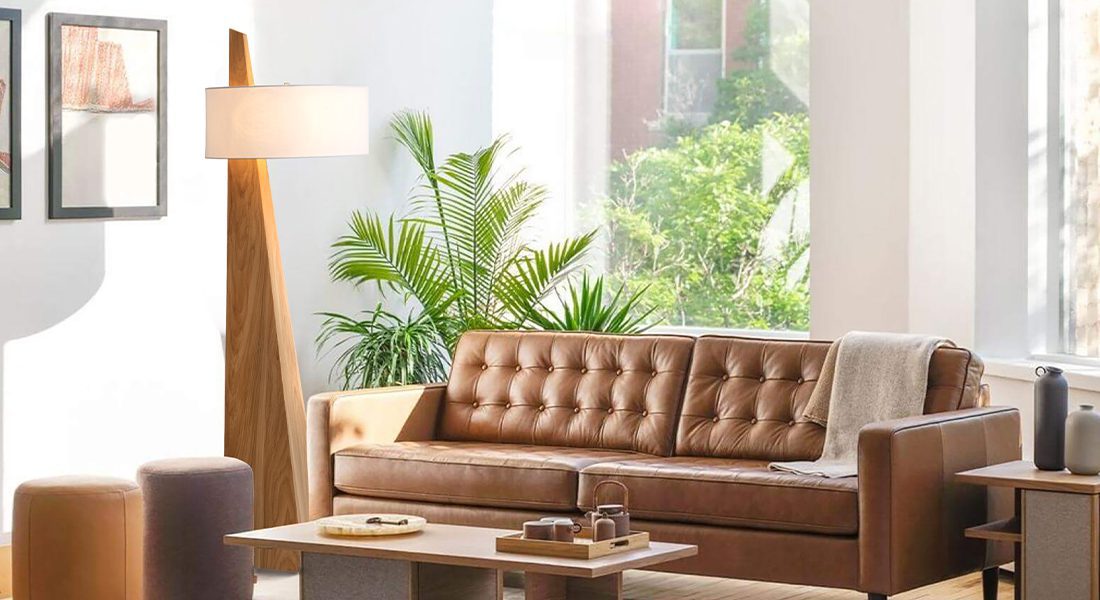
Sculptural lamps prioritize visual presence. They are furniture as much as they are lighting. The Iconic from Nova stands 95 inches tall on a black marble base and weighs 146 pounds. It is a design object that also produces light. At $1,399 it is priced for spaces where the lamp itself is part of the decor strategy. The Tambo Cylindro takes a quieter approach. A 60 inch frosted acrylic column that glows like a light pillar. Place it beside a console and it changes the mood of the room without demanding your attention.
| Explore Nova of California Floor Lamps at novaofcalifornia.com |
Step Three: Get the Height Right
Height mistakes are the most common error in floor lamp buying. The math is simple but most people skip it.
For standard rooms with 8 foot ceilings you want floor lamps between 58 and 80 inches tall. The bottom of the shade should sit at or slightly above seated eye level. That is roughly 42 to 48 inches from the floor. If the shade sits too low the bulb is visible and the light glares into your eyes. If it sits too high the light misses the zone where you actually sit.
For rooms with 9 foot ceilings or higher taller lamps come into play. The Luna Bella at 92 inches and the Iconic at 95 inches are scaled for these rooms. In an 8 foot ceiling room those same lamps would feel like they are pressing against the ceiling. They need vertical breathing room.
Arc lamps follow a different rule. The arm extends outward so the overall height matters less than the reach. The Morelli at 85 inches has a 71 inch reach. That means the shade sits roughly 5 to 6 feet from the base horizontally. Measure from where the base will sit to where you want the light to land. If that distance exceeds the reach of the lamp the arc will not clear the furniture.
Related: Best Floor Lamps That Transform Your Home
Step Four: Choose a Finish That Connects to Your Room
Floor lamp finishes fall into three families at Nova of California. Weathered brass. Satin nickel. And matte black. Each one sets a visual temperature.
Weathered brass pairs with warm materials. Wood furniture. Linen upholstery. Cream and camel fabrics. If your room has oak or walnut tones then weathered brass will feel like it belongs there. It is Nova’s signature finish and it appears across the full lamp lineup.
Satin nickel reads cooler. Gray sofas. Glass tabletops. Metal shelving units. If the dominant material in your room is cool toned then satin nickel will complement rather than compete.
Matte black does not push warm or cool. It anchors. A matte black lamp lets the shade and the light do the talking. It works in almost any room because it does not introduce a new color temperature. It just sits there and holds the space.
One practical tip. If you are buying more than one floor lamp for the same room use the same finish across all of them. An arc lamp in weathered brass paired with a tree lamp in satin nickel will feel disconnected. Same finish across different lamp styles creates visual continuity without matching shapes.
Step Five: Think About the Shade Material
The shade determines two things. How the light looks when the lamp is on. And how the lamp looks when it is off.
White linen drum shades produce warm diffused light. The fabric softens the output and spreads it evenly. These shades glow when the lamp is on. When the lamp is off they read as clean and classic. The Slimline Drum and the Tambo both use linen shades and the resulting light quality is similar.
Scallop shades add texture. The ridged surface creates small shadow patterns on nearby walls. The effect is subtle but it gives the light visual interest beyond a simple warm glow. Nova’s Scallop Slimline and Tambo Scallop use this shade type.
Frosted acrylic diffuses light more evenly than fabric but with a cooler tone. The Tambo Cylindro uses frosted acrylic to create a column of clean white light. No color cast. No shadow patterns. Just even diffusion.
Natural mica shades produce a warm amber glow. The mineral material is translucent and each panel is slightly different. No two mica shades produce exactly the same light pattern. The Natural Mica 3 Light Arc Floor Lamp at $699 uses this material and the resulting warmth is distinctive.
Related: Best Statement Piece Floor Lamps for Luxury Interiors
Step Six: Set a Budget and Understand What Moves the Price
Nova of California floor lamps range from $299 for the Palm Springs 1 Light Arc to $1,699 for the Tambo Scallop. That spread covers a wide territory. Understanding what drives the price helps you decide where your money goes.
Base material is the biggest factor. Metal bases with weighted bottoms cost more than lightweight tripod frames. The Iconic uses a solid black marble base. That single component accounts for much of its price. Marble is heavy. It is expensive to source and to ship. But it also means the lamp will never tip over.
Shade material is the second factor. Natural mica and handfinished scallop shades cost more than plain white linen. The difference shows up in light quality and visual detail. Whether that difference is worth it depends on how close the lamp sits to where you spend time. A lamp in the far corner of a room does not need an elaborate shade. A lamp beside your reading chair does.
Number of light sources matters too. The Encinitas 3 Light Tree is priced higher than the single head Tambo partly because it requires three sockets and three shades. More light sources means more parts. More assembly. More testing.
All Nova floor lamps ship with 14 watt E26 LED bulbs rated at 1,500 lumens and 2700K color temperature with CRI 95+. That bulb lasts roughly 25,000 hours. At 4 hours daily use you are looking at over 17 years. Every lamp across the price range includes the same quality bulb. The light output does not scale with price. The design and materials do.
Frequently Asked Questions
What is the most important thing to consider when buying a floor lamp?
Light direction. Different lamp categories send light in different directions. Arc lamps provide overhead coverage. Tree lamps cover multiple zones. Slimline lamps radiate at standing height. Torchieres bounce light off the ceiling. Match the direction to the job you need the lamp to do.
How tall should a floor lamp be for an 8 foot ceiling room?
Between 58 and 80 inches. The bottom of the shade should sit at or slightly above seated eye level which is about 42 to 48 inches from the floor. Taller lamps like the 92 inch Luna Bella work better in rooms with 9 foot ceilings or higher.
Do floor lamps work as the only light source in a room?
In small to medium rooms yes. A 1,500 lumen floor lamp provides enough ambient light for a bedroom or den. Larger living rooms benefit from two floor lamps or a floor lamp combined with table lamps. Layered lighting always produces a better result than a single source.
What floor lamp finish works in any room?
Matte black. It does not push warm or cool. It anchors the lamp visually and lets the shade and light quality define the mood. Weathered brass works best in warm toned rooms. Satin nickel works best in cool toned rooms. Matte black works in both.
| Find Your Floor Lamp at NOVA |