
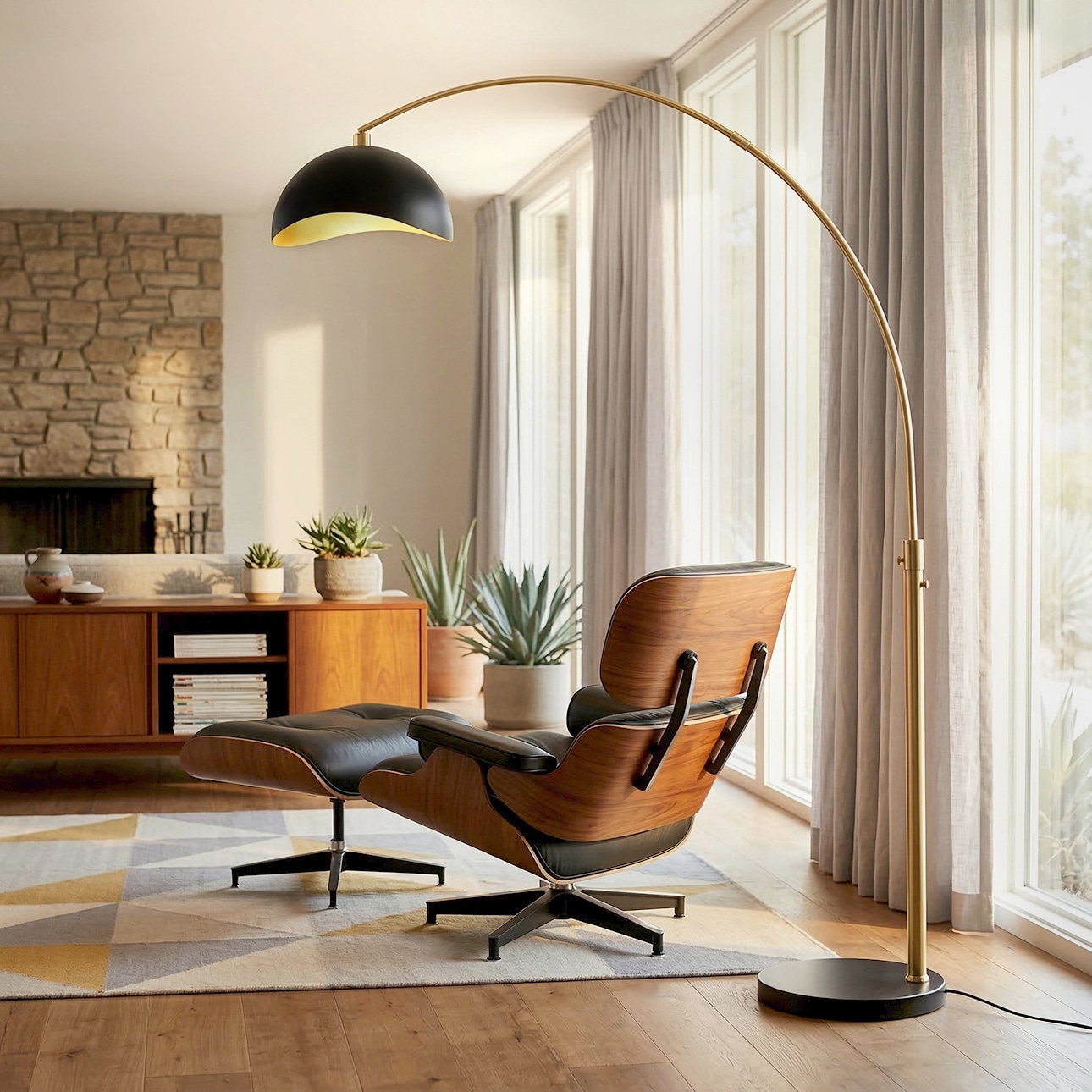
If you’ve spent any time working from home, you already know how much lighting affects your energy, focus, and the way you feel by the end of the day. A poorly lit home office isn’t just uncomfortable, it’s quietly working against your productivity, your posture, and your mood. In 2026, that’s no longer acceptable, especially when the lighting options available today are more intelligent, more beautiful, and more affordable than ever before.

At Nova of California, we have spent years helping homeowners across the USA transform ordinary workspaces into high-performance, visually stunning home offices. Luxury home office lighting is no longer reserved for architects or interior designers with six-figure budgets. With the right knowledge and the right fixtures, you can build a workspace that looks and performs at a genuinely professional level.
This guide covers everything — from the science of task illumination to the aesthetics of statement chandeliers, from smart lighting ecosystems to the layered lighting philosophy that top designers swear by. Whether you’re starting from scratch or refining an existing setup, you’ll walk away with a clear, actionable roadmap.
Why Home Office Lighting Is More Important Than You Think
Most people treat lighting as an afterthought. They pick up whatever overhead fixture came with the house, add a desk lamp from a big-box store, and call it done. That’s a mistake that costs them more than they realize.
Research in environmental psychology consistently shows that lighting quality directly influences cognitive performance, circadian rhythm regulation, and emotional wellbeing. When your home office lighting is mismatched to your work, too dim for focused tasks, too harsh for extended screen sessions, or lacking the warm tones needed to decompress your brain and body.
The Hidden Costs of Poor Lighting
Here’s what’s actually happening when your lighting is off:
• Eye strain and headaches from high-contrast glare or insufficient task light
• Disrupted sleep patterns due to blue-spectrum light exposure in the evening
• Reduced alertness and slower cognitive processing in low-lux environments
• Neck and shoulder tension from compensating posture in poorly lit workspaces
• Lower perceived professionalism in video calls when your lighting is unflattering
The good news is that all of these problems are entirely solvable with thoughtful home office lighting design. And the even better news is that solving them can also make your workspace genuinely beautiful.
The Layered Lighting Philosophy for Home Offices
Interior designers and lighting specialists use a concept called layered lighting and it’s the single most important principle you can apply to your home office. Instead of relying on one light source to do everything, you build your lighting environment in layers, each serving a distinct purpose.

There are three core layers, and a well-designed home office uses all of them:
Layer 1 — Ambient Lighting
Ambient lighting is your room’s base illumination. It fills the space evenly, eliminates harsh shadows, and sets the overall mood. In a home office, this might be recessed LED downlights, a flush-mount ceiling fixture, or a statement chandelier. The goal isn’t brilliance, it’s comfortable, consistent light that makes the room functional without visual fatigue.
For a typical 10×12 home office, I’d recommend ambient fixtures delivering around 300 to 400 lumens per square foot. That’s enough for general visibility without washing out the space.
Layer 2 — Task Lighting
Task lighting is where productivity lives. This is the directed, higher-intensity light you use for your desk work, reading, writing, or detailed screen-based tasks. A well-positioned LED desk lamp, an adjustable swing-arm wall sconce above the desk, or a focused pendant fixture can all serve as excellent task lighting.
The critical spec here is color rendering index (CRI). For task lighting, you want a CRI of 90 or above. That means colors and details appear accurately, which reduces the cognitive load your eyes experience when interpreting what you’re looking at. Pair that with a color temperature of around 4000K to 4500K during peak work hours, and you’ve got a task lighting setup that genuinely supports focus.
Layer 3 — Accent Lighting
Accent lighting is what separates a functional home office from a luxury home office. These are the statement details LED strip lights behind your monitor creating bias illumination, a picture light highlighting artwork on your wall, recessed spotlights drawing attention to your bookshelf, or undercabinet lighting adding depth and warmth to your workspace aesthetic.
Accent lighting contributes about 10 to 20 percent of the total light in a room but does a disproportionate amount of the aesthetic heavy lifting. It’s also where you can really express your personal design sensibility.
Home Office Lighting Trends Defining 2026
The lighting industry moves fast, and 2026 is shaping up to be one of the most exciting years for home office lighting design. Here’s what’s actually happening in the market and in high-end home installations right now.
Circadian Rhythm Lighting Systems
This is arguably the biggest trend in home office illumination right now. Circadian lighting systems automatically adjust both the color temperature and intensity of your lights throughout the day to mirror the natural progression of sunlight.
In the morning, your lights gradually brighten with cooler, blue-enriched tones that signal wakefulness and support cortisol production. Through the afternoon, they hold a focused, neutral white. In the evening, they warm significantly, shifting to amber tones that support melatonin production and tell your body it’s time to wind down.
For example, a homeowner in Los Angeles who switched to a circadian lighting system in their home office reported falling asleep faster and feeling noticeably sharper during morning work sessions within just two weeks. That’s not unusual, it’s what biology predicts.
Human-Centric Lighting Design
Closely related to circadian lighting, human-centric lighting (HCL) takes a broader view. It’s a design philosophy that treats light not just as a functional necessity but as an active tool for supporting human health, wellbeing, and performance. In 2026, HCL principles are showing up in luxury home office designs across the USA in a very tangible way: tunable white fixtures, melanopic lux measurements, and non-visual lighting effects are all part of the conversation.
Integrated Smart Lighting Ecosystems
Smart lighting in the home office has matured significantly. We’ve moved well past the novelty of voice-controlled bulbs. Today’s smart lighting ecosystems platforms like Lutron Camera, Philips Hue professional, or custom DMX systems allow for scene-based control, occupancy sensing, daylight harvesting, and seamless integration with productivity apps.
Imagine your lighting automatically shifting to a focused work scene when you open your task management app, then transitioning to a softer, warmer profile when you switch to a video call. That level of integration is available right now, and it’s becoming a standard feature in luxury home office builds.
Sculptural and Architectural Fixtures
On the design side, 2026 is seeing a strong move toward lighting as furniture sculptural statement pieces that function as room-defining art. Think oversized geometric pendants in brushed brass or matte black, LED installations that create a canopy of light above the desk, or minimalist Japanese-inspired floor lamps that contribute to the room’s design language as much as any other piece of decor.
Nova of California’s approach has always been to treat every fixture as both a functional tool and a design statement. In 2026, the wider market is catching up to that philosophy.
Home Office Lighting Types at a Glance
The table below gives you a quick reference for choosing the right lighting type based on your specific needs, energy goals, and desired ambiance level.
| Lighting Type | Best Use Case | Energy Efficiency | Ambiance Level |
| LED Recessed | General illumination | Very High | Moderate |
| Pendant Lights | Task & focal point | High | High |
| Desk Lamps | Close task work | High | Moderate |
| LED Strip Lights | Accent & bias lighting | Very High | Very High |
| Chandeliers | Statement & luxury | Moderate | Very High |
| Smart Bulbs | Adaptive full-room | High | Adjustable |
| Floor Lamps | Ambient fill light | Moderate | High |
| Wall Sconces | Decorative accent | Moderate–High | High |
How to Design Your Home Office Lighting Layout
Understanding the theory is one thing. Actually planning and executing a lighting layout is where most homeowners get stuck. Let me walk you through the process step by step.

Step 1 — Assess Your Natural Light First
Before you touch a single fixture, understand what you’re working with in terms of daylight. Note which direction your windows face, how much light you get at different times of day, and whether glare on your monitor is already an issue.
North-facing offices in the USA get consistent, diffuse daylight great for color work and easy to control. South-facing offices get strong direct sun that can cause both glare and heat. East-facing offices are bright in the morning and dim in the afternoon. West-facing offices do the opposite.
This assessment shapes everything. If you get abundant morning sun, you might not need task lighting until noon. If your office faces north, you’ll need to compensate with higher-quality artificial light throughout the day.
Step 2 — Calculate Your Lumen Requirements
Use the simple formula: multiply your room’s square footage by the recommended lumens per square foot for an office environment. For general office work, that’s 300 to 500 lumens per square foot. For a 120 square foot home office, you’re targeting between 36,000 and 60,000 total lumens distributed across all your lighting layers.
Don’t panic at those numbers. Recessed LED downlights typically deliver 600 to 800 lumens each. An 8-inch flush LED fixture might deliver 3,000 to 4,000 lumens. You reach your targets faster than you’d expect when you layer intelligently.
Step 3 — Plan Your Fixture Positions
Position your ambient fixtures to cover the room evenly without creating hotspots directly above your desk. Task lighting should come from the side opposite your dominant hand if you’re right-handed, your desk lamp should come from the left. This prevents your writing hand from casting a shadow across your work.
For monitor setups, place your primary light source to the side of the screen rather than directly behind you (which creates reflection) or directly in front (which causes glare on the display). Bias lighting an LED strip behind your monitor is one of the easiest and most impactful additions you can make.
Step 4 — Select Your Fixtures With Both Function and Form in Mind
This is where you translate the technical plan into actual product choices. At Nova of California, we always guide clients to start with the fixture that will be the room’s visual anchor, usually the ceiling fixture or the desk lamp and build outward from there in terms of finish, style, and scale.
Mixing metals is acceptable and often adds visual richness, but mixing too many design styles can create visual noise. Choose two to three complementary finishes, say, brushed nickel, warm brass, and matte black and stick to them across your fixtures, hardware, and accessories.
The Best Lighting Fixtures for a Luxury Home Office in 2026
Let’s get specific. Here are the fixture categories that belong in a truly well-designed luxury home office, with practical guidance on each.
Adjustable LED Recessed Downlights
These are the workhorse of modern home office ambient lighting. Quality LED recessed fixtures with adjustable color temperature (CCT) give you the flexibility to shift your room’s mood and functionality throughout the day without changing a single bulb. Look for fixtures with a CRI of 90 or above, a beam angle adjustable between 25 and 60 degrees, and compatibility with your smart home platform.
One practical tip: install more recessed lights than you think you need and put them on a dimmer. It’s far easier and cheaper to dim the lights you have than to add more later. I’d rather have eight dimmable downlights than four at full intensity.
Architectural Pendant Lights
A pendant light above or beside the desk does double duty; it provides directional task illumination and serves as the room’s visual focal point. In 2026, the strongest design trends favor oversized artisanal pendants (hand-blown glass, hand-formed metal) and minimalist geometric forms in premium finishes.
Scale matters more than most people realize. A pendant that’s too small for the room looks tentative and unresolved. As a general rule, add the room’s length and width in feet, then use that number in inches as the fixture’s diameter. A 10×12 room would call for a pendant roughly 22 inches in diameter.
High-Performance LED Desk Lamps
Your desk lamp is the most used fixture in your home office, and it deserves a genuine investment. The best home office desk lamps in 2026 offer full-spectrum LED arrays, stepless dimming, tunable white output from 2700K to 6500K, USB-C charging ports, and touch-sensitive controls. Some premium models include integrated ambient sensors that automatically adjust brightness based on the room’s light level.
For extended screen-based work, look specifically for flicker-free technology. Standard LED flicker even when invisible to the naked eye contributes to visual fatigue at a neurological level. It’s a spec worth paying a premium for.
LED Strip Lighting and Bias Illumination
LED strip lights have become genuinely sophisticated tools in the luxury home office context. High-density RGBWW strips with CRI 95+ output are now widely available and can be profiled precisely to match your room’s other light sources. Behind the desk, under floating shelves, inside built-in cabinetry, or along ceiling coves strip lighting adds depth and dimensionality that no other fixture type can match at the same cost.
For bias lighting specifically that glow behind your monitor a 6500K cool white strip on a dimmer creates the reference standard used in professional video editing suites. It’s the same setup colorists and photographers use to ensure accurate color perception.
Statement Chandeliers and Sculptural Pendants
If your home office has high ceilings or is designed as a statement room, a chandelier or dramatic sculptural pendant can elevate the space from impressive to genuinely extraordinary. Crystal chandeliers with LED retrofit bulbs, modern linear chandeliers in smoked glass and matte steel, and organic-form rattan or woven pendants are all strong choices for 2026.
The key with a statement chandelier in a home office is to ensure it doesn’t compete with your task lighting. The chandelier sets the room’s tone; the desk lamp and recessed lights do the functional work.
Smart Home Office Lighting Setting Up Your Ecosystem
Smart lighting is no longer optional for a luxury home office setup. Here’s how to build a system that genuinely serves your workflow rather than just adding technical complexity.
Choosing Your Smart Lighting Platform
The three major ecosystems worth considering for a US home office in 2026 are Lutron (best-in-class for reliability and build quality), Philips Hue (widest fixture variety and third-party integration), and LIFX (excellent color quality without requiring a hub). If you’re already invested in Apple HomeKit, Google Home, or Amazon Alexa, verify compatibility before purchasing.
For a luxury install, I’d strongly recommend Lutron’s Caedra or RadioRA systems. They’re wired, reliable, and designed for permanent residential installation rather than the plug-and-play rental market.
Programming Scenes That Actually Help You Work
The real value of smart lighting is in scenes pre-programmed states that set your entire room’s lighting to match a specific activity. Here are the four scenes every home office should have:
• Focus Mode: 4500K, 100% brightness on task lights, 60% on ambient, no accent lighting
• Video Call Mode: 3000K, 70% brightness from a front-facing angle, minimal backlight
• Creative Mode: 3500K, 80% ambient, 100% accent lighting to inspire visual thinking
• Wind-Down Mode: 2700K, 30% all sources, warm accent lighting only
Set these up with a single button or voice command, and you’ll find yourself actually using them rather than manually adjusting fixtures every time your work mode shifts.
Integrating Daylight Sensors
A daylight sensor (photocell) connected to your smart lighting system automatically compensates for the available natural light in your office. When a cloud passes over and your room dims, the system brightens your artificial lights to maintain your target illuminance. When afternoon sun floods the room, it dims down to avoid over-lighting.
This kind of closed-loop control is what separates a luxury smart lighting installation from simply having smart bulbs. It’s set-and-forget automation that makes your home office feel perfectly lit at every hour of the day.
Energy Efficiency and Sustainability in Home Office Lighting
Luxury and sustainability aren’t in conflict in 2026, the most sophisticated home office lighting systems are also the most energy-efficient ones. Here’s what you need to know.
LED Technology and Its Long-Term Value
Modern LED fixtures use 75 to 80 percent less energy than incandescent equivalents and last 15 to 25 times longer. For a home office that’s used eight or more hours a day, that longevity compounds into genuine cost savings. A quality LED recessed downlight running eight hours daily at typical US electricity rates will cost roughly $3 to $5 per year to operate far less than the halogen or fluorescent alternatives it replaces.
ENERGY STAR and DLC Certified Products
When purchasing home office lighting fixtures, look for ENERGY STAR or DesignLights Consortium (DLC) certification. These aren’t just marketing labels; they represent tested performance standards for efficacy, color quality, and longevity. In some US states, utility rebate programs offer financial incentives for installing ENERGY STAR certified lighting in residential home offices.
Occupancy Sensing and Automated Controls
Occupancy sensors ensure lights are never on in an empty room. For a home office, even a simple motion-sensing dimmer can eliminate the energy waste of forgotten lights. Combined with your smart lighting ecosystem, occupancy data can also inform your usage patterns and help you optimize your lighting scenes over time.
Home Office Lighting for Video Calls and Remote Work
One of the most underappreciated aspects of home office lighting design in 2026 is how it affects your professional presence on video calls. Your on-screen appearance is a genuine professional asset, and lighting is the single biggest variable in how you look on camera.
The Three Rules of Video Call Lighting
First, your primary light source should be in front of you ideally between you and your camera. A soft-box style desk lamp or a ring light positioned at face height creates flattering, even illumination that eliminates unflattering shadows under your eyes and jaw.
Second, avoid light sources directly behind you. Bright windows or lamps behind your head create a silhouette effect that makes it nearly impossible for your camera to properly expose your face. If your office has a window behind your desk, either reposition your setup or use blackout blinds during video calls.
Third, match your on-screen white balance to your room’s color temperature. Most cameras set white balance automatically, but if your lighting is mixed with, say, a warm desk lamp combined with cool daylight the camera will struggle and your skin tones will look inconsistent. Stick to a single color temperature for your primary call lighting.
Dedicated Video Call Presets
If you use video calls regularly and most remote workers do create a dedicated lighting preset specifically for calls. A warm-white (3000K) key light at 70 to 80 percent brightness, combined with subtle ambient fill to soften shadows, will make you look consistently professional regardless of the time of day or the weather outside.
Real-World Home Office Lighting Examples
Abstract principles become much clearer with concrete examples. Here are three distinct home office lighting setups at different design levels, all achievable with Nova of California’s product line.

Example 1 — The Minimalist Executive Home Office
A 12×14 foot office with white walls and a floating walnut desk. The lighting design uses six CCT-adjustable recessed LED downlights on a Lutron dimmer for ambient illumination, a single articulated brass wall sconce as the task light, and a continuous LED cove light around the ceiling perimeter for subtle accent illumination. Total spend on fixtures: approximately $1,800 to $2,400. The result is a room that feels like a high-end law office calm, focused, and undeniably professional.
Example 2 — The Creative Director’s Studio
A 10×16 foot office with exposed brick and an industrial aesthetic. This setup pairs two large Edison-style pendant lights with vintage-style warm LEDs for ambient atmosphere, an adjustable drafting lamp with a full-spectrum 5000K output for design and color work, and RGB+W LED strips along the underside of floating shelves for adjustable accent color. The smart system allows instant switching between a warm creative mode and a cool analytical mode. Total fixture cost: approximately $900 to $1,400.
Example 3 — The Luxury Corner Suite
A 14×18 foot dedicated home office suite with coffered ceilings and custom built-in shelving. This is a flagship installation featuring a statement linear LED chandelier above the primary desk, eight recessed spotlights on individual zone controls, LED strip lighting inside every built-in cabinet and shelf, two premium floor lamps for ambient fill in the seating area, and a full Lutron RadioRA integration controlling everything from a single wall panel or smartphone. This is the home office lighting setup that genuinely rivals corporate executive suite design.
Common Home Office Lighting Mistakes to Avoid
Knowing what not to do is just as valuable as knowing best practices. Here are the mistakes that homeowners and even some contractors consistently make.
Relying Solely on Overhead Lighting
A single overhead fixture no matter how powerful creates flat, shadow-heavy illumination that feels institutional. It’s the office equivalent of a bare bulb. Always layer at minimum three sources: ambient, task, and accent.
Ignoring Color Temperature Consistency
Mixing a 6500K cool white LED downlight with a 2700K warm lamp at the same desk creates visual discord and makes it impossible for your eyes to fully adapt. Keep your primary task and ambient lights within 500K of each other.
Positioning Task Lights Incorrectly
A desk lamp placed directly above or directly behind a computer monitor will cause glare on the screen. A lamp placed on the same side as your dominant hand will cast your hand’s shadow across your work. Position task lights to the side opposite your writing hand, angled down and forward at roughly 45 degrees.
Underinvesting in Dimmer Controls
Fixed-brightness lighting is the enemy of flexibility. The difference between a 60 percent and 100 percent lit room can completely change how a space feels. Install dimmers on every circuit; they are inexpensive and transformative.
Choosing Fixtures for Looks Alone
A visually stunning pendant that delivers inadequate lumen output, poor CRI, or uncomfortable glare is a design failure dressed in beautiful packaging. Always verify the functional specifications of any fixture before purchasing, regardless of how attractive it looks in a showroom or catalog.
Frequently Asked Questions
Here are the questions we hear most often from homeowners and remote workers planning a home office lighting upgrade.
| Question | Answer |
| What is the best lighting for a home office in 2026? | A layered lighting approach works best combining natural light, LED task lighting (at least 450 lux at desk level), and ambient lighting with smart controls. Warm-to-neutral CCT ranges of 2700K–4000K support both focus and relaxation. |
| How many lumens do I need for a home office? | Most home offices need between 300 and 500 lumens per square foot for general work. For detailed tasks like reading or drafting, I’d recommend 400–500 lumens directly at the workspace. |
| Is smart lighting worth it for a home office? | Absolutely. Smart lighting systems pay for themselves through energy savings and productivity gains. Circadian-tuned lighting that shifts color temperature throughout the day has been linked to better focus and less eye fatigue. |
| What color temperature is best for home office productivity? | Cooler whites around 4000K–5000K promote alertness and focus during working hours. In the evening, shift to warmer tones (2700K–3000K) to signal wind-down to your brain. |
| How do I reduce glare on my monitor from overhead lights? | Position overhead lights behind or beside your monitor, not directly above or in front of it. Use indirect or diffused fixtures, add bias lighting behind your screen, and adjust your monitor’s brightness to match ambient light levels. |
| What is bias lighting and why does it matter? | Bias lighting is a soft glow placed behind your monitor that reduces the contrast between the bright screen and the dark wall. It reduces eye strain significantly during long work sessions it’s one of the most underrated home office upgrades. |
| Can I use floor lamps in a home office? | Yes, floor lamps are excellent for ambient fill and can reduce harsh shadows when placed opposite your primary light source. Arc-style floor lamps also add a design element without taking up desk space. |
| How does Nova of California approach luxury home office lighting? | Nova of California designs lighting solutions that blend form and function focusing on adjustable, energy-efficient fixtures with high-end finishes that complement luxury home office aesthetics across the USA. |
How Nova of California Approaches Luxury Home Office Lighting
At Nova of California, we have developed our design philosophy around one central idea: every home office deserves lighting that respects both how people work and how they live. That means fixtures and systems that are technically excellent, visually refined, and genuinely adaptive to the human beings who use them every day.
We work with homeowners across the USA from San Francisco penthouses to Dallas suburban home offices to New York City apartment studios and the constants are always the same. People want to feel energized when they need to be, calm when the day winds down, and proud of the space they’ve built. Lighting makes all of that possible.
Our service approach combines personalized lighting consultations, fixture curation from the best domestic and international manufacturers, and full installation support through our network of certified lighting contractors. Whether you’re building a home office from scratch or refining a space that isn’t quite working, we’re here to guide you through every decision.
You don’t have to figure this out alone, and you don’t have to settle for a workspace that merely functions. In 2026, a home office that’s both beautiful and brilliantly lit is entirely within reach and Nova of California is here to help you get there.
Final Thoughts on Home Office Lighting in 2026
Your home office is one of the most consequential rooms in your home right now. It’s where your professional life happens, where your concentration either thrives or falters, and where you spend more waking hours than almost anywhere else. Lighting isn’t a finishing touch in that context it’s a foundational investment.
The principles we have covered here layered lighting, circadian rhythm alignment, smart ecosystem integration, fixture quality over aesthetics alone, and consistent color temperature are not complicated once you understand them. And the returns on getting them right compound every single workday.
I’d encourage you to start with one change: add a dimmable, tunable LED desk lamp with a CRI above 90. Use it for a week and pay attention to how your eyes feel at the end of the day, how your energy holds through the afternoon, and how your workspace looks on your next video call. I’d be surprised if you’re not immediately convinced that the rest of this guide is worth acting on.
Luxury home office lighting in 2026 is defined by intelligence, intentionality, and craft. Nova of California is proud to be part of that conversation and we’re here whenever you’re ready to take your workspace to the level it deserves.


