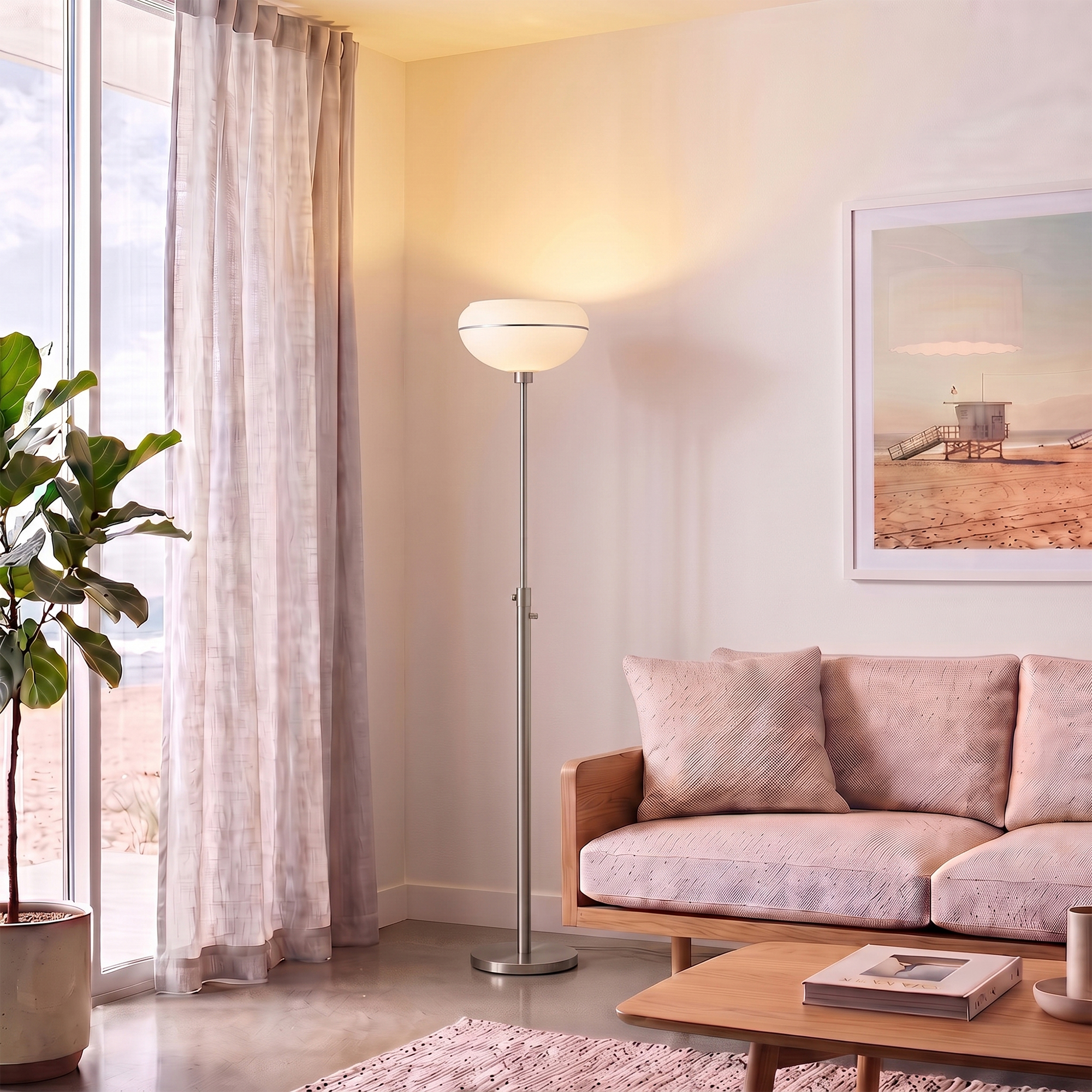
Layered lighting means using several light sources at different heights so a living room feels warm after dark. Pair one floor lamp with one table lamp, add a dimmer, and keep the bulb warm at 2700K. Three light sources at different heights usually feel better than one bright ceiling fixture.
Why Winter Evenings Need a Different Plan
Winter changes how a room is used. The sun sets early, the windows turn into mirrors, and people spend more hours at home in one or two chairs. A single overhead fixture does not match that pattern. It lights the whole room evenly, which flattens the walls and makes the furniture look flat too.
Layered lighting solves this by placing light where people sit, read and talk. Each source adds a small pool of light, and the room gains depth. The eye moves between the pools, which feels calm rather than harsh. Designers often describe lighting in layers: ambient light for general comfort, task light for close work and accent light for mood.
The Three Layers and What Each One Does
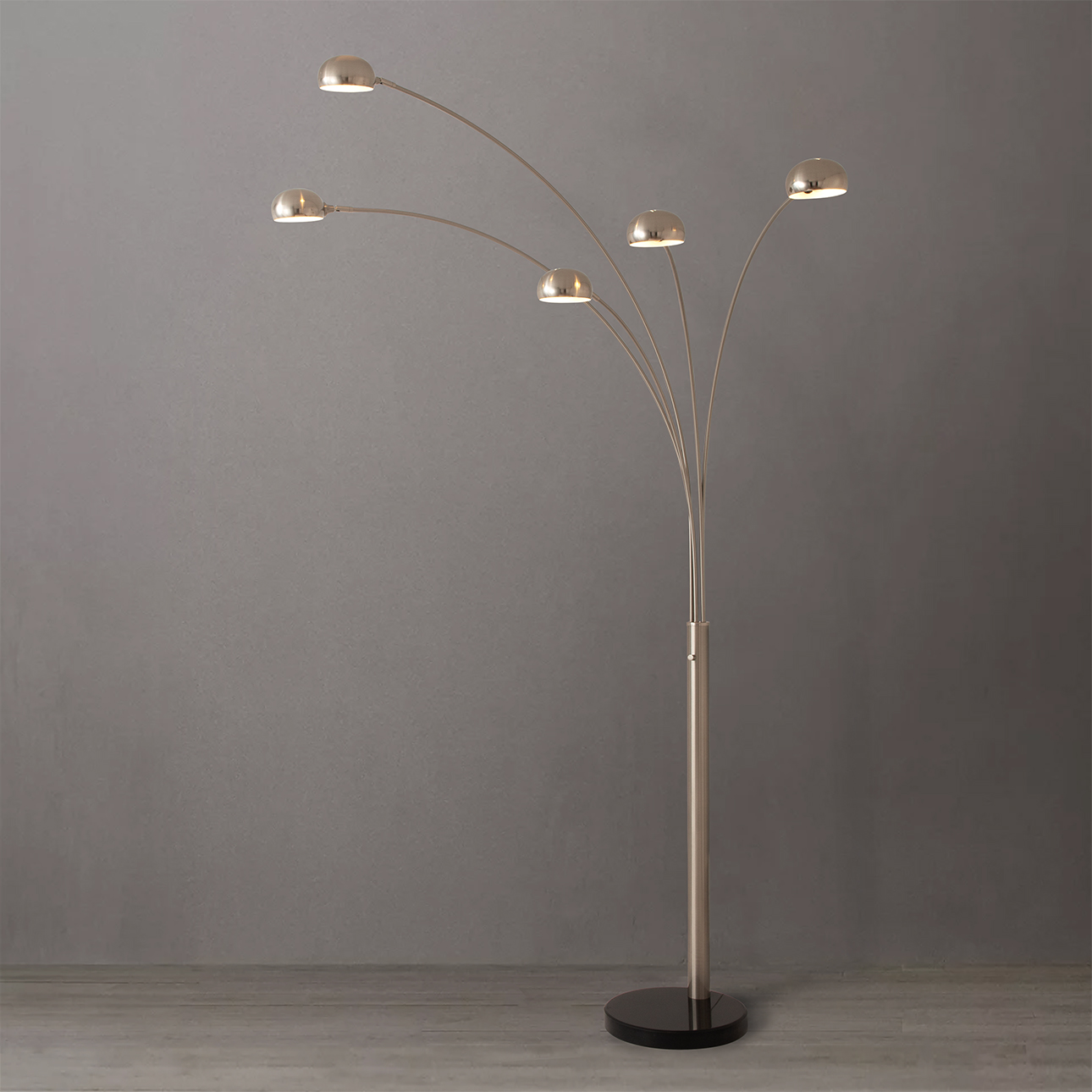
Ambient light fills the room with a soft base. A floor lamp often serves this role when its arm or shade spreads light across a seating area. Task light supports reading, writing or sewing. A table lamp beside a chair does this job well. Accent light draws the eye to a shelf, a plant or a piece of art.
A small living room rarely needs all three from separate fixtures. Two well placed lamps can cover ambient and task light, while a warm bulb and a dimmer shape the mood. Start with what the room does most in the evening, then add a third source only if a dark corner remains.
Start With the Floor Lamp
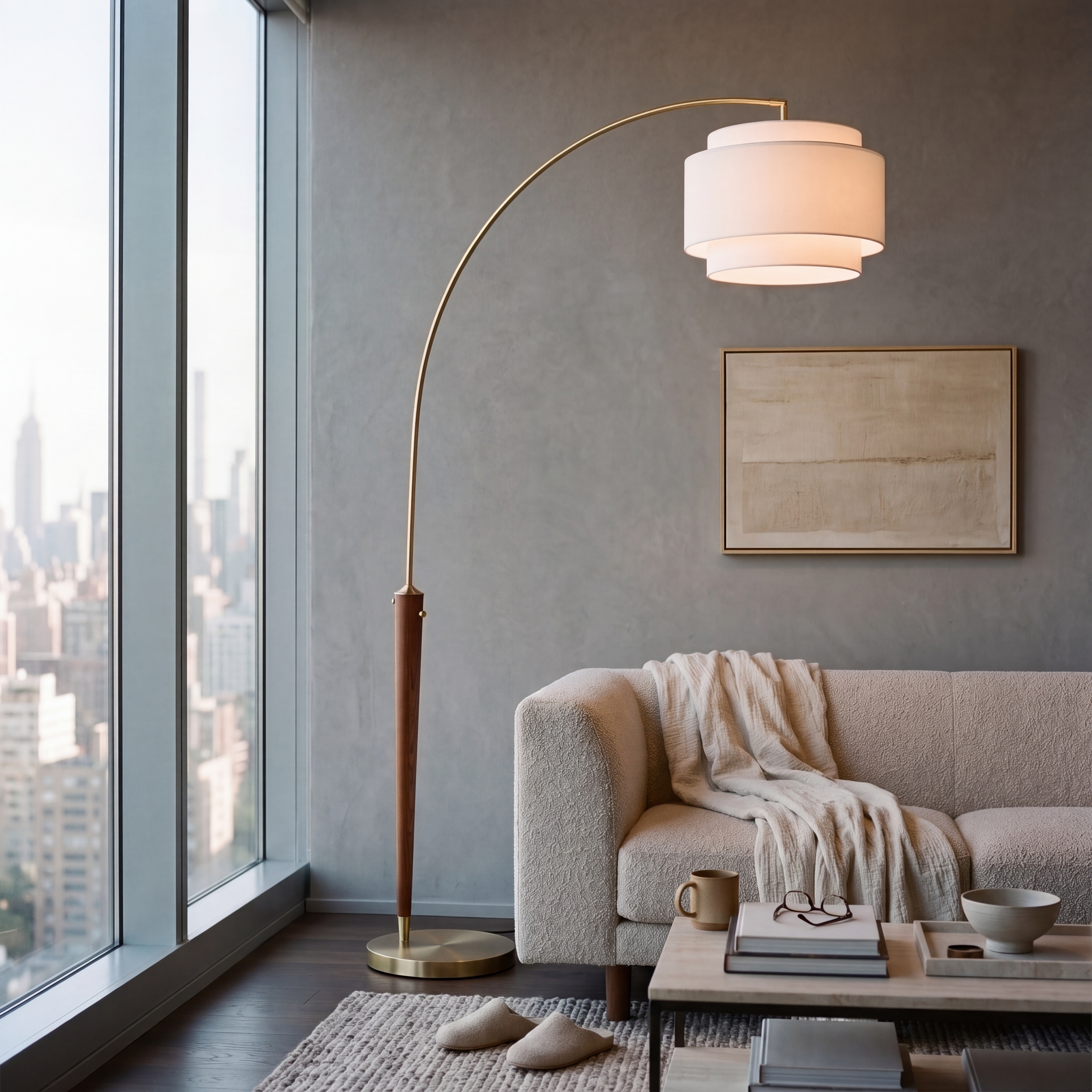
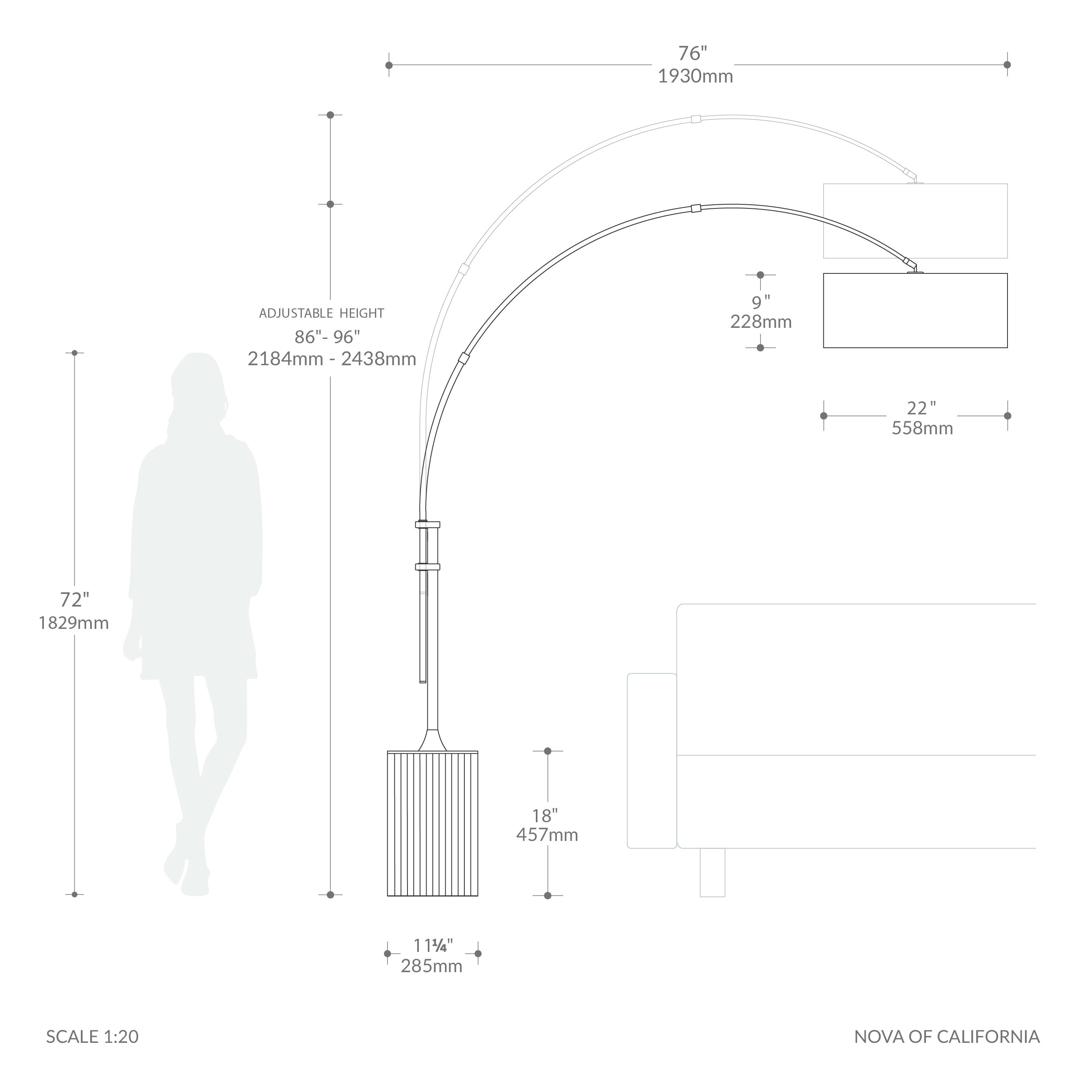
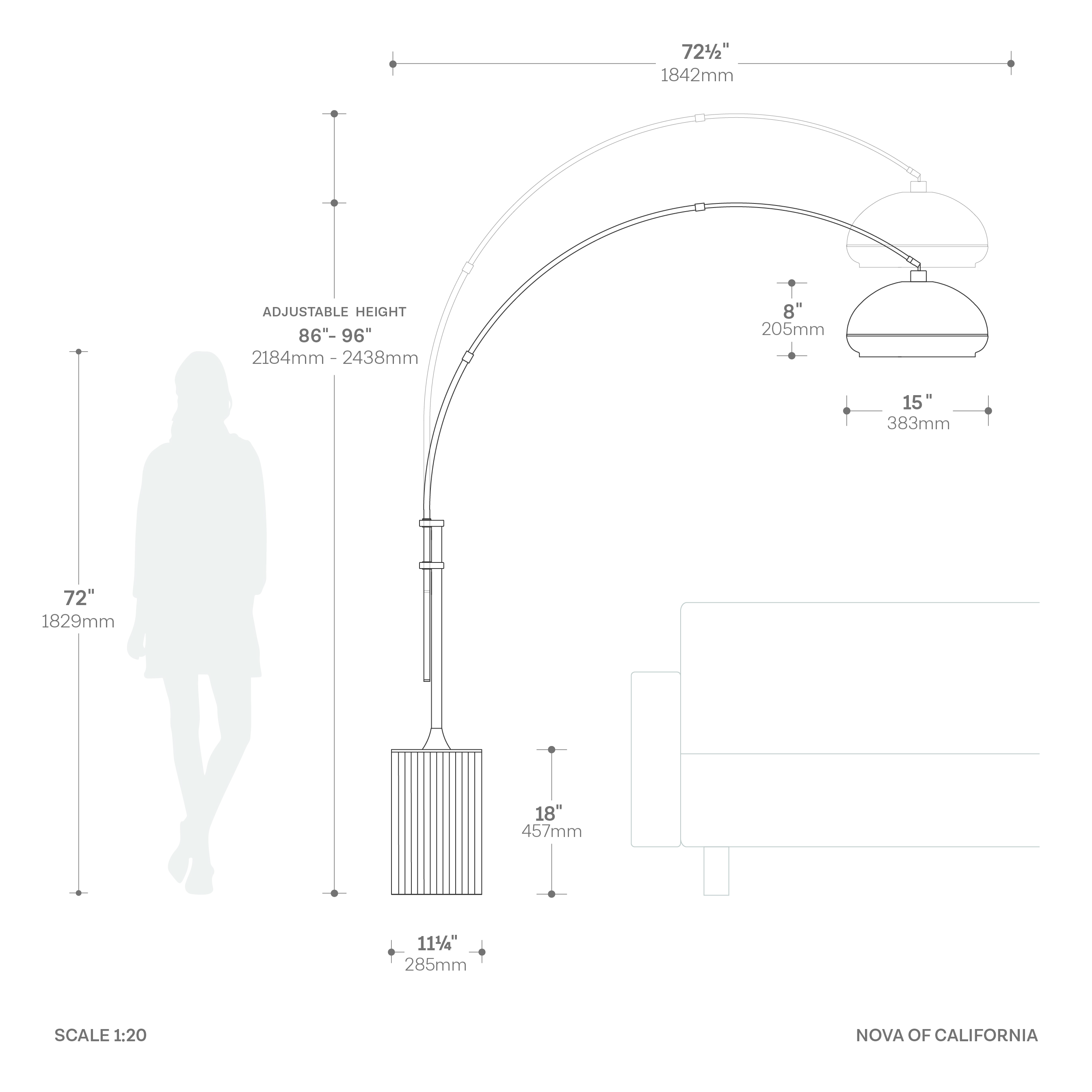
The Luna Bella arc floor lamp stands 92 inches tall. Its arc reaches over a sofa or armchair and places the source above the seated person’s line of sight, which reduces glare. The stem dimmer lets the owner set the level without a wall switch, so the lamp can serve as the room’s main ambient source on cold evenings.
Place the base beside the seat rather than behind it. The light then falls across the seating and onto the table nearby. Keep the cord route short and along a wall. A floor lamp that reaches over a sofa is one of the most efficient ways to add warmth without filling the floor.
Add a Table Lamp for Close Work
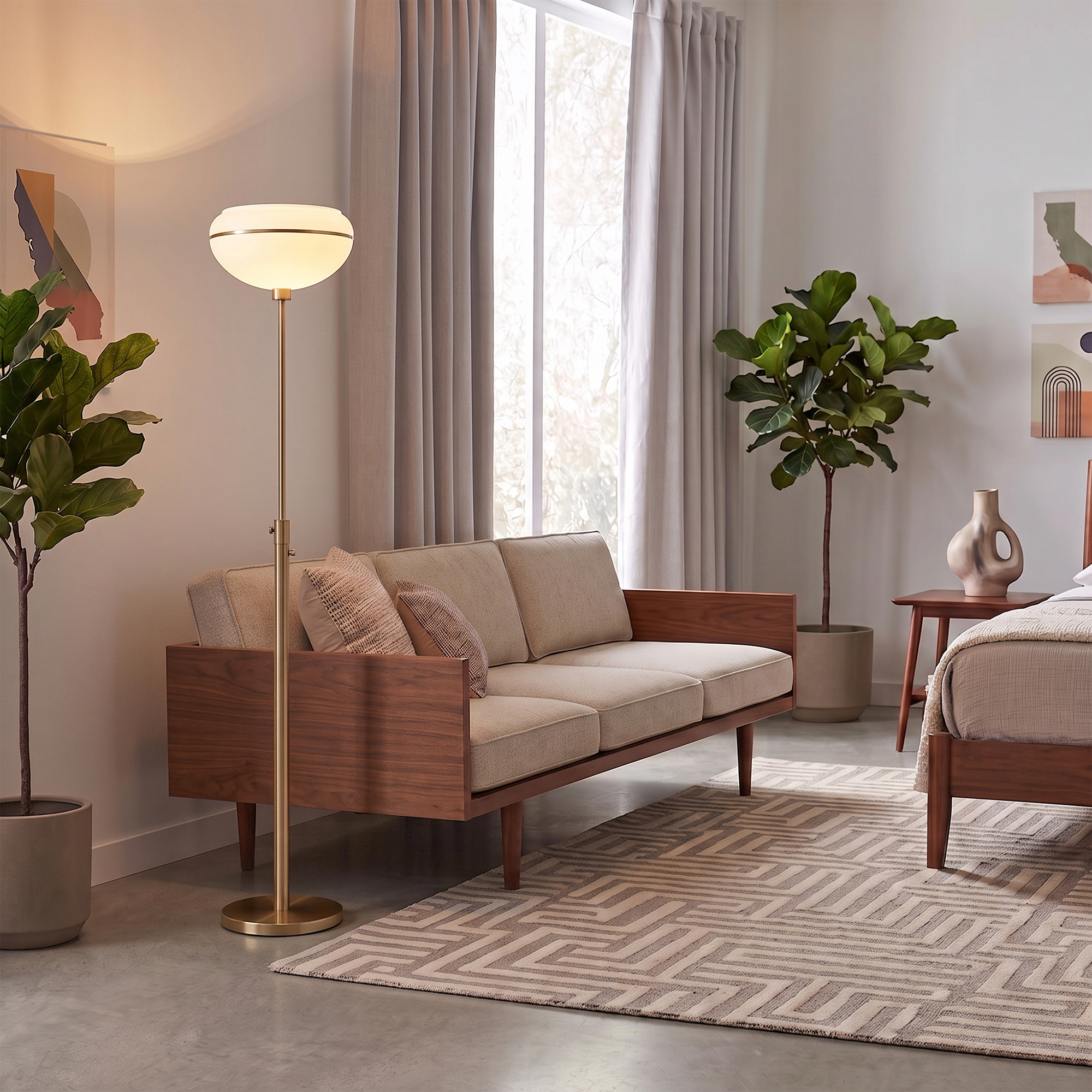
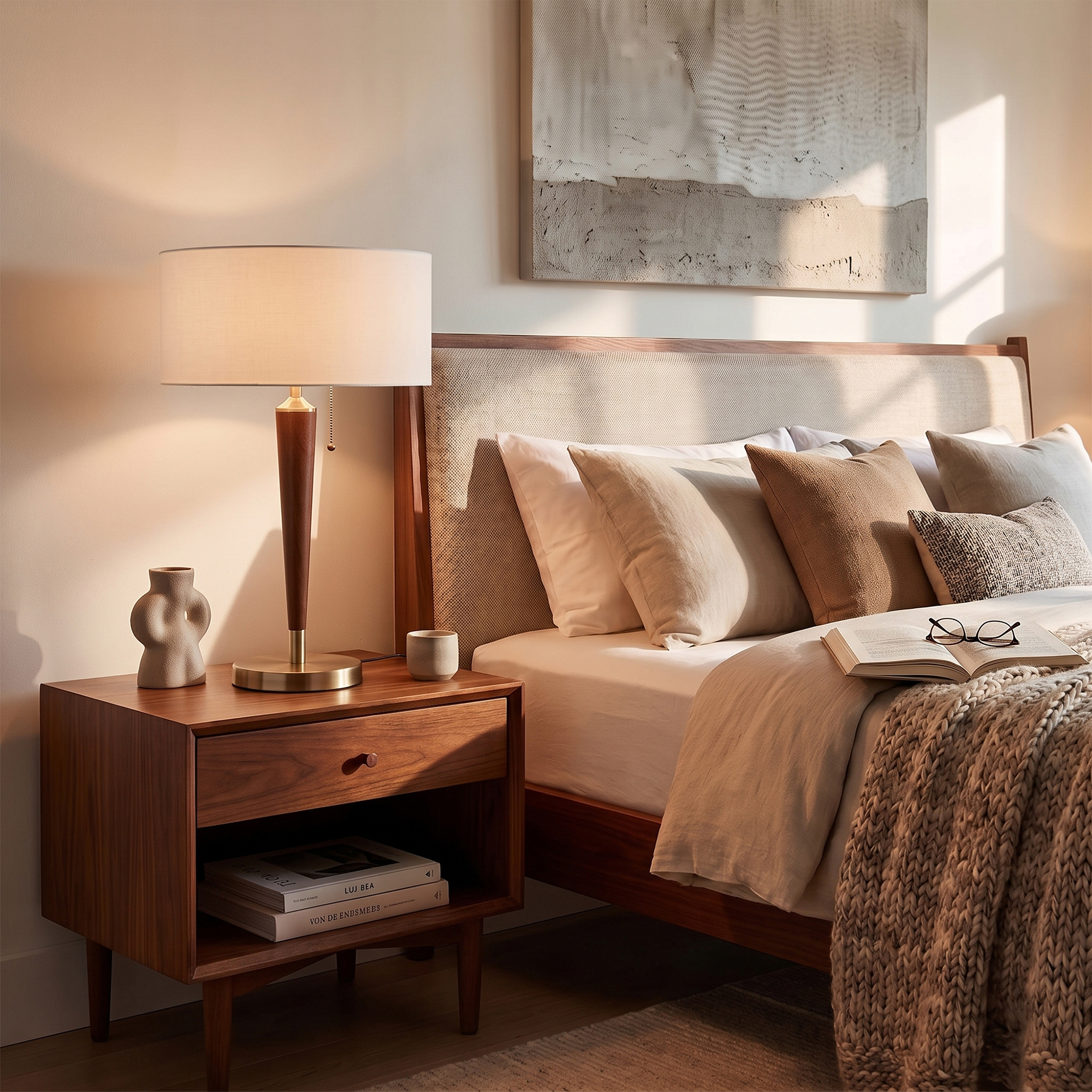
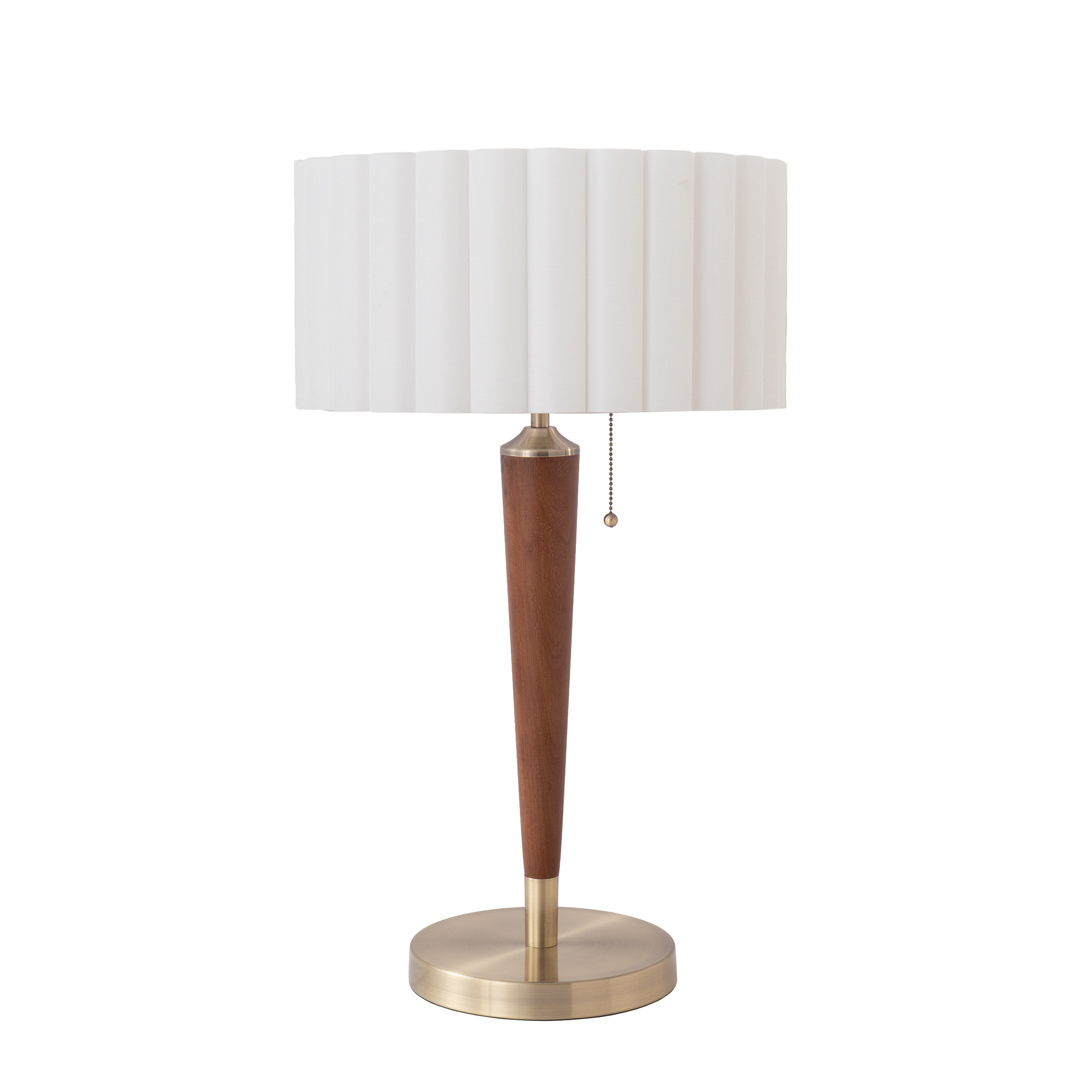
A table lamp adds the task light that a floor lamp cannot always provide. Position it on a side table at the height of the seated person’s shoulder, so the light lands on the book or the work surface rather than the eyes. A table lamp with a dimmer gives another control point and keeps the reading corner comfortable for longer.
Tizio, designed by Richard Sapper for Artemide in 1972, shows how a focused task light can be both precise and sculptural. Its adjustable arms direct light exactly where it is needed. NOVA table lamps offer a softer, more decorative alternative for a living room, while still giving the controlled light that reading requires.
Choose a Warm Bulb and a Dimmer
The standard NOVA bulb is a 14W E26 LED with 1500 lumens and a warm 2700K color temperature. It has a color rendering index above 95, a rated life of 25,000 hours and produces the output of a 100W incandescent bulb. Warm light at this temperature suits wood, leather and wool, which are common in winter rooms.
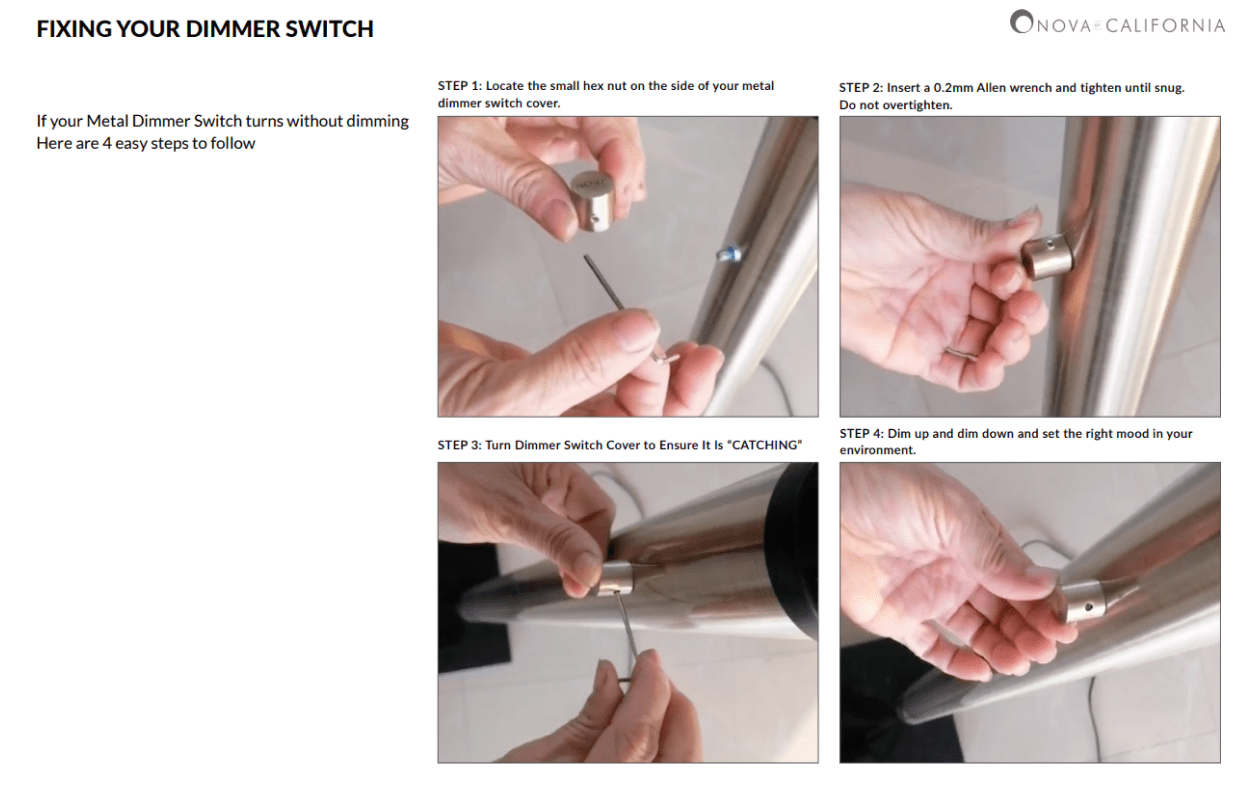
Dimmers matter more in winter than in summer. Lower light levels feel cozy at six in the evening but become too strong after dinner. NOVA lamps are dimmable and smart ready through the E26 socket. A compatible smart bulb can be added later for scheduling, while the lamp works fully without wifi.
Mixing Finishes in a Winter Room
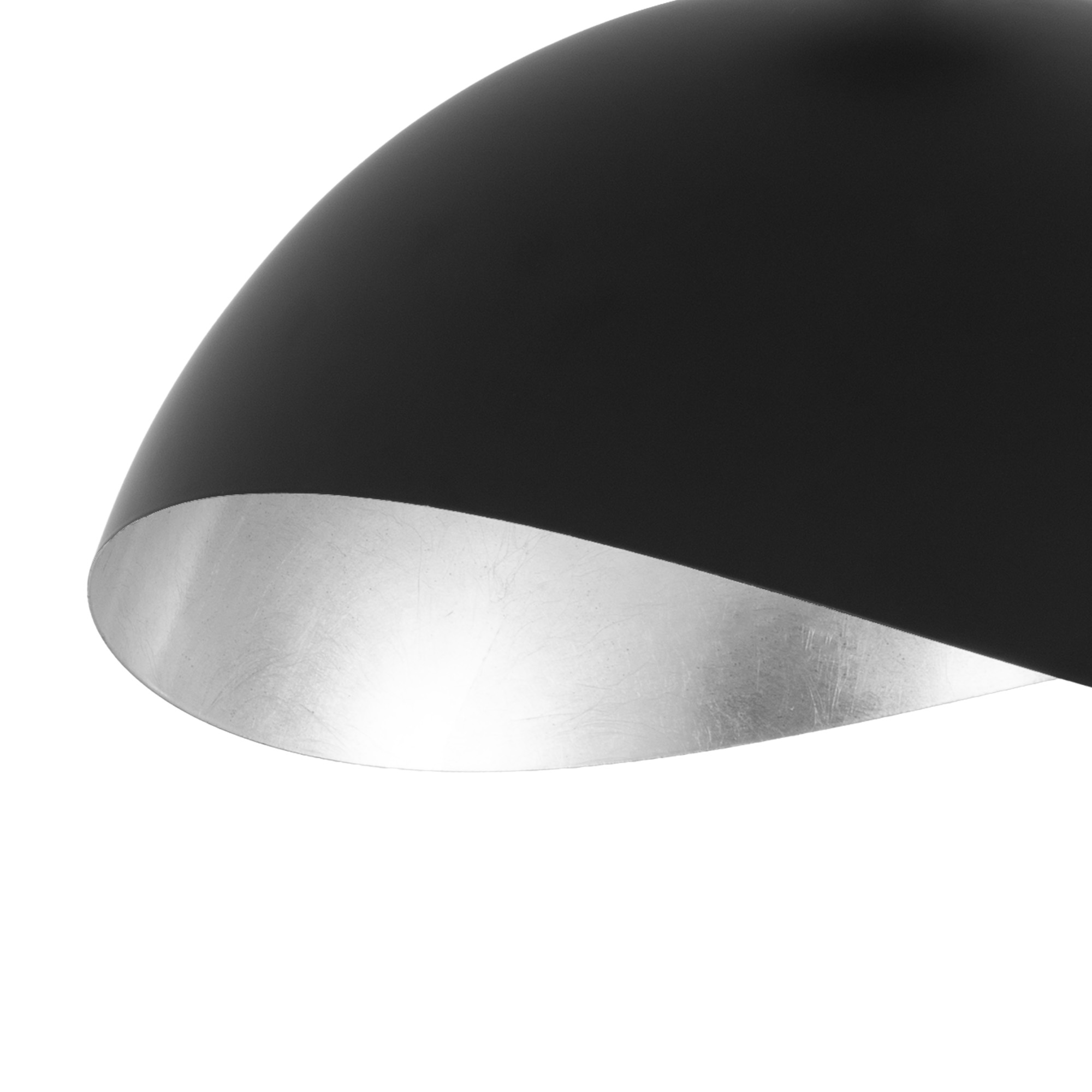
Weathered brass adds warmth that pairs well with cream walls, oak and wool throws. Satin nickel reflects light softly and suits cooler palettes and metal hardware. Matte black creates contrast, grounds a space with pale furniture and makes a lamp look sculptural. NOVA lamps come in these three finishes only.
Mixing finishes works when one finish repeats. If the floor lamp is brass, repeat a brass accent such as a frame, a vase or a drawer pull. This creates a link between the lamps and avoids a scattered look.
Three Layouts for Common Living Rooms
In a long living room, place a floor lamp at one end of the sofa and a table lamp at the other end. This balances the room and avoids a dark center. In a square room, place a floor lamp in the corner behind the armchair and a table lamp on the coffee table side. In a studio, use the floor lamp to mark the seating zone and let a table lamp define the reading area.
Each layout works best when the lamps sit at similar heights and share the same warmth. Mismatched heights create visual tension, so measure the seating and choose lamps that complement each other.
Placement Mistakes That Cost Warmth
The first mistake is placing all light at ceiling height. The second is choosing a cool bulb that makes the room feel like an office. The third is putting a lamp too far from the seat, which forces the person to lean. The fourth is ignoring the cord path, which creates trip hazards in a winter room with rugs.
Glare on a window is another common issue. In the evening, a lamp next to the glass can reflect back and make the room feel darker. Move the lamp so the window frames the light rather than competing with it.
Iconic Lamp References for the Winter Room
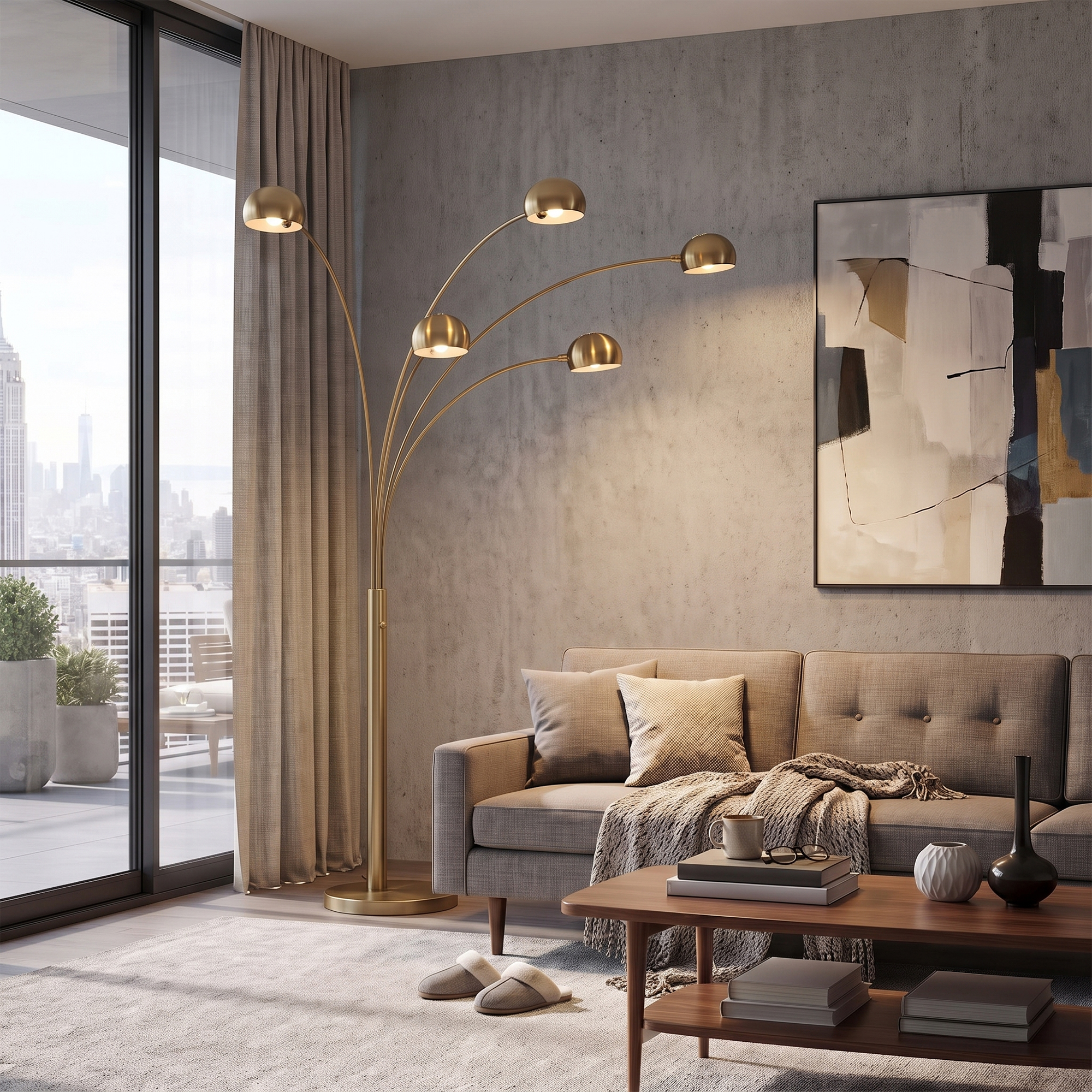
Flos introduced the Arco in 1962, designed by Achille Castiglioni and Pier Giacomo Castiglioni. Its arc form defined the idea of one strong light source that reaches over seating. Many arc lamps today, including NOVA’s, follow that logic. Tolomeo, designed by Michele De Lucchi and Giancarlo Fassina for Artemide in 1987, shows the adjustable task light that complements an ambient source.
A Simple Winter Lighting Checklist
Start with one floor lamp for ambient light. Add one table lamp for reading. Choose a 2700K bulb for each source. Add a dimmer to at least one lamp. Keep the cord route short and safe. Check that each lamp sits at a comfortable height for the seated person.
Once these steps are in place, the room will feel warm on cold evenings without relying on the ceiling fixture. This approach costs less than a full renovation and changes the room immediately.
Final Note
Many homeowners ask whether they need new lamps or a new ceiling fixture. In most living rooms, the answer is lamps. A ceiling fixture is expensive to change and rarely adjusts well for evening use. Two lamps on dimmers give more control for less money, and they can move with the household when furniture changes. Start small, live with the setup for a week, and then decide if a third light is needed.
Winter lighting is about comfort, not brightness. Layer the light, keep the bulbs warm and let the room feel settled after dark. A living room that works in winter is one that invites people to stay.