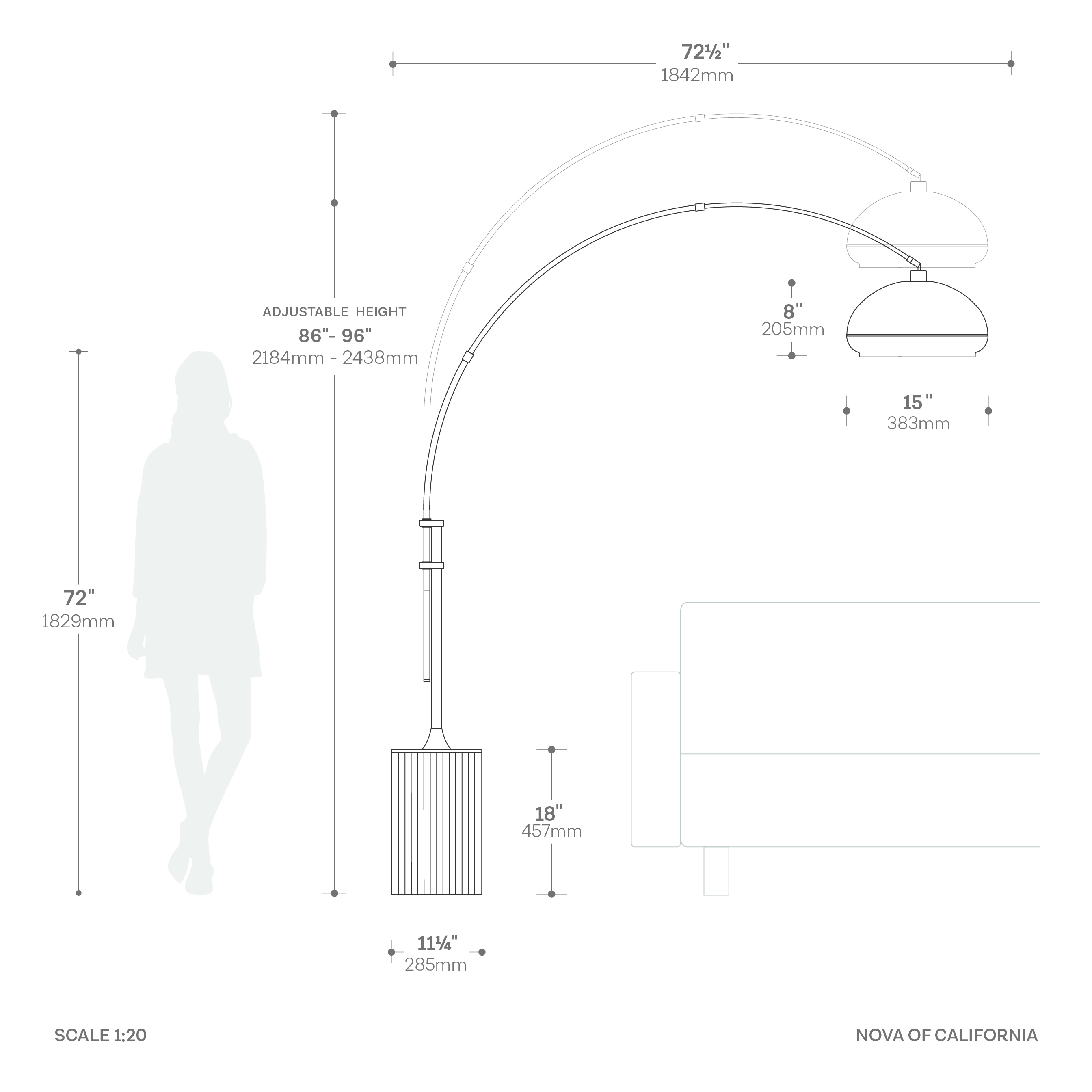
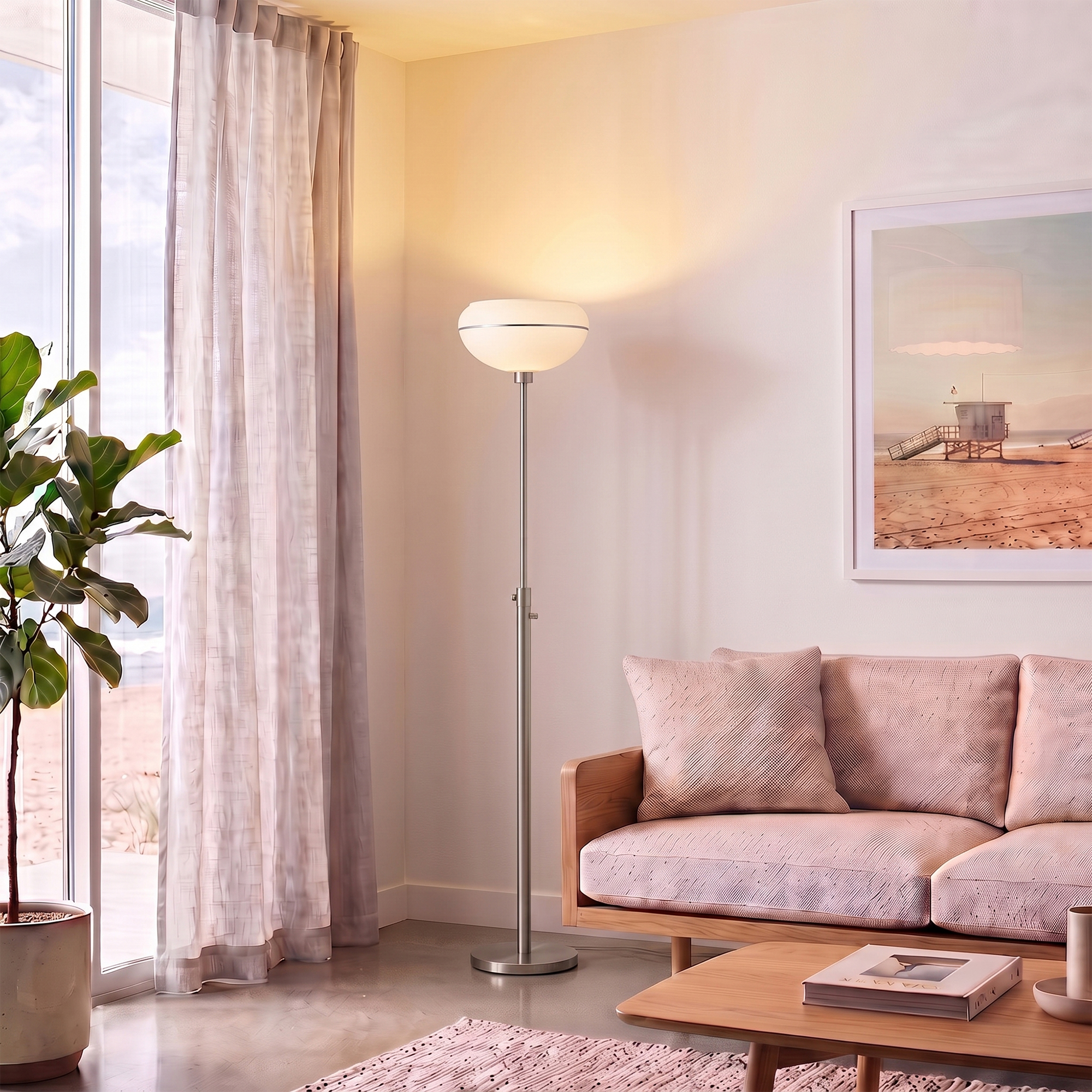
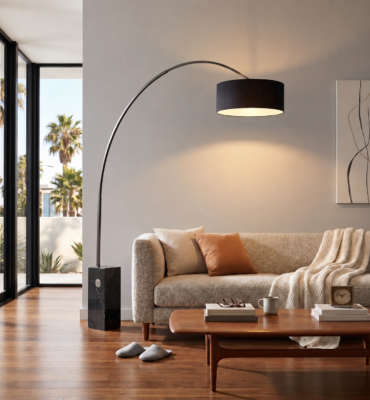
| A torchiere floor lamp directs light upward toward the ceiling, which then reflects evenly across the entire room. The best torchiere floor lamps combine a weighted marble base for stability, a dimmable LED for efficiency, and a shade material that shapes the quality of the reflected light. Nova of California offers six torchiere models ranging from $499 to $799, each standing 72 inches tall with contract grade construction and smart home compatibility. |
The Lamp You Do Not Notice Is the One Doing the Most Work
Stand in a well lit living room and try to find the light source. If the room feels bright and comfortable but nothing glares at you from any direction, there is almost certainly a torchiere somewhere in that space. It is doing exactly what it was designed to do. It is disappearing.
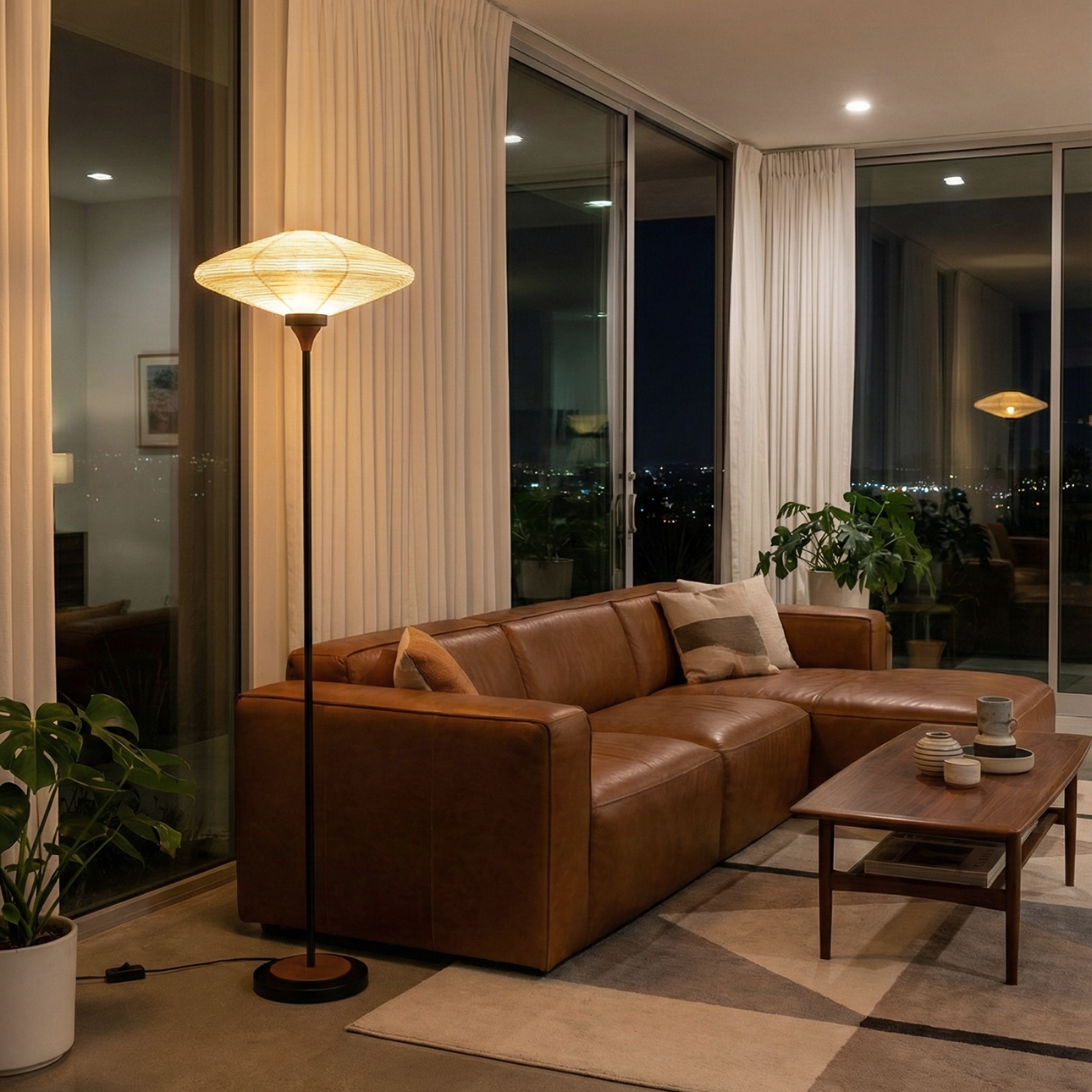
That is the paradox of a great torchiere floor lamp. The better it works, the less you see it working. The light fires upward. The ceiling catches it and sends it back as soft, even ambient light that fills corners, erases harsh shadows, and makes the room feel larger than its square footage. No pool of light on the floor. No bright spot on the wall. Just the whole room, gently lit.
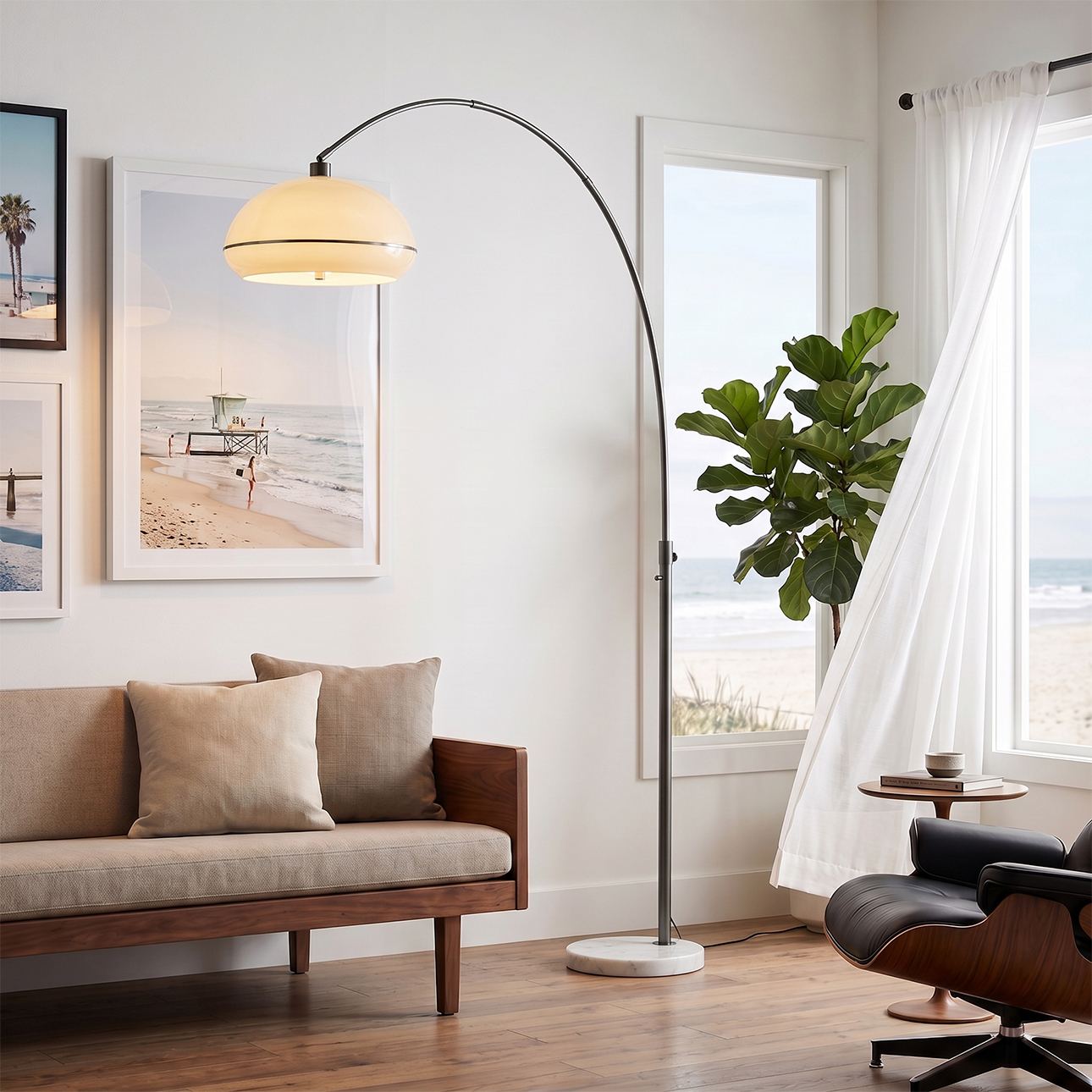
This is the opposite of what most floor lamps do. A standard floor lamp puts a shade at eye level and throws light sideways. An arc lamp reaches over furniture to deliver targeted overhead light. Both are excellent at their jobs. But neither one can fill an entire room the way a torchiere does.
What Separates a Good Torchiere from a Forgettable One
Most people assume all torchiere lamps are basically the same. A pole. An upward facing shade. A bulb. The differences only show up when you live with one for a few months.
The base decides everything. A torchiere stands 6 feet tall on a narrow column. Physics wants it to fall over. The base has to win that argument every time someone walks past, every time a door closes and sends a draft through the room. Cheap torchieres solve this with a wide tripod or a flat disc that slides on hardwood. The better solution is mass. A natural marble base weighing 10 to 18 pounds sits planted on any surface and does not move.
The shade shapes the light. An open top torchiere just throws raw light at the ceiling. It works, but the ceiling becomes a bright spot rather than a diffused reflector. A sandblasted Lucite shade or an opal glass diffuser spreads the beam before it ever reaches the ceiling. The result is a softer, more uniform wash across the room. The Morelli Torchiere uses Lucite for exactly this reason. The Tambo Torchiere uses opal glass. Same principle. Different material texture.
Dimming is not optional. A torchiere at full brightness lights a room for a dinner party. At 40 percent it sets the mood for a film. At 15 percent it becomes a night light that does not wake anyone up. Without a dimmer, you have one setting. Every Nova torchiere includes either a rotary stem dimmer or a foot slide dimmer. All six are also compatible with Amazon Echo, Google Assistant, and Apple Home for voice and app control.
Six Torchiere Lamps Worth Considering
Redondo Torchiere ($499) — The Architectural Entry Point
Designed by Alex Brokamp in 2019. The Redondo is the most minimal lamp in this lineup. Matte black cold rolled steel. A circular LED head that faces the ceiling. A natural black marble base that weighs the whole unit down to a solid 10 pounds. At $499 it is the least expensive Nova torchiere and the one that blends most easily into rooms where the lamp should not be the focal point. It does not demand attention. It just lights the room.
Morelli Torchiere ($599) — The Heritage Piece
Peter Morelli designed this lamp in 1967. That sentence alone tells you something about how long this form has worked. The sandblasted Lucite shade diffuses the uplight into a wide, soft wash. Weathered brass stem. Walnut wood accents. Black marble base at 18 pounds. At 72 inches it occupies a narrow footprint but carries serious visual weight. This is the torchiere for someone who wants a lamp with a real design lineage, not a replica of one.
Luna Bella Torchiere ($599) — The Statement Maker
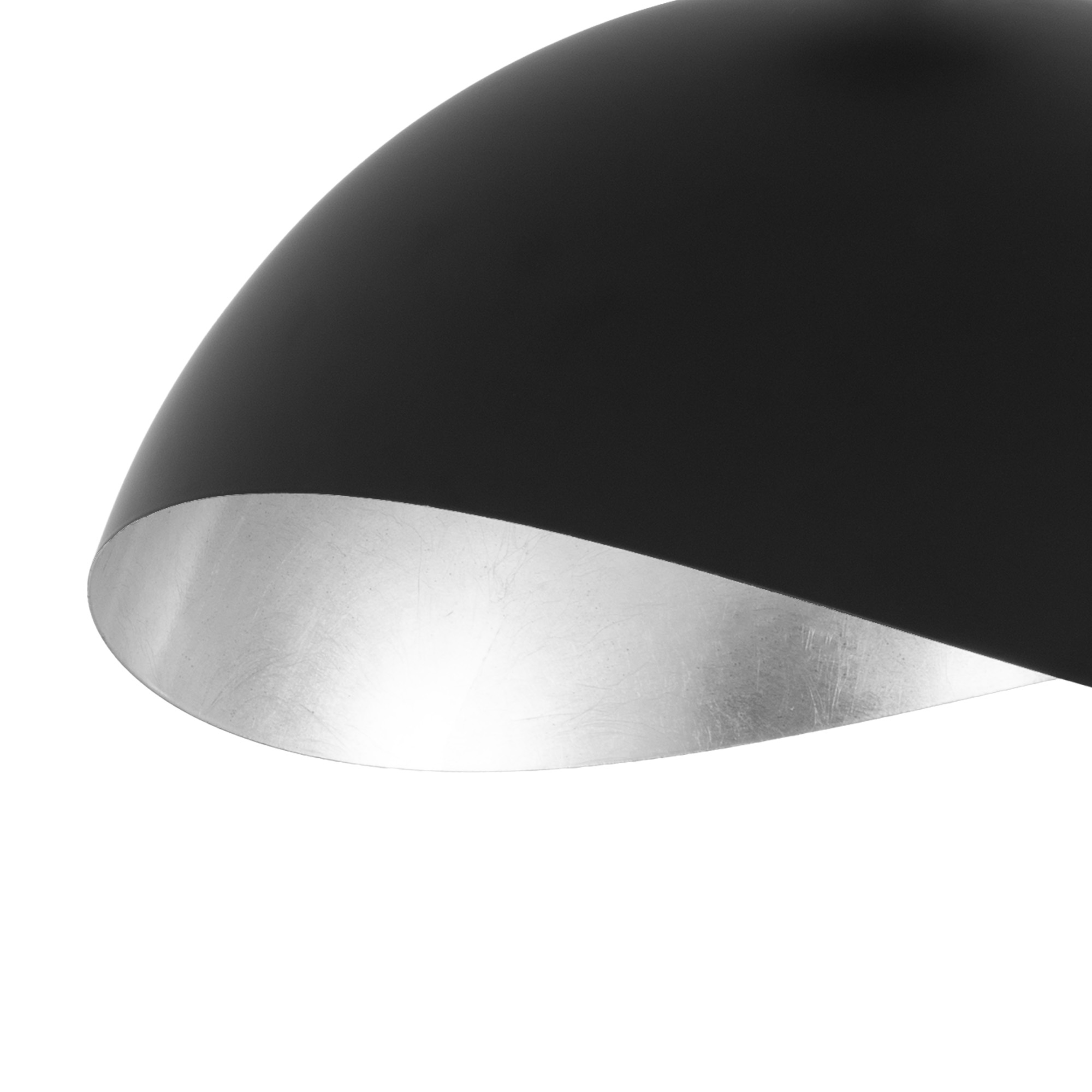
Hand applied gold leaf on the shade interior creates a warm amber glow that bounces off the ceiling differently than any white or silver finish. The Luna Bella Torchiere pairs that gold leaf with weathered brass and a matte black frame. The foot dimmer lets you dial the gold warmth from a whisper to a full glow. At $599 this is the most expressive torchiere in the collection. It does not disappear. It announces itself quietly and warmly.
Rancho Mirage Torchiere ($599) — The Tiered Design
The Rancho Mirage takes a different approach to the shade. Instead of a single opening or diffuser, it uses a tiered matte black shade with gold leaf underneath. The tiers break the light into bands as it rises. The effect is architectural. Matte black body. Weathered brass accents. Black marble base at 18 pounds. The Rancho Mirage is for rooms where clean geometric lines matter.
Tambo Torchiere ($799) — The Premium Choice
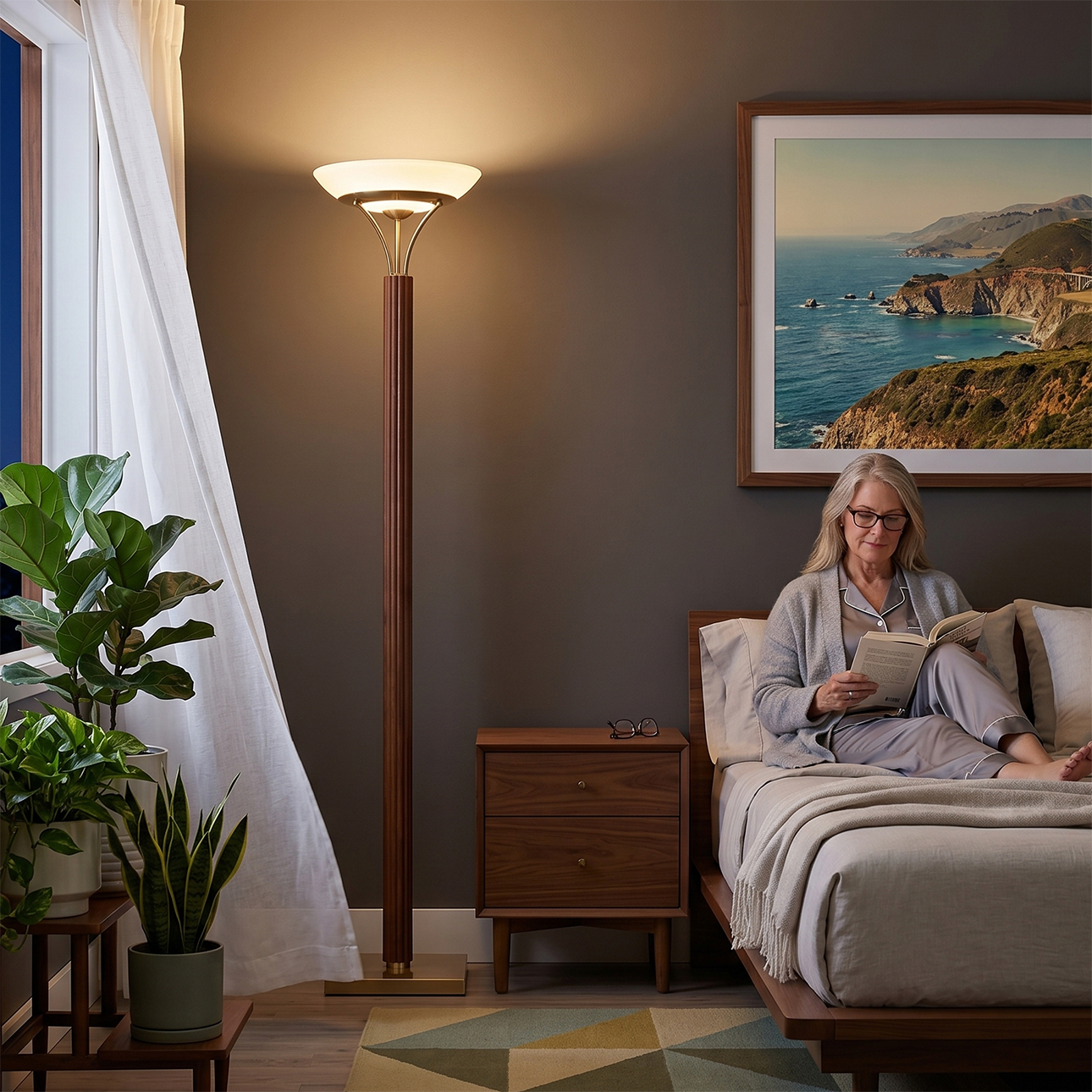
The most expensive torchiere in the Nova collection justifies its price with material quality. Hand laid dark walnut wood wraps the column. An opal glass diffuser produces the smoothest, most even uplight of any lamp here. The foot slide dimmer offers finer control than a rotary switch. Available in both dark walnut and natural ash finishes, the Tambo suits rooms where natural materials are the design language. At 18 pounds and 72 inches, the proportions are identical to the rest of the lineup. The feel is completely different.
Which Room Gets Which Torchiere
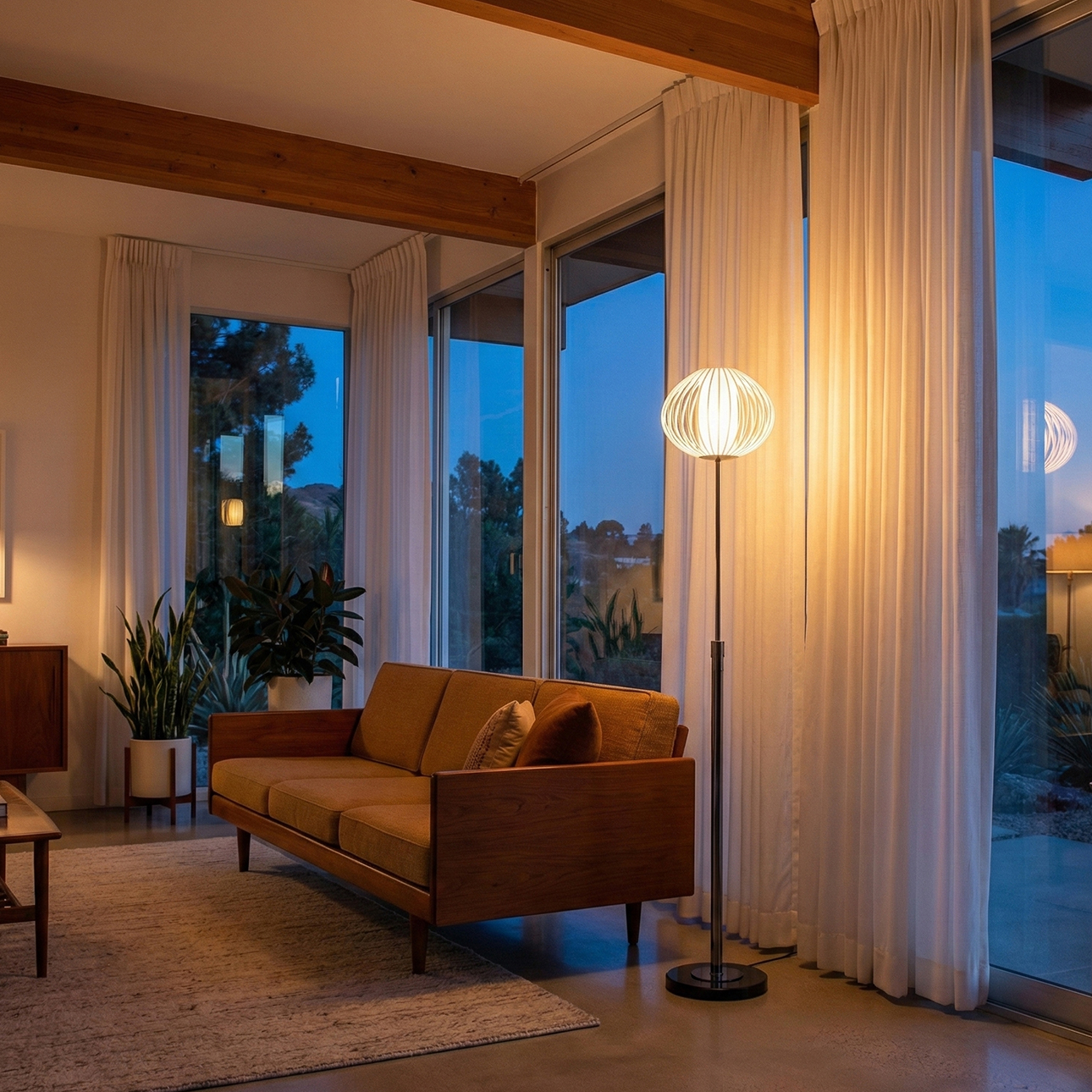
Living room (200+ square feet): The Tambo or Luna Bella. These rooms need a torchiere with presence. The opal glass diffuser on the Tambo fills large rooms evenly. The gold leaf on the Luna Bella adds warmth to evening gatherings. Position the lamp behind or beside the sofa, within 2 feet of a corner. The ceiling bounce will reach the center of the room from there. For more on how torchiere lamps light entire rooms, read our guide.
Bedroom: The Redondo. At 10 pounds it is the lightest and easiest to reposition. The matte black finish disappears against a dark wall. With the rotary dimmer set to 15 percent, it produces a soft ambient glow that works as a night light without the blue spectrum disruption of a screen or phone charger LED.
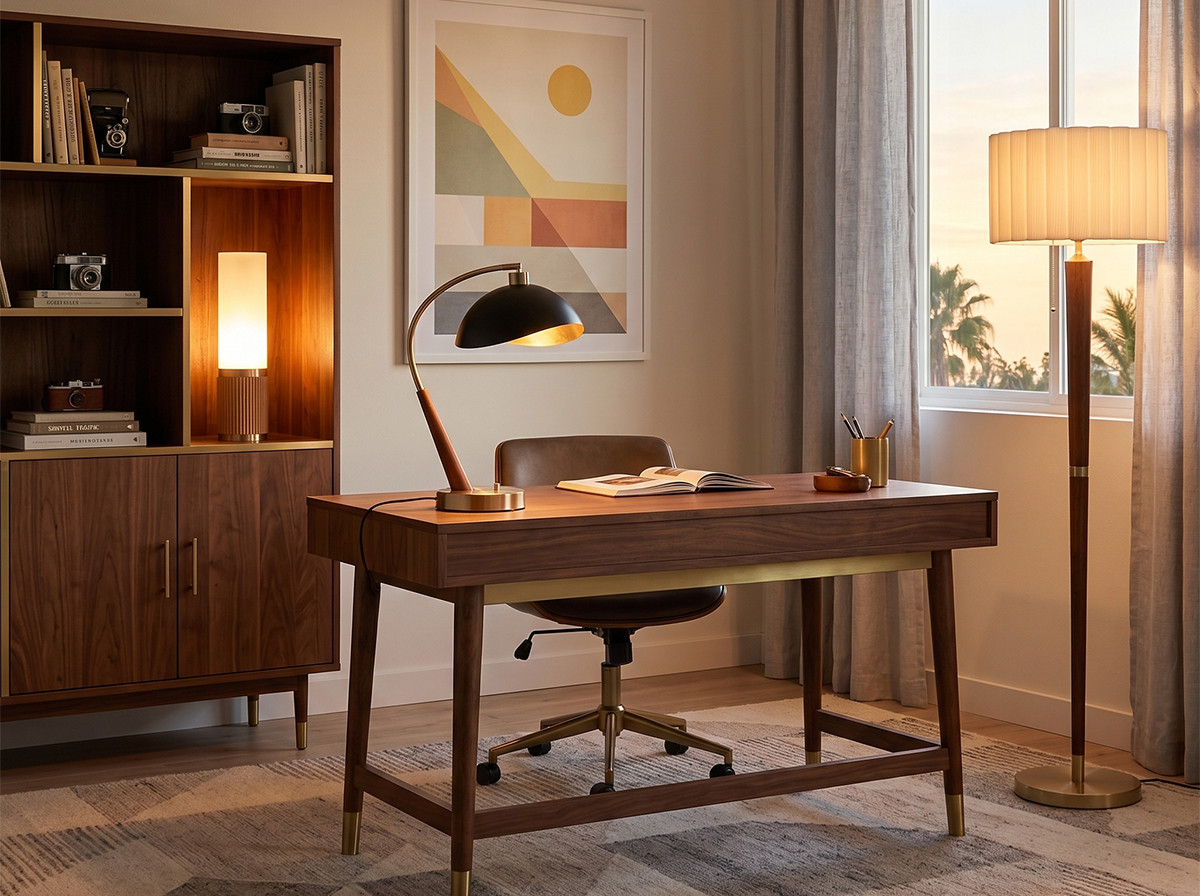
Home office: The Morelli. The Lucite shade produces diffused uplight that reduces glare on monitors and screens. The weathered brass and walnut bring warmth to a room that usually feels cold and utilitarian. A torchiere behind the desk eliminates the contrast between a bright screen and a dark room, which is one of the primary causes of eye fatigue during long work sessions.
Dining area: The Rancho Mirage. Its tiered shade creates layered light that adds depth to the ceiling above a dining table. Place it in the corner closest to the table. The light reflects down evenly across the surface without the focused pool that a pendant or arc floor lamp creates. For detailed torchiere placement strategies, see the full guide.
When a Torchiere Is the Right Choice (and When It Is Not)
A torchiere is the right choice when you need the entire room lit from a single floor lamp. No other floor lamp type can do this. A standard floor lamp lights a zone beside itself. An arc lamp lights a zone above specific furniture. A torchiere lights the whole room.
It is not the right choice when you need focused task light. A torchiere cannot light a book in your lap or illuminate a specific work surface. It provides the ambient base layer. You still need a table lamp or a directional floor lamp for task lighting. The best lit rooms combine both. For a deeper look at how torchieres compare to arc lamps specifically, read Torchiere vs Arc Lamp: Which Gives Better Overhead Light.
What to Check Before You Buy Any Torchiere
Base weight. Anything under 8 pounds will tip eventually. Look for 10 pounds minimum. Marble or solid metal bases outperform hollow disc bases on every surface.
Dimmer type. A built in dimmer (stem or foot) is more reliable than depending on a separate smart plug. Check that the dimmer is compatible with LED bulbs if you plan to use one.
Shade material. Open top torchieres with no diffuser create a bright spot on the ceiling. Lucite, opal glass, or frosted metal shades spread the light before it hits the ceiling. The result is visibly smoother.
Height. Most torchieres sit between 68 and 72 inches. In rooms with standard 8 foot ceilings, 72 inches leaves enough gap between the shade and the ceiling for the light to spread before it bounces. In rooms with 9 or 10 foot ceilings, that gap grows, and the spread improves.
Smart compatibility. If you use voice assistants, confirm the torchiere works with your platform before buying. All Nova torchieres are compatible with Amazon Echo, Google Assistant, and Apple Home.
Frequently Asked Questions About Torchiere Floor Lamps
What does torchiere mean?
Torchiere comes from the French word for torch. It describes any lamp that directs its light upward, like a torch held above the head. In modern use, a torchiere floor lamp is a tall, slim floor lamp with an upward facing shade that bounces light off the ceiling to illuminate the room indirectly.
Are torchiere lamps good for living rooms?
Torchiere lamps are one of the best ambient light sources for living rooms. A single torchiere can fill a 200 to 300 square foot room with even, shadow free light. They work especially well in rooms with white or light colored ceilings, which reflect the most light back into the space.
Can you use LED bulbs in a torchiere?
Yes. LED bulbs are the best option for torchiere lamps. They produce minimal heat, which matters because the upward facing shade traps warm air. A 14W to 28W LED produces 1,500 to 2,500 lumens with far less heat than an equivalent halogen bulb. Nova torchieres are designed specifically for LED use.
How much light does a torchiere provide?
A torchiere with a 14W to 28W LED produces 1,500 to 2,500 lumens. Because the light reflects off the ceiling and spreads across the entire room, the perceived brightness is often greater than a direct lamp of the same output. The ceiling acts as a giant diffuser, distributing the light more evenly than any shade can.
Do torchiere lamps work with low ceilings?
Torchiere lamps work with ceilings as low as 8 feet. A 72 inch lamp leaves 24 inches between the shade and an 8 foot ceiling. That is enough space for the light to spread before it bounces. With ceilings below 8 feet, the reflected light can feel too concentrated. Higher ceilings produce a wider, softer spread.