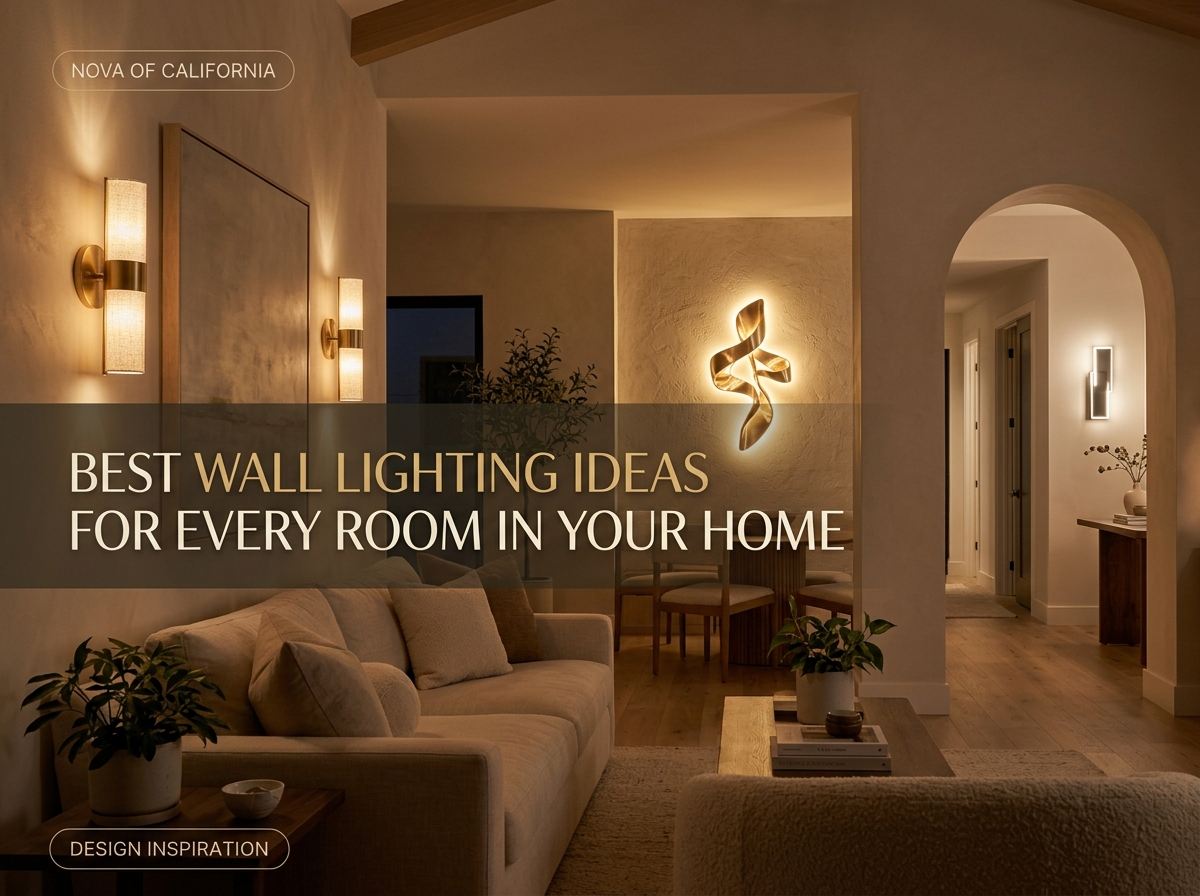
| Wall lighting ideas transform rooms by adding depth and visual warmth at eye level. The most effective options are plug in wall sconces that install with two screws and connect to standard outlets. They eliminate the need for hardwiring or renovation while creating layered light that overhead fixtures alone cannot provide. |
Why Overhead Lighting Is Not Enough
Stand in the center of any room and look at the ceiling. That single flush mount or recessed can pushes light straight down. It reaches the floor and the tops of furniture. It does not reach the walls. And walls make up the largest visible surface in every room you occupy.
A study from the American Lighting Association found that rooms with light sources at three different heights feel 33% more spacious to occupants than rooms with ceiling light alone. The reason is biological. Our eyes read depth through contrast. When walls stay dim and the center of the room stays bright, the brain compresses its estimate of the space. Wall lighting reverses that compression by pushing illumination outward to the room’s actual boundaries.
This is why designers treat wall lights as a structural element rather than a decorative afterthought. They are the middle layer in a three layer system: overhead for general coverage, wall fixtures for ambient fill, and task lamps for focused work.
Plug In Wall Sconces: The Practical Starting Point
Hardwired sconces require an electrician, a wall box, and a switch run. That adds $200 to $400 per fixture before the sconce itself. Plug in wall sconces eliminate all of that. They mount with two screws into drywall anchors and connect to any standard outlet.
The installation takes under fifteen minutes. Two pilot holes, two anchors, two screws, and a cord that runs neatly along the baseboard or behind furniture. For renters this changes everything. You can add architectural quality lighting to any room and restore the walls when you leave.
Nova of California offers 13 plug in wall sconce models ranging from $149 to $499. Each one is designed in Venice Beach with clean lines rooted in mid century modern aesthetics. The Globe Wall Sconce ($149) sits flush against the wall with a profile slim enough for narrow hallways. The Bloom Wall Sconce ($299) features an organic petal inspired shade that diffuses light in a wide arc. And the Rancho Mirage ($499) delivers a sculptural presence that functions as both a light source and a statement piece.
Wall Lighting Ideas by Room
Living Room
The living room benefits most from wall lighting because it has the most competing visual zones. Seating areas, media walls, bookshelves, and conversation corners all need different light levels at different times of day.
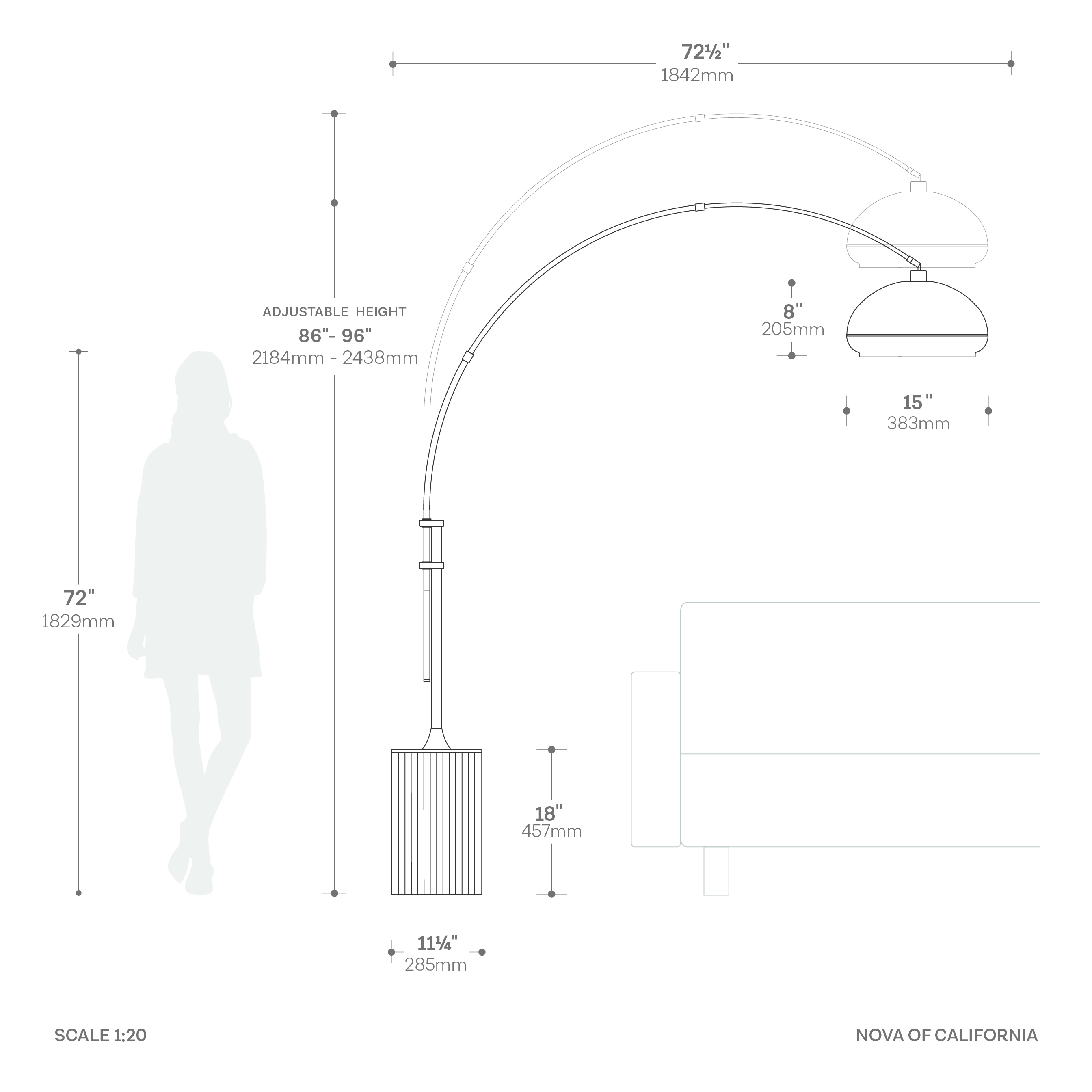
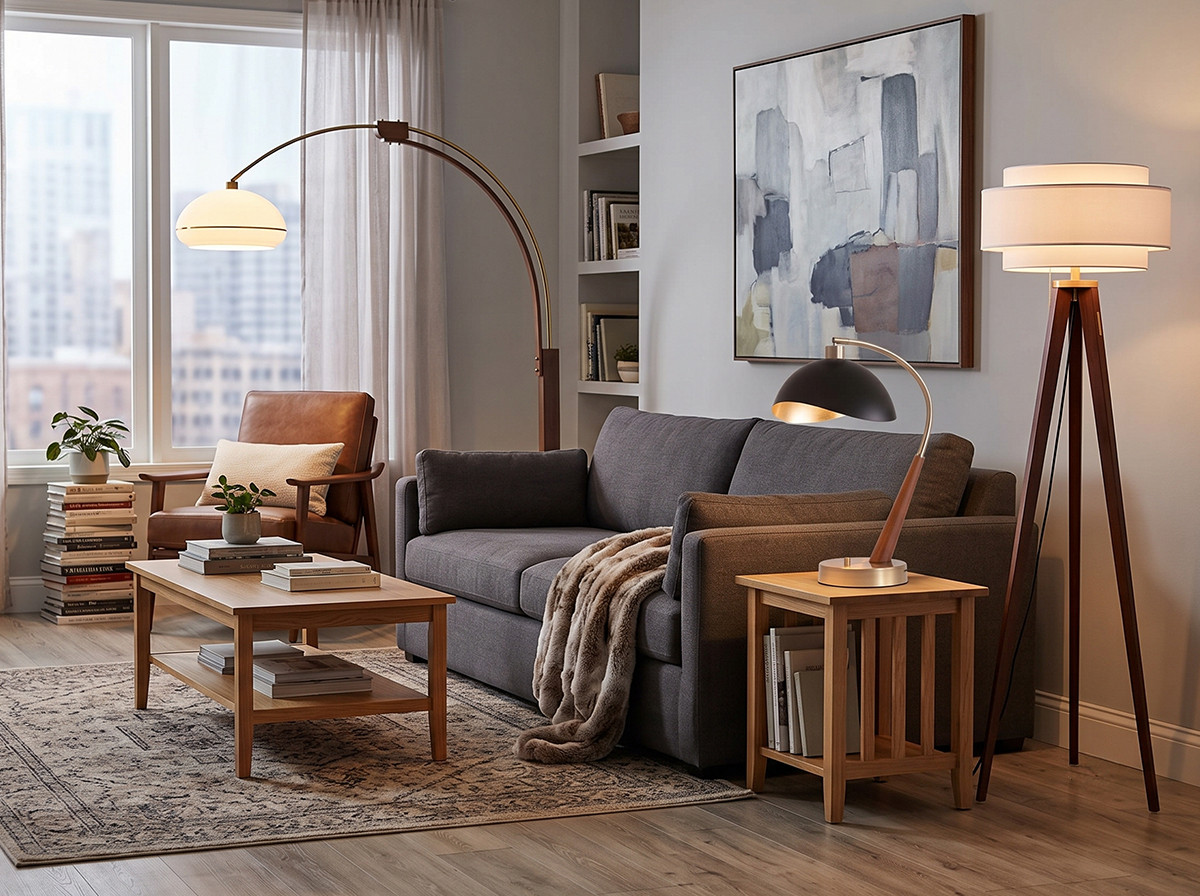
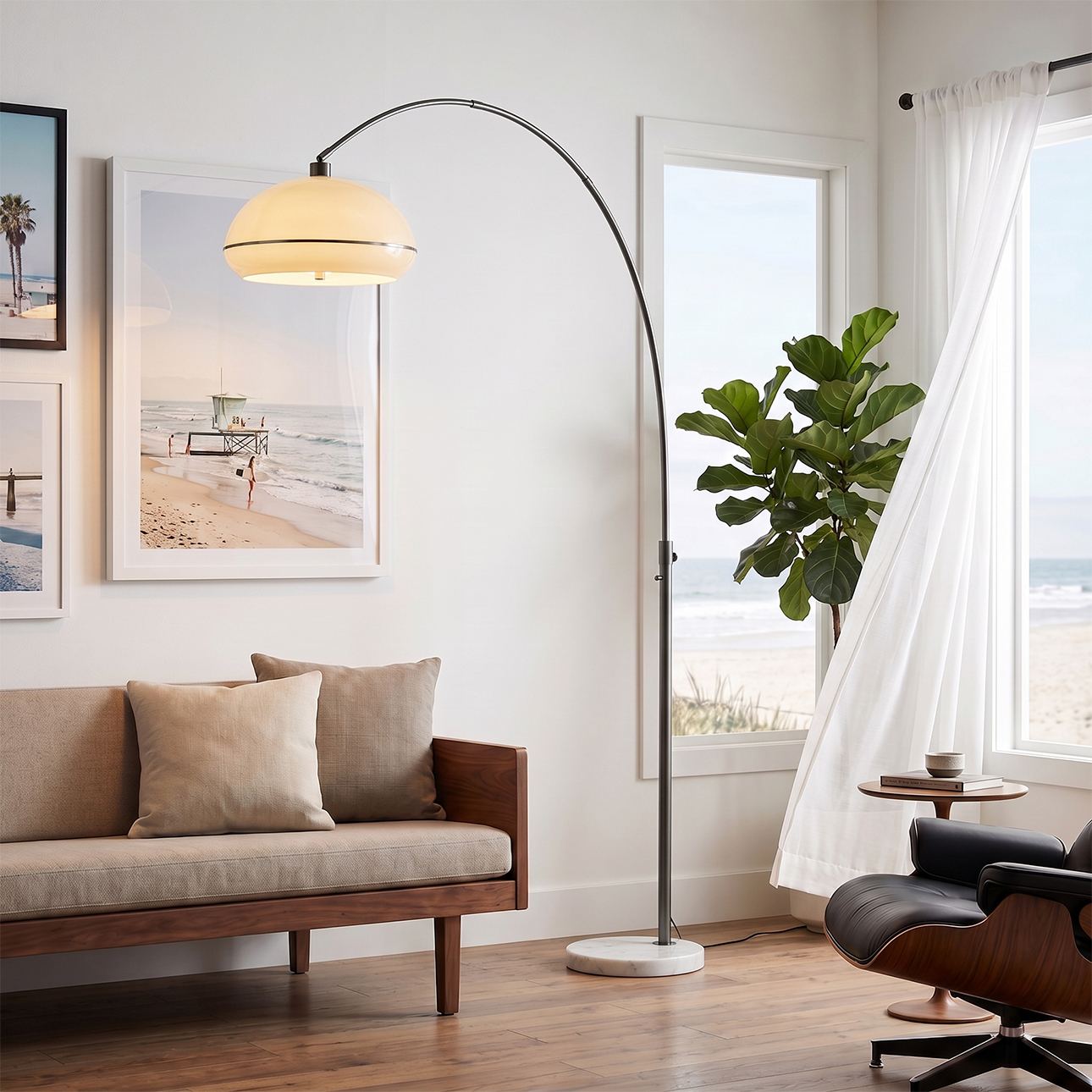
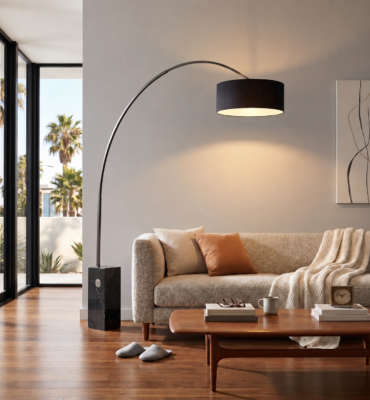
Place a pair of sconces flanking the sofa at 60 to 66 inches from the floor. This creates a soft ambient glow behind seated guests and eliminates the harsh overhead shadow that makes evening conversations feel clinical. The Nova Tambo ($349) works especially well here. Its adjustable arm lets you direct light toward the wall for ambient wash or toward the seating for reading. Pair that with an arc floor lamp in the opposite corner and the room gains three distinct light zones from just two fixtures.
Bedroom
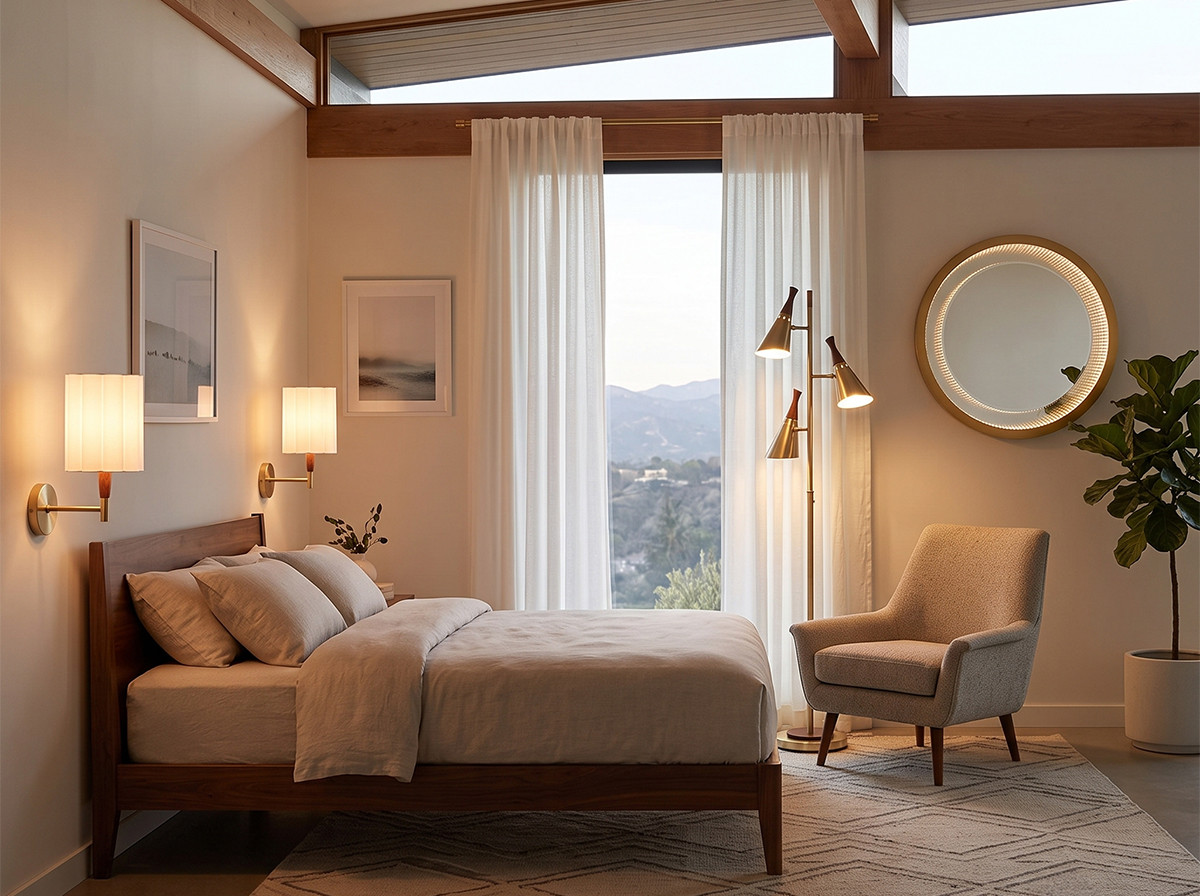
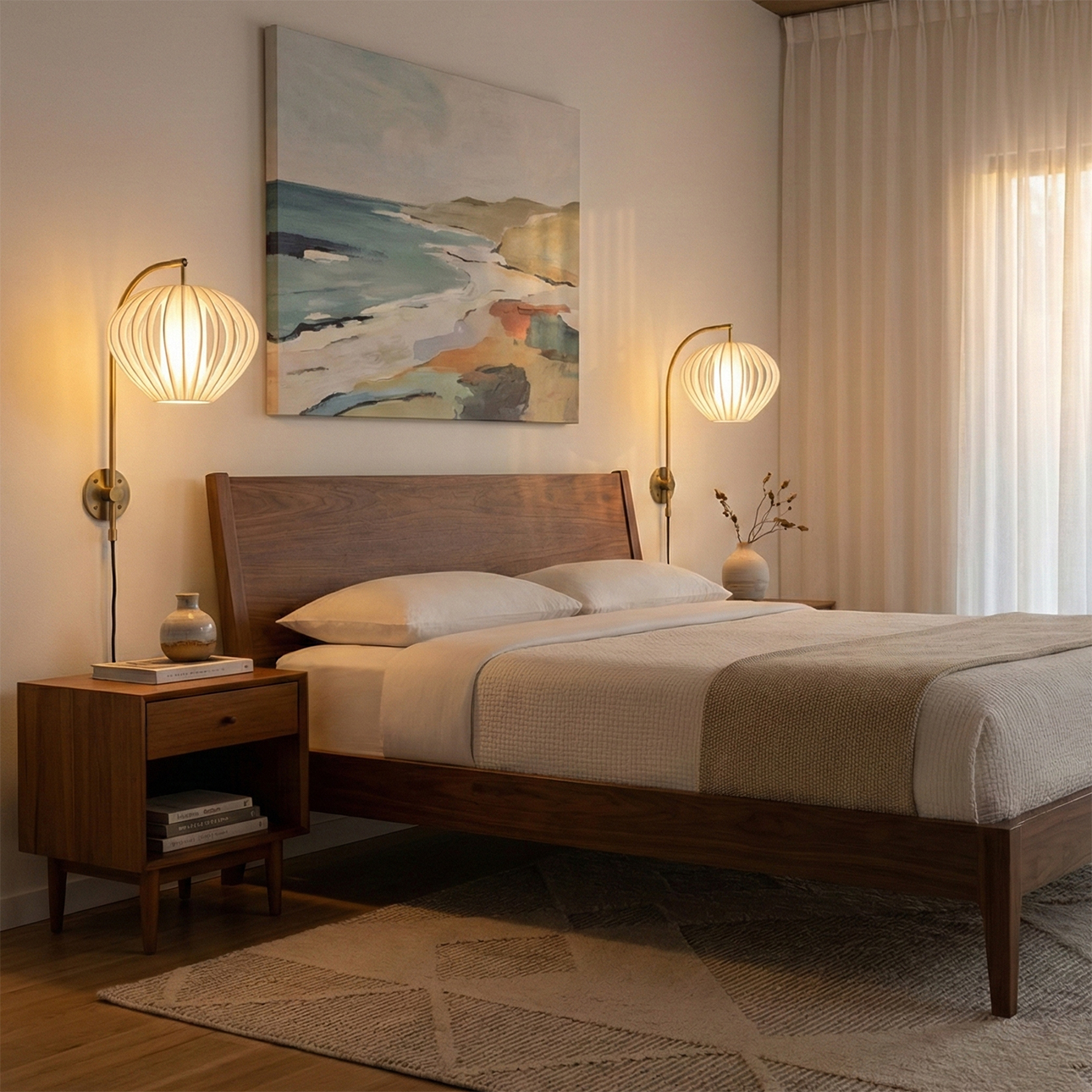
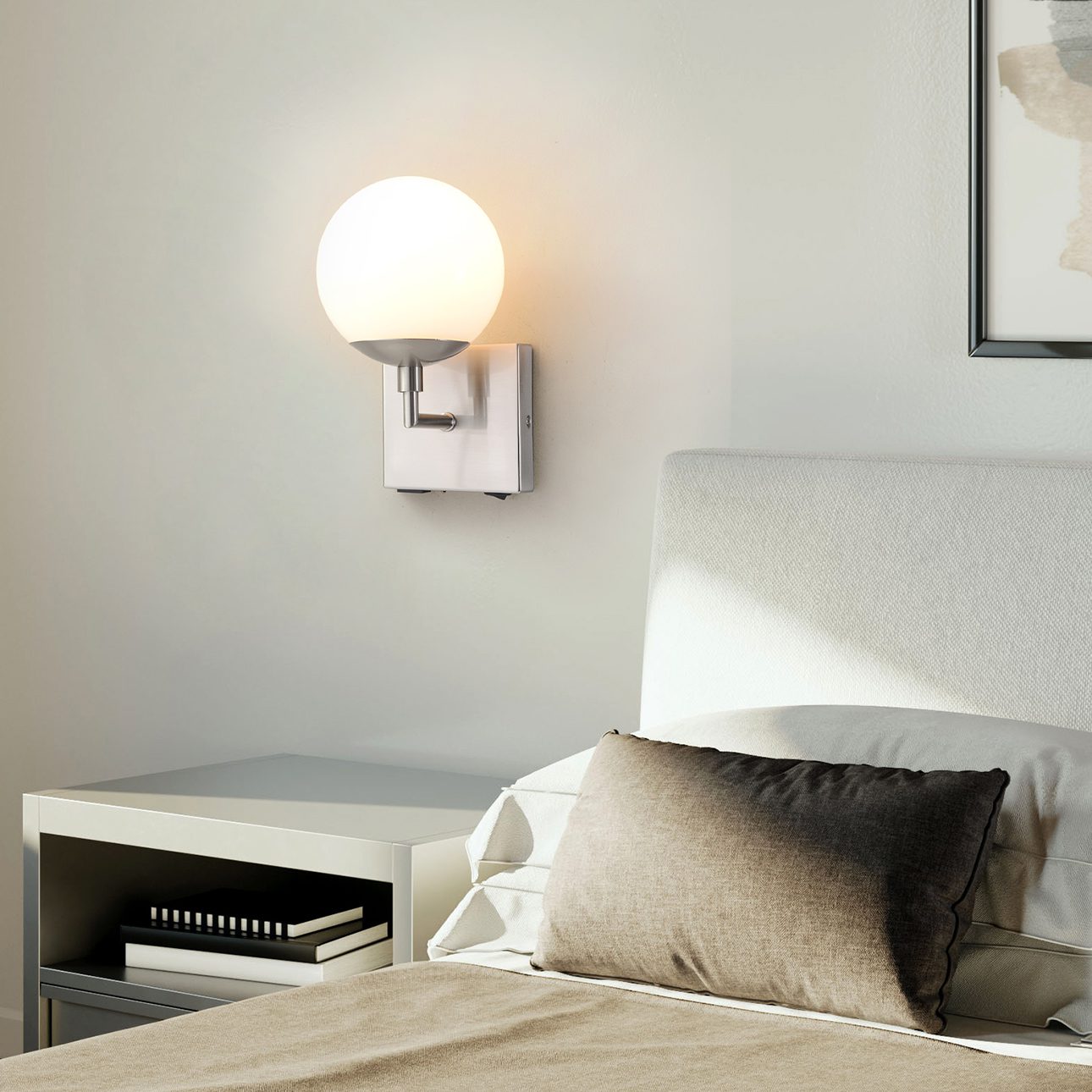
Bedside table lamps consume the surface area you need for books, phones, and water glasses. Wall mounted sconces reclaim that space entirely. Mount them 8 to 10 inches above the mattress top on either side of the headboard.
Look for models with a rocker switch on the fixture itself so you can turn them off without reaching for a cord. The Nova Globe Wall Sconce ($149) includes a built in rocker and a profile that does not interfere with pillows or movement during sleep. For rooms where you read in bed, the Swing Wall Sconce ($399) has a swiveling arm that positions light directly over your page.
Hallway and Entryway
Hallways are narrow. Every inch of floor and surface space matters. Wall sconces solve this because they project from the wall by only three to five inches while casting light both up and down.
Space them every six to eight feet along the corridor. A single Bradley Bar Wall Sconce ($149) at the front entry provides a warm welcome glow without a table or floor lamp. For longer hallways, the Lodi ($299) offers a clean linear shape that reads as architectural detailing rather than just a light fixture.
Home Office
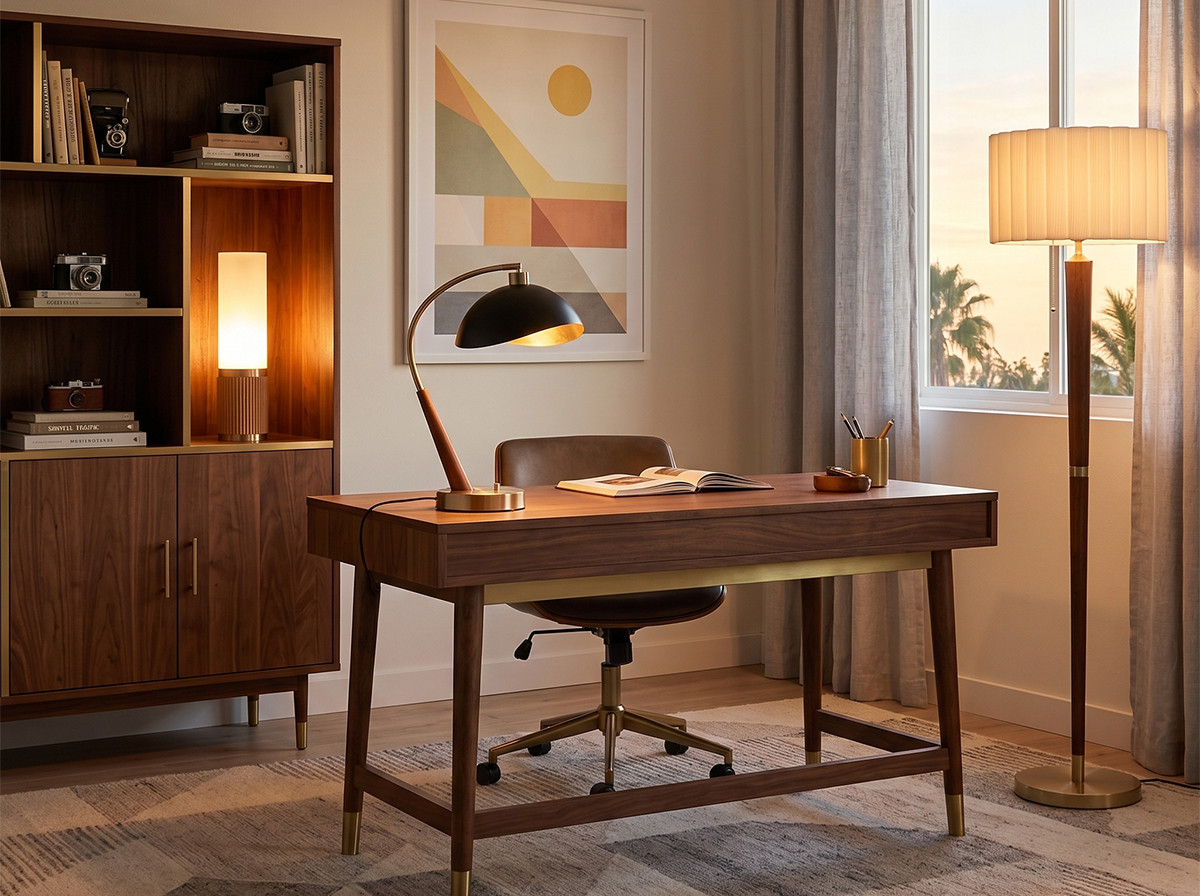
Task lighting in a home office needs to come from the side, not from above. Overhead light creates glare on screens and shadows across the keyboard. A wall sconce placed to the left or right of your monitor at eye level provides diffused ambient light that reduces eye strain during long work sessions.
The Petaluma ($299) directs light in a wide spread pattern that fills the wall behind the desk. This creates a soft backlight effect that prevents the screen from being the only bright object in your field of vision.
How to Choose the Right Wall Sconce
Three factors determine which wall light works best for your space. Size, light output, and finish.
Size: Measure the wall space where the sconce will mount. Leave at least 6 inches of clearance on either side. In narrow spaces like hallways, choose sconces that extend no more than 4 inches from the wall.
Light output: For ambient lighting, 800 to 1,500 lumens per fixture is the practical range. Nova fixtures use 14W E26 LED bulbs delivering 1,500 lumens at 2700K with a CRI of 95 or higher. That color temperature reads warm without skewing yellow.
Finish: Match the finish to existing hardware in the room. Nova wall sconces come in three finishes: weathered brass, satin nickel, and matte black. Brass pairs well with warm wood tones and mid century modern furniture. Nickel complements cooler palettes. Black works as a neutral anchor in any scheme.
Installation Tips That Save Time and Damage
Start with a stud finder. If you can mount into a stud, do it. One screw in a stud and one in a drywall anchor is more secure than two anchors alone. If no studs align with your placement, use toggle bolt anchors rated for at least 50 pounds.
Route the cord along the top of the baseboard using paintable cord covers. These cost under $10 at any hardware store and make the cord virtually invisible. Some designers run the cord behind a piece of furniture or down the inside edge of a doorframe for an even cleaner look.
Height matters more than you think. The center of a wall sconce should sit between 60 and 66 inches from the floor in most rooms. In rooms with 9 or 10 foot ceilings, raise that range by 4 to 6 inches. Beside a bed, drop the measurement to 8 to 10 inches above the top of the mattress.
Layering Wall Lights with Floor Lamps and Mirrors
Wall sconces perform best as one layer in a multi source lighting plan. Pair them with a floor lamp that anchors the room and an LED mirror that doubles ambient light through reflection. This three piece combination creates the effect of professional lighting design without permanent fixtures.
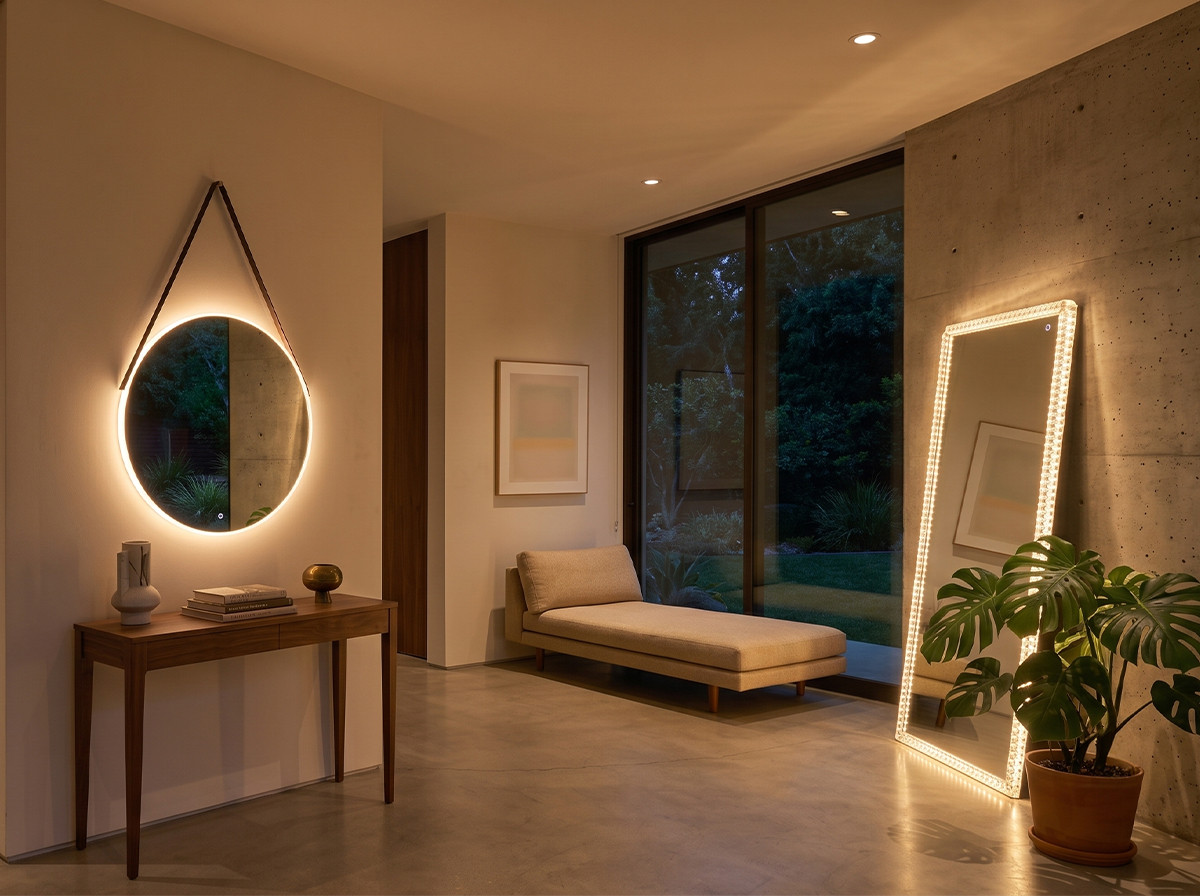
The Nova Super Star Round LED Mirror ($499) adds a ring of 2700K light that bounces off surrounding walls. Place it on the wall opposite a sconce and the reflected light fills the room from both sides. The Aurora 36 inch Round Backlit LED Mirror ($499) produces a similar effect with a broader halo that suits larger rooms.
For reading corners, combine a wall sconce for ambient fill with a slim floor lamp for directed task light. The sconce prevents the area from feeling like a spotlight while the floor lamp gives you the brightness you need for detail work.
Frequently Asked Questions About Wall Lighting
What is the best height for wall sconces?
Mount the center of the sconce between 60 and 66 inches from the floor in living rooms, hallways, and home offices. For bedside sconces, position them 8 to 10 inches above the top of the mattress so you can reach the switch while lying down.
Can you install wall sconces without an electrician?
Yes. Plug in wall sconces mount with two screws and connect to any standard wall outlet. No electrical box, no wiring, and no professional installation required. Most models install in under fifteen minutes.
How many wall sconces does a room need?
For living rooms and bedrooms, two sconces (one on each side of the focal wall) provide balanced lighting. Hallways benefit from one sconce every six to eight feet. Small rooms or entryways typically need just one.
Do wall sconces provide enough light on their own?
Wall sconces are designed as ambient or accent lighting, not primary room illumination. They work best when paired with at least one other light source such as a floor lamp or overhead fixture. Together, they create layered lighting that feels complete.